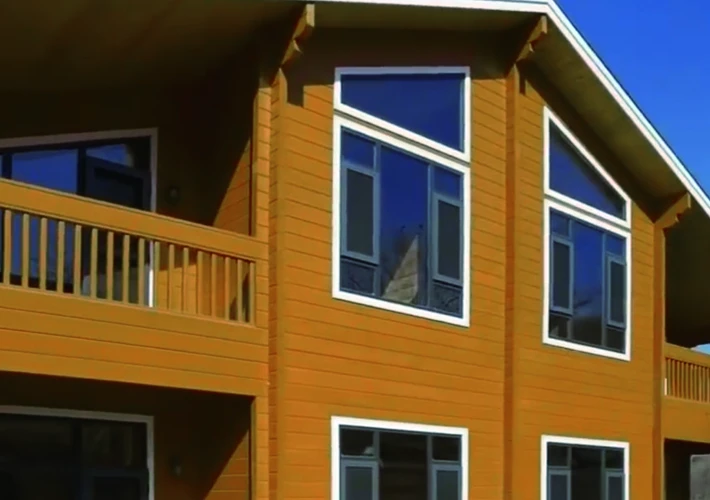
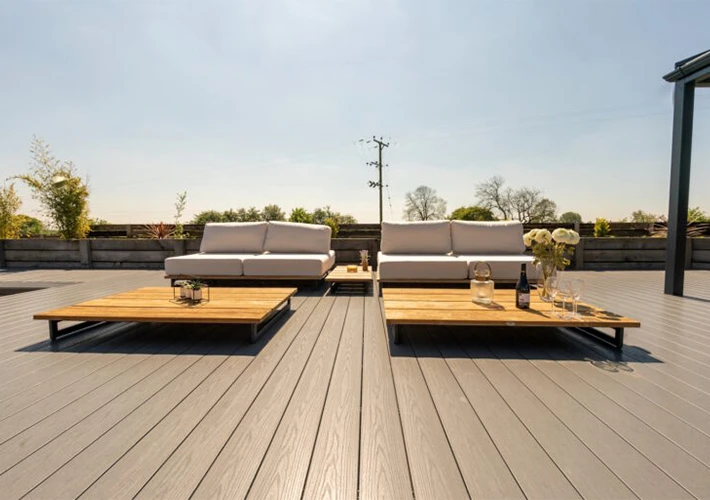
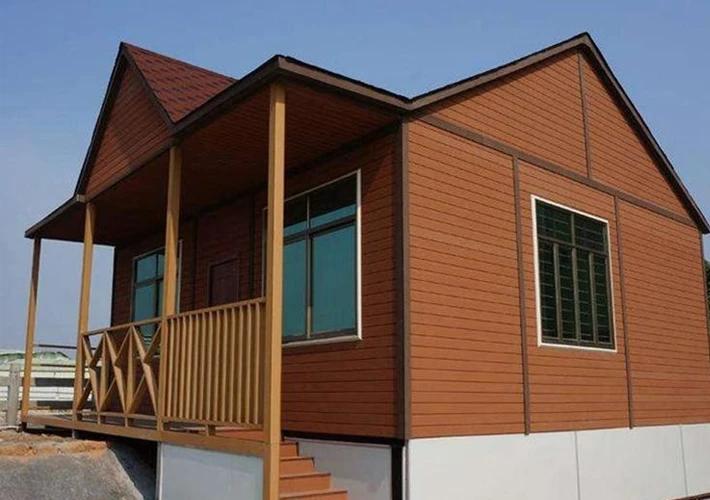
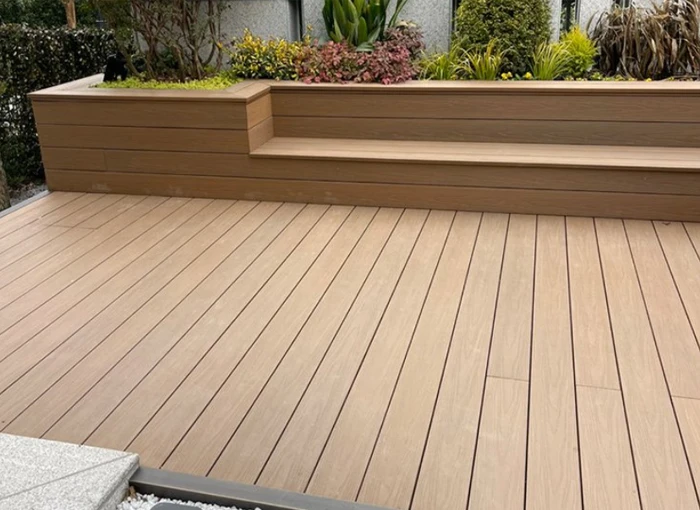
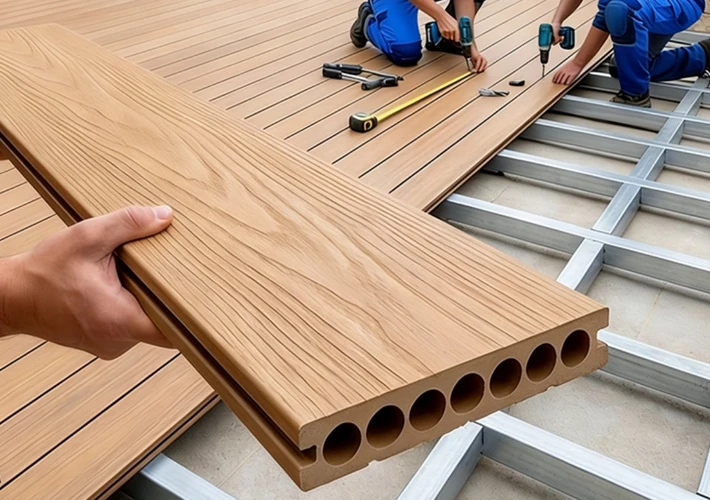
WPC classic composite decking has become an increasingly popular alternative to traditional timber decking for residential, commercial, and outdoor landscaping projects. By combining wood fibers or wood flour with thermoplastic materials, composite decking offers a balance of natural wood aesthetics, weather resistance, dimensional stability, and relatively low maintenance requirements.
However, one of the most important questions for importers, wholesalers, distributors, contractors, and project developers is: How long does WPC classic composite decking actually last?
The average lifespan of standard WPC classic composite decking is generally around 10–25 years, depending on its material formulation, manufacturing quality, installation conditions, climate exposure, and maintenance practices. High-quality products manufactured with carefully controlled raw materials and suitable production technology can deliver long-term outdoor performance, while lower-quality alternatives may experience fading, cracking, deformation, or surface deterioration much earlier.
For international buyers, understanding the expected lifespan is not simply about estimating how many years a deck will remain usable. It is also about evaluating product quality, calculating lifecycle costs, selecting suitable materials for different markets, and choosing a reliable manufacturer capable of maintaining consistent production standards.
As a professional Chinese composite decking manufacturer, Solidexwood focuses on supplying outdoor composite products for international distributors, wholesalers, contractors, and construction projects. This article explains the average lifespan of WPC classic composite decking, the factors that determine its durability, how to extend its service life, and what buyers should evaluate when sourcing products directly from a China factory.
What Is the Average Lifespan of WPC Classic Composite Decking?
The average lifespan of WPC classic composite decking typically ranges from 10 to 25 years. This is a general industry estimate rather than a guaranteed service life for every product. Actual performance varies according to the formulation, manufacturing process, installation quality, environmental conditions, and maintenance routine.
Unlike traditional solid timber decking, WPC decking combines wood-based materials with plastic polymers to create a composite product. This combination reduces several common problems associated with natural wood, including moisture absorption, rotting, insect damage, and frequent surface treatment requirements.
Nevertheless, not all composite decking products offer the same durability. Two products with similar appearances and dimensions may perform very differently after years of exposure to sunlight, rain, temperature changes, and daily use.
Typical Service Life of Different WPC Decking Quality Levels
The following table provides a general reference for buyers evaluating different composite decking categories.
| WPC Decking Category | Indicative Service Life | General Characteristics |
|---|---|---|
| Low-cost WPC decking | 5–10 years | More sensitive to environmental exposure and inconsistent manufacturing |
| Standard classic WPC decking | 10–15 years | Suitable for general residential and light commercial applications |
| High-quality classic WPC decking | 15–20 years | Better material formulation and manufacturing consistency |
| Premium engineered composite decking | 20–25 years or longer | Designed for improved durability and long-term outdoor performance |
These ranges are indicative planning estimates, not standardized performance classifications. Buyers should request actual technical specifications, independent test reports, and warranty documentation before making procurement decisions.
Why Does WPC Decking Have a Long Service Life?
The durability of WPC decking comes from the combination of wood fibers and plastic polymers.
Wood flour or wood fibers provide texture, structural characteristics, and a natural appearance. The plastic component helps reduce water penetration and provides binding strength. Additives such as UV stabilizers, antioxidants, coupling agents, and processing aids can further improve the performance of the finished product.
A properly formulated WPC product can offer several advantages:
- Reduced moisture absorption compared with untreated timber.
- Better resistance to fungal decay and common wood-boring insects.
- No requirement for regular painting or wood-preservative treatment.
- Good resistance to everyday outdoor weather exposure.
- Relatively stable dimensions when correctly manufactured and installed.
- A natural wood-like appearance with a variety of colors and surface textures.
The lifespan of a deck, however, depends on how effectively these characteristics are achieved during manufacturing.
For example, insufficient UV stabilizers may result in faster color fading. Poor material compatibility can affect internal bonding and mechanical strength. Inadequate extrusion control may create inconsistent density or structural weaknesses.
Therefore, choosing a reliable WPC manufacturer is one of the most important steps in securing long-term decking performance.
Is a 25-Year Lifespan Realistic?
A 25-year service life can be achievable for certain high-quality composite decking systems under suitable conditions. However, it should not be treated as a universal expectation for all classic WPC decking.
Buyers should distinguish between three different concepts:
- Expected service life: The estimated period during which a product can remain functional under defined conditions.
- Product warranty: The period and conditions under which a manufacturer provides specific protection against covered defects.
- Actual field performance: The real-world performance of the installed product in a particular climate and application.
A 20-year warranty, for example, does not automatically mean that every board will remain visually unchanged for 20 years. Warranty coverage may exclude installation errors, structural damage, improper maintenance, or normal weather-related color changes.
For importers and distributors, it is advisable to communicate these distinctions clearly to downstream customers.
What Factors Affect the Lifespan of WPC Classic Composite Decking?
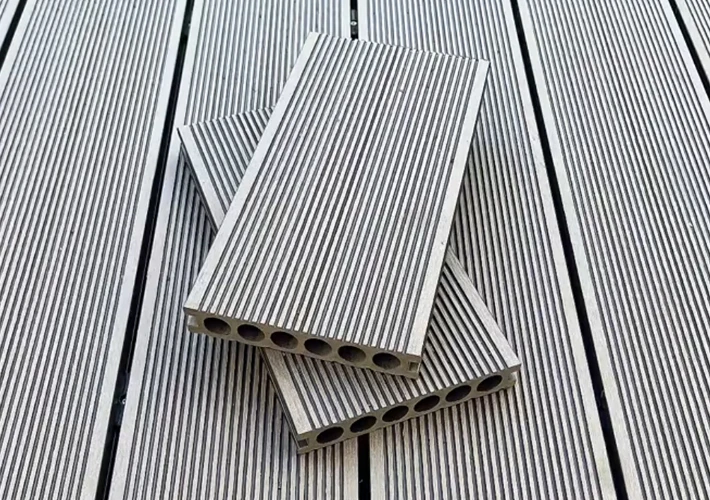
The service life of WPC classic composite decking is influenced by several interconnected factors. Material composition, production technology, environmental exposure, installation, and maintenance all contribute to long-term performance.
Understanding these factors helps buyers distinguish between products that merely look similar and products engineered for reliable outdoor applications.
1. Raw Material Composition
Raw material selection is one of the most important determinants of composite decking durability.
Most traditional WPC decking products contain a combination of:
- Wood flour or wood fibers.
- HDPE, PVC, or other suitable thermoplastic polymers, depending on the product formulation.
- Coupling agents.
- UV stabilizers.
- Antioxidants.
- Lubricants and processing additives.
- Colorants and other functional ingredients.
The proportion and compatibility of these components directly influence the physical and mechanical properties of the finished board.
For example, excessive wood content without adequate moisture control may increase water absorption and dimensional instability. Insufficient polymer content or poor compatibility between the wood and plastic phases may reduce the integrity of the composite structure.
Similarly, low-quality recycled materials can introduce inconsistent melt behavior, contamination, and variations in product performance if they are not properly selected and controlled.
A professional manufacturer should maintain clear raw material specifications and appropriate incoming material inspection procedures.
For B2B buyers, asking about the material formulation and quality-control process is more useful than simply asking whether a product is made from recycled materials.
2. UV Resistance and Sunlight Exposure
Ultraviolet radiation is one of the major environmental challenges for outdoor composite decking.
When decking is exposed to direct sunlight over extended periods, UV radiation can gradually affect the polymer components and surface colorants. Depending on the formulation, this may cause:
- Surface color fading.
- Changes in surface appearance.
- Gradual degradation of exposed polymer materials.
- Increased surface brittleness in poorly stabilized products.
This is particularly important in regions with intense sunlight, including Australia, the Middle East, South America, and parts of Southeast Asia.
A WPC board intended for a shaded garden terrace may not deliver the same long-term performance when installed beside an outdoor swimming pool in a high-UV environment.
To improve UV resistance, manufacturers may incorporate suitable UV stabilizers and antioxidants into the formulation. Pigment selection and extrusion control also influence color consistency.
Buyers targeting high-solar-radiation markets should request UV aging test reports and clarify the testing conditions, including exposure duration, equipment, and evaluation criteria.
It is also important to distinguish between natural initial color change and progressive UV degradation. Some composite products may undergo an initial color adjustment after installation before stabilizing. The extent and duration vary by formulation.
3. Moisture Resistance and Water Absorption
Water resistance is another important reason why WPC decking is widely used in outdoor environments.
Traditional timber can absorb moisture, swell, shrink, and eventually develop rot when repeatedly exposed to wet conditions without appropriate protection.
WPC decking generally absorbs less water than untreated wood because its polymer component helps reduce moisture penetration.
However, composite decking is not necessarily completely waterproof under every condition.
Water can enter through exposed board ends, cut edges, damaged surfaces, or internal voids. Poor drainage and persistent standing water may also contribute to surface contamination, algae growth, and deterioration of the supporting structure.
The quality of the material formulation and the density of the extruded board influence its water absorption performance.
For projects in coastal areas, humid climates, or regions with heavy rainfall, buyers should evaluate:
- Water absorption test results.
- Dimensional changes after water exposure.
- Resistance to fungal growth.
- Board density and structural consistency.
- Drainage design and installation requirements.
A well-designed drainage system is essential even when using moisture-resistant composite materials.
4. Temperature Changes and Thermal Expansion
Outdoor decking experiences continuous temperature fluctuations.
In hot weather, WPC boards expand as temperatures rise. When temperatures fall, the boards contract. Repeated expansion and contraction can create stress within the decking system.
If installation gaps are insufficient, boards may push against one another, resulting in buckling, deformation, or excessive stress on fasteners.
Temperature-related performance depends on several factors:
- Polymer type.
- Material formulation.
- Board dimensions.
- Extrusion consistency.
- Installation temperature.
- Available expansion gaps.
- Substructure design.
This factor is especially important in countries with large seasonal temperature differences or extremely hot summers.
For example, a decking system installed in Canada must accommodate different seasonal conditions from one installed in Saudi Arabia or the United Arab Emirates.
Professional installation instructions should specify expansion gaps and fixing requirements according to board length, installation temperature, and the manufacturer’s technical recommendations.
5. Mechanical Strength and Load-Bearing Performance
WPC decking is frequently installed in areas exposed to regular foot traffic, outdoor furniture, and occasional concentrated loads.
The board must maintain sufficient mechanical strength throughout its service life.
Important performance indicators include:
- Flexural strength.
- Flexural modulus.
- Impact resistance.
- Screw holding performance.
- Surface hardness.
- Resistance to deformation under load.
Board thickness, profile structure, internal cavities, and joist spacing all influence the load-bearing capacity of the installed system.
A thicker board does not automatically guarantee better performance. The internal structure and material formulation are equally important.
For commercial projects, such as restaurants, hotels, public terraces, and outdoor walkways, buyers should confirm the intended application and obtain appropriate load-related technical information.
6. Manufacturing Technology and Quality Control
Even when two factories use similar raw materials, their products may have significantly different performance characteristics.
Manufacturing technology affects the consistency, density, surface quality, and structural integrity of composite decking.
Important production considerations include:
- Accurate raw material weighing and mixing.
- Appropriate moisture control for wood-based materials.
- Consistent extrusion temperature.
- Stable extrusion pressure and speed.
- Proper cooling and calibration.
- Accurate cutting and dimensional control.
- Surface finishing and inspection.
Poor extrusion control can cause uneven density, internal defects, surface irregularities, and dimensional variations.
These defects may not always be visible immediately after installation. Some may become apparent only after prolonged outdoor exposure.
For this reason, buyers should assess the manufacturer’s production capabilities and quality-control procedures rather than relying entirely on product photographs or sample appearance.
7. Installation Quality and Supporting Structure
The lifespan of WPC decking depends not only on the boards themselves but also on the complete decking system.
An incorrectly installed high-quality board may fail earlier than a properly installed standard product.
Common installation problems include:
- Excessive joist spacing.
- Insufficient expansion gaps.
- Incorrect fastener selection.
- Poor drainage.
- Uneven supporting structures.
- Inadequate ventilation beneath the deck.
- Improper treatment of board ends and edges.
A stable substructure helps distribute loads evenly and reduces unnecessary stress on the boards.
The installation system should also allow rainwater to drain away efficiently and provide adequate airflow beneath the decking surface.
For international projects, distributors and contractors should follow the manufacturer’s installation guide and local building requirements.
How Does WPC Classic Composite Decking Compare with Traditional Wood Decking?
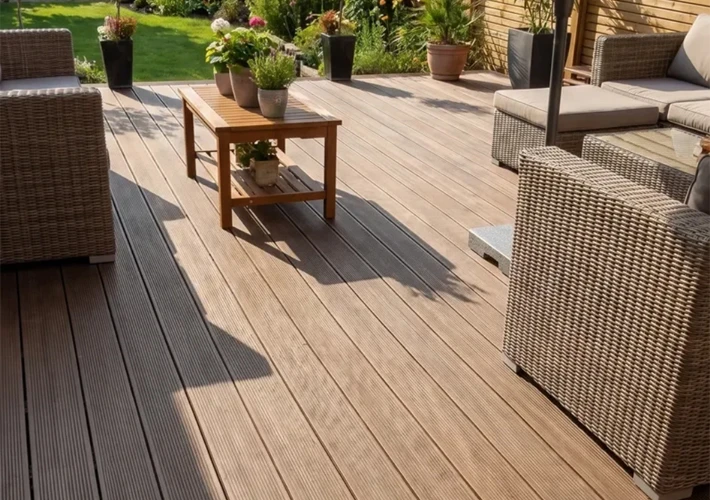
One of the main reasons buyers choose WPC classic composite decking is its combination of natural appearance and lower maintenance requirements.
Traditional timber has long been used for outdoor terraces, balconies, garden walkways, and poolside areas. However, it requires regular maintenance to protect it from moisture, insects, UV radiation, and biological decay.
WPC decking offers an alternative that reduces many of these maintenance demands.
WPC Decking vs. Natural Wood
| Comparison Factor | WPC Classic Composite Decking | Traditional Natural Wood |
|---|---|---|
| Typical service life | Approximately 10–25 years, depending on quality | Highly variable, often 5–20+ years depending on species and maintenance |
| Moisture resistance | Generally better than untreated timber | Varies significantly by wood species and treatment |
| Rot resistance | Generally good due to polymer content | Requires suitable species, treatment, or protection |
| Termite resistance | Generally better than untreated wood | Vulnerable unless appropriately protected |
| UV performance | Depends on stabilizers and pigments | May fade, weather, or crack |
| Painting requirements | Usually not required | Often requires periodic coating |
| Maintenance | Generally low | Usually higher |
| Appearance | Wood-like colors and textures | Authentic natural wood grain |
| Color consistency | May change with weather exposure | Changes naturally over time |
| Installation | Requires suitable gaps and support spacing | Depends on timber type and installation system |
The comparison should be understood as a general material assessment. Naturally durable hardwoods and professionally treated timber can achieve long service lives under suitable conditions.
Why Do Importers Prefer WPC Decking?
For wholesalers and distributors, WPC decking offers several commercial advantages.
1. Lower maintenance requirements
Customers generally do not need to repaint or regularly apply wood preservatives to maintain the basic appearance of WPC decking.
This makes it attractive for property owners, hospitality businesses, and commercial outdoor projects.
2. More consistent product specifications
Composite decking is manufactured through industrial processes, allowing factories to produce standardized dimensions, colors, and surface profiles.
This is useful for importers managing large-volume orders and distributors maintaining consistent product inventories.
3. Flexible design options
WPC decking can be produced in different colors, profiles, textures, and dimensions.
Common choices include grey, brown, teak, coffee, and other wood-inspired finishes.
4. Reduced dependence on natural timber
WPC decking can incorporate wood-based by-products and recycled polymer materials, depending on the formulation.
This provides an alternative to some traditional timber applications, although environmental benefits should be evaluated using actual material sourcing and lifecycle information.
5. Suitable for multiple outdoor applications
WPC decking is used in residential gardens, hotel terraces, outdoor restaurants, balconies, landscaping projects, and commercial walkways.
These advantages make composite decking a practical product category for international building material distributors.
Does WPC Decking Last Longer Than Wood?
There is no universal answer because timber species, treatment methods, climate, installation, and maintenance can vary considerably.
However, compared with untreated or poorly maintained timber, high-quality WPC decking can provide a longer and more predictable maintenance cycle.
For buyers, the more meaningful comparison is not simply the initial purchase price or estimated lifespan. It is the total cost of ownership over the expected service period.
This includes material costs, installation, maintenance, replacement, and potential downtime.
How Can You Extend the Lifespan of WPC Classic Composite Decking?
Although WPC decking is designed for outdoor use, appropriate installation and maintenance remain essential.
A well-maintained decking system can retain its functionality and appearance for many years.
The following practices are particularly important for distributors, contractors, and project developers.
1. Choose a Suitable Product for the Installation Environment
Different environments create different performance requirements.
For example:
- High-UV regions require appropriate UV resistance.
- Humid climates require good moisture management.
- Coastal projects may require corrosion-resistant accessories and fasteners.
- High-traffic commercial areas require suitable mechanical strength.
- Poolside applications require attention to drainage and surface slip performance.
Buyers should not assume that one WPC formulation is equally suitable for every climate and application.
When importing composite decking, clearly communicate the intended destination market and project environment to the manufacturer.
2. Prepare a Stable Supporting Structure
The substructure is fundamental to long-term decking performance.
Before installation, ensure that the supporting ground or structural base is stable, level, and capable of carrying the expected loads.
Joist spacing should follow the manufacturer’s recommendations. Excessive spacing may cause the boards to flex more than intended.
The supporting structure should also be designed to avoid water accumulation.
For outdoor projects, adequate ventilation beneath the boards helps the decking system dry after rainfall.
3. Leave Appropriate Expansion Gaps
Composite materials respond to temperature changes.
Installers must leave sufficient gaps between boards and at the ends of decking runs to accommodate thermal expansion and contraction.
The required spacing depends on:
- Board length.
- Local climate.
- Installation temperature.
- Material composition.
- Manufacturer specifications.
Never apply a universal expansion-gap measurement to every composite decking product.
Incorrect spacing can result in buckling, gaps that are too large, or excessive pressure on the fastening system.
4. Use Suitable Fasteners and Accessories
The fasteners and accessories used in a decking system influence both installation quality and long-term stability.
Common installation components include:
- Starter clips.
- Hidden fasteners.
- Screws.
- Joists.
- Edge finishing accessories.
- Fascia boards.
In coastal and humid environments, suitable corrosion-resistant fasteners are especially important.
Using incompatible accessories may cause premature corrosion, loose connections, or installation problems.
5. Maintain Proper Drainage and Ventilation
Standing water is undesirable for any outdoor decking system.
Although WPC boards are generally more moisture-resistant than untreated timber, the supporting structure, fasteners, and surrounding materials still need protection from prolonged moisture exposure.
A good installation design should provide:
- Adequate drainage slopes where required.
- Sufficient space beneath the deck.
- Proper air circulation.
- Clear drainage outlets.
- No unnecessary water traps.
Regularly remove leaves, dirt, and other materials that may block drainage gaps.
6. Clean the Surface Regularly
Routine cleaning helps maintain the appearance and functionality of composite decking.
For normal cleaning, use:
- A soft-bristle brush or broom.
- Clean water.
- A mild detergent when necessary.
- A suitable cleaning brush for stubborn dirt.
Avoid using aggressive chemicals unless the manufacturer confirms their compatibility with the product.
High-pressure cleaning should only be carried out according to the manufacturer’s instructions, because excessive pressure or incorrect nozzle positioning may damage the surface.
7. Prevent Long-Term Surface Damage
Outdoor furniture, heavy planters, and sharp objects can cause scratches or localized pressure.
To minimize damage:
- Use protective pads beneath furniture legs.
- Avoid dragging heavy objects across the surface.
- Remove oil and food stains promptly.
- Keep drainage gaps free of debris.
- Avoid placing extremely hot objects directly on the boards.
- Follow the manufacturer’s guidance for snow and ice removal.
These simple measures help maintain the appearance of the deck and reduce unnecessary surface damage.
8. Conduct Periodic Inspections
For commercial projects, periodic inspections are particularly valuable.
Check the following components:
| Inspection Item | What to Check | Recommended Action |
|---|---|---|
| Decking boards | Cracks, deformation, excessive fading | Assess the cause and replace damaged boards if necessary |
| Fasteners | Loose or corroded screws and clips | Tighten or replace compatible components |
| Joists | Movement, deterioration, or structural instability | Repair or replace affected support sections |
| Drainage | Blocked gaps or standing water | Remove debris and improve drainage |
| Surface | Stains, dirt, algae, and scratches | Clean using approved methods |
Inspection frequency should reflect the climate, usage intensity, and project requirements.
For hotels, restaurants, and other commercial properties, scheduled maintenance helps identify minor issues before they become costly repairs.
Is WPC Classic Composite Decking Suitable for Different Climates?
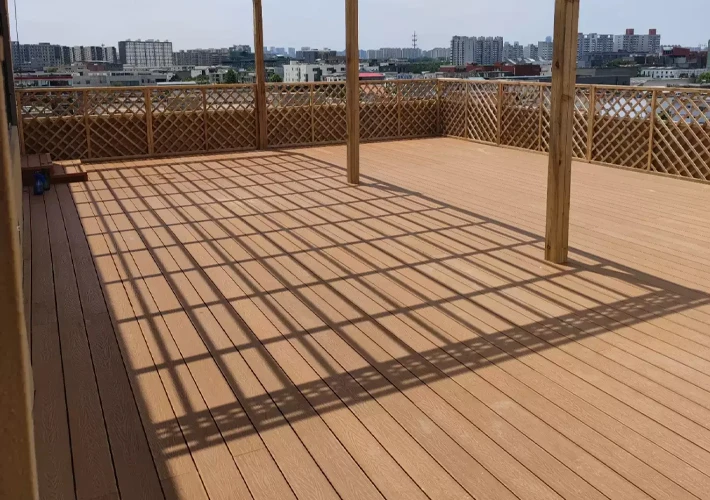
Climate compatibility is an important purchasing consideration for international buyers.
A product that performs well in a mild European climate may require different specifications for a tropical Southeast Asian market or a high-temperature Middle Eastern project.
Understanding regional environmental conditions helps importers select the appropriate composite decking product.
Hot and Sunny Climates
Countries such as Saudi Arabia, the United Arab Emirates, Australia, and parts of South America experience high temperatures and strong sunlight.
In these markets, the most important considerations include:
- UV stabilization.
- Color retention.
- Thermal expansion.
- Heat-related dimensional changes.
- Surface temperature under direct sunlight.
Dark-colored decking generally absorbs more solar energy than lighter-colored decking. Therefore, color selection can influence surface temperature.
Buyers should request relevant UV exposure and thermal performance data rather than relying on color descriptions alone.
For projects around swimming pools, resorts, and outdoor entertainment areas, the actual surface temperature under local sunlight should also be evaluated.
Tropical and Humid Climates
Southeast Asian markets, including Thailand, Malaysia, Indonesia, and Vietnam, often experience high humidity and heavy rainfall.
The main concerns include moisture exposure, drainage, biological surface growth, and installation ventilation.
WPC decking is attractive in these regions because its polymer content generally reduces moisture absorption compared with untreated timber.
Nevertheless, good drainage and regular cleaning remain important.
For humid environments, buyers should prioritize:
- Consistent material density.
- Controlled moisture absorption.
- Appropriate anti-fungal performance.
- Reliable board dimensions.
- Suitable installation accessories.
Cold and Seasonal Climates
In countries such as Canada, the United States, and parts of Europe, composite decking may experience freezing temperatures, snow, ice, and repeated freeze-thaw cycles.
Temperature-related movement and moisture trapped around the installation system should be considered.
Important purchasing factors include:
- Low-temperature impact performance.
- Dimensional stability.
- Suitable fastening systems.
- Correct expansion gaps.
- Appropriate snow and ice maintenance instructions.
Buyers should also confirm whether the manufacturer’s test data cover the expected temperature range.
Coastal Environments
Coastal projects are exposed to salt-containing air, humidity, wind, and strong sunlight.
While WPC decking can be suitable for many coastal applications, the entire installation system must be considered.
The polymer composite board may resist many forms of moisture-related deterioration, but metal accessories and supporting structures can still corrode.
For coastal projects, specify suitable fasteners and supporting materials, maintain drainage, and follow the manufacturer’s installation recommendations.
Climate Suitability Reference Table
| Climate | Main Challenges | Important Product Considerations |
|---|---|---|
| Middle East | High temperatures and UV radiation | UV stabilization and thermal movement |
| Australia | Strong sunlight and seasonal temperature changes | Weathering resistance and dimensional stability |
| Southeast Asia | Humidity and heavy rainfall | Moisture resistance and drainage |
| Canada | Freezing conditions and snow | Low-temperature performance and expansion gaps |
| Europe | Seasonal temperature changes and rainfall | Dimensional stability and weather resistance |
| South America | Diverse climates and strong regional sunlight | Market-specific formulation and UV performance |
For international distributors, offering climate-appropriate specifications can improve product positioning and reduce complaints after installation.
How to Choose a Reliable WPC Classic Composite Decking Manufacturer in China?
For importers and wholesalers, the manufacturer plays a major role in determining the long-term quality of WPC decking.
China is an important sourcing destination for composite decking because of its established production capacity, material supply chains, manufacturing infrastructure, and export experience.
However, different factories have different levels of production control, technical expertise, and product consistency.
A reliable supplier should offer more than competitive pricing. It should provide stable quality, clear technical specifications, professional communication, and dependable export services.
1. Evaluate Raw Material Control
Ask the manufacturer about its primary raw materials and how they are inspected.
Important questions include:
- What type of polymer is used?
- What type of wood flour or wood fiber is incorporated?
- How are recycled materials selected and controlled?
- Are UV stabilizers and other functional additives included?
- How is raw material consistency maintained between batches?
A professional manufacturer should be able to explain its material selection process without relying entirely on general marketing claims.
2. Check Production Equipment and Manufacturing Capacity
Production capacity directly affects order fulfillment and supply stability.
When evaluating a China WPC decking factory, consider:
- Number and type of extrusion lines.
- Daily or monthly production capacity.
- Dimensional control.
- Surface finishing equipment.
- Raw material storage.
- Finished-product inspection.
- Packaging and container-loading facilities.
A factory with stable production management is better positioned to support repeat orders and large-volume projects.
3. Request Product Testing Reports
Technical documentation helps buyers compare products using measurable performance indicators.
Depending on the product and target market, relevant testing may include:
| Test Category | What It Evaluates |
|---|---|
| Water absorption | Moisture uptake after water exposure |
| Flexural strength | Resistance to bending under load |
| Flexural modulus | Stiffness under bending |
| Impact resistance | Resistance to sudden mechanical impact |
| UV aging | Changes after artificial ultraviolet exposure |
| Dimensional stability | Changes in dimensions under temperature or moisture exposure |
| Slip resistance | Surface traction under specified conditions |
| Fungal resistance | Resistance to fungal growth under specified test conditions |
Not every test is required for every project. Buyers should identify the relevant standards and performance requirements for the destination market.
Testing reports should clearly identify the tested product, test method, laboratory, and date. A report for one formulation or product series should not automatically be assumed to cover every product supplied by the factory.
4. Examine Product Samples Before Bulk Purchasing
Samples allow buyers to evaluate product appearance, dimensions, surface texture, and basic workmanship.
Before placing a container order, check:
- Color consistency.
- Surface finish.
- Board thickness and width.
- Cross-sectional structure.
- Edge quality.
- Weight and density consistency.
- Compatibility with installation accessories.
For larger orders, buyers should also confirm that the approved sample corresponds to the actual mass-production specification.
Sample approval is an important step in reducing disputes between buyers and suppliers.
5. Confirm Customization Capabilities
Different markets have different preferences regarding colors, profiles, and board dimensions.
Some distributors prefer traditional wood-inspired colors, while others focus on contemporary grey, charcoal, or lighter natural finishes.
A capable manufacturer should be able to discuss:
- Custom colors.
- Board dimensions.
- Surface textures.
- Solid and hollow profiles, where available.
- Matching fascia and accessories.
- Packaging and private-label requirements.
Customization can help distributors establish a differentiated product range rather than competing exclusively on price.
6. Evaluate Export Experience and Packaging
Composite decking is commonly shipped in large quantities. Packaging and container loading therefore deserve careful attention.
A professional supplier should consider:
- Board protection during transportation.
- Moisture-resistant packaging where appropriate.
- Pallet or bundle stability.
- Accurate quantity labeling.
- Container loading efficiency.
- Documentation and export coordination.
For long boards, packaging design is especially important because poor handling can result in bending, surface damage, or broken edges.
Importers should confirm packaging specifications and loading arrangements before shipment.
7. Compare Total Procurement Costs Rather Than Only Unit Prices
The lowest factory quotation does not necessarily represent the best purchasing decision.
Buyers should compare:
- Material specifications.
- Board dimensions.
- Weight and density.
- Accessories included.
- Packaging.
- Production lead time.
- Quality inspection.
- Warranty conditions.
- Shipping efficiency.
A slightly higher initial purchase price may be justified if the product provides better performance, fewer complaints, and lower replacement costs.
8. Work with Solidexwood, a China Composite Decking Factory
Solidexwood is a Chinese factory brand focused on composite outdoor building materials, including WPC decking, composite cladding, fencing, and ASA outdoor products.
For overseas distributors, wholesalers, contractors, and project buyers, working directly with a factory can provide several advantages.
Factory-direct supply
Direct cooperation with a China manufacturer allows buyers to communicate product requirements, specifications, and order details more efficiently.
Product range
Solidexwood focuses on outdoor composite material solutions, helping buyers develop coordinated product offerings for decking and exterior applications.
Customization support
For suitable products and order quantities, buyers can discuss customized colors, dimensions, surface finishes, and product configurations.
B2B cooperation
Solidexwood works with international building material importers, distributors, wholesalers, and project contractors.
Technical communication
Buyers can discuss product specifications, installation requirements, packaging, and quality expectations before confirming orders.
For companies seeking a long-term composite decking supplier in China, evaluating factory capabilities and establishing clear product specifications are essential steps toward reliable cooperation.
How to Calculate the Long-Term Cost of WPC Classic Composite Decking?
The average lifespan of composite decking is closely related to its total cost of ownership.
For importers, contractors, and project developers, evaluating only the initial purchase price can lead to an incomplete understanding of the actual investment.
A product with a lower purchase price may require more frequent replacement or maintenance. A higher-quality alternative may offer better lifecycle economics if it maintains its performance over a longer period.
Initial Purchase Cost
The initial investment usually includes:
- Decking board purchase price.
- Supporting joists.
- Installation clips and screws.
- Fascia and finishing accessories.
- Transportation and import costs.
- Installation labor.
For international buyers, the landed cost is often more important than the factory quotation alone.
Shipping volume, packaging dimensions, container utilization, import duties, and local logistics can all affect the final cost per square meter.
Maintenance Cost
One advantage of WPC decking is that it generally requires less maintenance than traditional untreated timber.
Routine maintenance normally involves cleaning, checking fasteners, clearing drainage gaps, and inspecting the supporting structure.
The exact cost depends on the project size, environmental conditions, and usage intensity.
Commercial projects may also require scheduled inspections to maintain safety and appearance.
Replacement Cost
If boards become damaged, the replacement cost depends on whether individual boards can be removed without dismantling a large section of the deck.
This is why installation system design matters.
Using compatible clips and accessible fixing methods can make future repairs easier.
For project developers, the cost of replacement should also include labor, temporary access restrictions, and potential disruption to business operations.
Example: Comparing Two WPC Decking Investments
The following example is illustrative and uses hypothetical prices rather than current market quotations.
Assume a project requires 100 square meters of decking.
| Cost Item | Option A: Standard Product | Option B: Higher-Specification Product |
|---|---|---|
| Initial material and installation cost | $4,000 | $5,000 |
| Expected service period | 12 years | 20 years |
| Annual maintenance allowance | $100 | $80 |
| Total maintenance over the assumed period | $1,200 | $1,600 |
| Total cost over the assumed period | $5,200 | $6,600 |
| Average annual cost | $433.33 | $330 |
Although Option B has a higher initial investment and a higher total maintenance allowance over its longer service period, its annualized cost is lower in this simplified example.
The calculation does not include discount rates, inflation, financing, replacement timing, or residual value. It is intended to demonstrate why buyers should compare products over their expected service periods rather than focusing only on purchase price.
Why Lifecycle Cost Matters for Distributors
For wholesalers and distributors, lifecycle cost is also a useful sales argument.
Customers increasingly want to understand how a product performs after installation, not just how much it costs per square meter.
A supplier that can provide technical specifications, product testing, installation guidance, and clear warranty terms can help distributors communicate value more effectively.
For project contractors, long-term durability also affects maintenance budgets, customer satisfaction, and project reputation.
Frequently Asked Questions About WPC Classic Composite Decking Lifespan
Q1: What Is the Average Lifespan of WPC Classic Composite Decking?
The general expected lifespan of WPC classic composite decking is approximately 10–25 years.
Actual service life depends on material quality, UV resistance, manufacturing consistency, installation, climate exposure, and maintenance.
Buyers should always confirm the expected service period and warranty conditions with the manufacturer.
Q2: Can WPC Classic Composite Decking Last 20 Years?
Yes. High-quality WPC decking can potentially provide around 20 years of service under suitable conditions.
However, achieving this performance requires appropriate raw materials, reliable manufacturing, correct installation, and regular maintenance.
A 20-year service expectation should be supported by product-specific performance data rather than assumed from the material category alone.
Q3: Does WPC Decking Fade Over Time?
Yes. Most outdoor composite decking products may experience some degree of color change after prolonged exposure to sunlight and weather.
The extent of fading depends on the polymer formulation, UV stabilizers, pigments, surface finish, and environmental conditions.
Products designed for high-UV regions should be evaluated using relevant accelerated weathering test reports.
Q4: Is WPC Decking Waterproof?
WPC decking generally has better moisture resistance than untreated timber, but it should not automatically be considered completely waterproof.
Water may enter through exposed ends, damaged areas, or internal structural spaces. Proper drainage and installation remain necessary.
Buyers should request product-specific water absorption data.
Q5: Does WPC Decking Rot?
WPC decking is generally more resistant to biological decay than untreated natural timber because of its polymer content.
However, the exact resistance depends on the formulation, manufacturing quality, and environmental conditions.
The supporting structure and accessories also need suitable protection.
Q6: Is WPC Decking Suitable for Swimming Pool Areas?
Yes. WPC decking is widely used in outdoor poolside projects.
However, buyers should evaluate surface slip resistance, heat buildup, drainage, fastener corrosion resistance, and the suitability of the selected product for wet environments.
Not all WPC decking surfaces provide the same slip performance.
Q7: Does WPC Decking Require Painting or Sealing?
Most standard WPC decking products do not require routine painting or sealing like traditional timber.
Regular cleaning and periodic inspection are usually sufficient.
Always follow the manufacturer’s maintenance instructions.
Q8: What Causes WPC Decking to Crack?
Cracking can result from several factors, including poor material formulation, manufacturing defects, excessive loading, incorrect installation, inadequate expansion gaps, or extreme environmental exposure.
Improper fastening and insufficient support spacing can also increase stress on the boards.
Q9: Is Solid WPC Decking More Durable Than Hollow WPC Decking?
Not necessarily.
Solid and hollow profiles have different structural characteristics, weights, and application requirements.
Solid profiles generally contain more material and may provide greater resistance to certain concentrated loads, while hollow profiles can reduce weight and material consumption.
Actual performance depends on board design, wall thickness, material formulation, and support spacing.
Buyers should compare mechanical test results rather than judging durability by profile type alone.
Q10: What Should Importers Ask a Chinese WPC Decking Manufacturer?
Before placing a bulk order, importers should request information about:
- Raw material composition.
- Board dimensions and tolerances.
- Density and weight.
- UV aging performance.
- Water absorption.
- Flexural strength.
- Installation instructions.
- Product warranty.
- Minimum order quantity.
- Production lead time.
- Packaging and container loading.
- Customization capabilities.
These details help buyers evaluate suppliers more accurately and reduce purchasing risks.
Q11: How Can Buyers Verify the Quality of WPC Decking from China?
Buyers should request representative samples, technical data sheets, independent test reports, and factory quality-control information.
For larger orders, a pre-shipment inspection can help verify product dimensions, appearance, quantity, packaging, and consistency with the approved specifications.
Q12: Is WPC Classic Composite Decking Worth the Investment?
For many outdoor applications, WPC decking offers a practical balance between appearance, moisture resistance, maintenance requirements, and service life.
Its suitability depends on the product specification, project environment, initial investment, and expected maintenance costs.
For distributors and contractors, choosing a reliable factory and matching the product to the intended application are more important than simply selecting the lowest-priced option.
Conclusion: Choose a Reliable WPC Classic Composite Decking Supplier for Long-Term Performance
The average lifespan of WPC classic composite decking is generally around 10–25 years, although actual performance varies according to raw material quality, UV resistance, manufacturing technology, installation, climate, and maintenance.
For importers and project buyers, long-term durability should be evaluated through product specifications, test reports, factory capabilities, and warranty conditions rather than marketing claims alone.
A reliable composite decking product should combine consistent material quality, suitable mechanical performance, stable dimensions, weather resistance, and a practical installation system.
As a China-based composite outdoor materials supplier, Solidexwood provides WPC decking and other outdoor composite product solutions for international wholesalers, distributors, contractors, and project developers.
Whether you are sourcing classic WPC decking for residential landscaping, hotel terraces, commercial walkways, or large outdoor construction projects, selecting the right manufacturer is an important step toward controlling procurement costs and maintaining long-term product quality.
Looking for a reliable WPC Classic Composite Decking manufacturer in China?
Contact Solidexwood to discuss product specifications, custom colors, samples, bulk orders, and OEM/ODM cooperation.
Solidexwood – Your Professional China Composite Decking Supplier.