Introduction
The demand for durable, attractive, and low-maintenance exterior building materials continues to grow in the global construction industry. Architects, contractors, distributors, and building material importers are increasingly looking for exterior panels that can withstand challenging weather conditions while maintaining their original appearance over many years. Among the available options, ASA exterior panels have become an increasingly attractive solution for residential, commercial, and industrial building projects.
ASA exterior panels are designed with an Acrylonitrile Styrene Acrylate (ASA) surface layer that provides enhanced resistance to ultraviolet radiation, weathering, moisture, and color fading. Combined with a suitable structural substrate, ASA exterior panels offer a practical balance between outdoor durability, decorative appearance, and installation convenience.
However, choosing the right ASA exterior panel manufacturer is not simply about comparing quotations. Product formulation, extrusion technology, raw material quality, surface performance, production consistency, customization capabilities, and export experience all influence the final purchasing result.
For international buyers, working directly with a professional Chinese factory can provide additional advantages, including competitive manufacturing costs, flexible product specifications, OEM and ODM services, and more efficient bulk purchasing arrangements.
Solidexwood is a China-based manufacturer and supplier of composite outdoor building materials, focusing on products such as ASA decking, ASA cladding, ASA exterior panels, and other WPC outdoor solutions. We understand the purchasing requirements of international distributors, wholesalers, contractors, and project developers.
This guide explains what ASA exterior panels are, how to evaluate their quality, what to look for when selecting a Chinese factory, and how to make a more informed bulk purchasing decision.
What Are ASA Exterior Panels and Why Are They Used in Outdoor Construction?
ASA exterior panels are outdoor decorative and functional building panels featuring an ASA-based weather-resistant surface. ASA stands for Acrylonitrile Styrene Acrylate, a thermoplastic material known for its resistance to outdoor aging, UV exposure, and environmental conditions.
Unlike conventional decorative panels designed mainly for indoor applications, ASA exterior panels are developed to maintain their performance and appearance under long-term outdoor exposure.
The ASA surface layer is particularly important because exterior building materials are continuously exposed to sunlight, rain, temperature fluctuations, dust, and other environmental factors. Without adequate surface protection, many materials can experience discoloration, brittleness, surface degradation, or loss of decorative appeal.
ASA technology helps address these challenges.
How Does ASA Exterior Panel Construction Work?
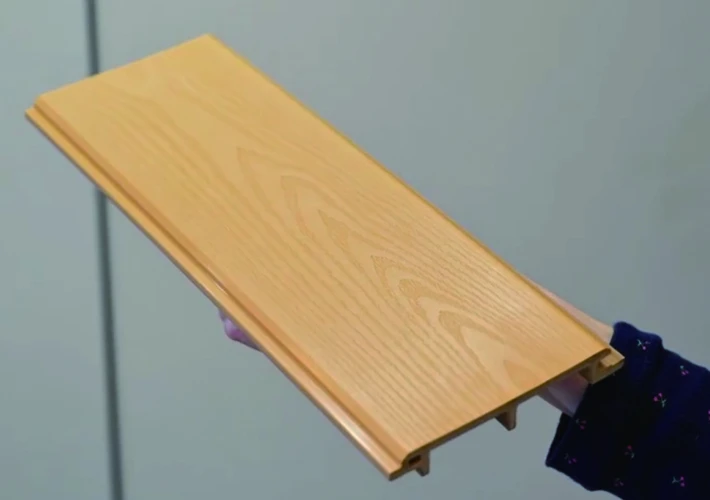
An ASA exterior panel generally consists of two functional components:
- ASA surface layer: Provides weather resistance, UV protection, color stability, and decorative appearance.
- Structural substrate: Provides rigidity, dimensional stability, mechanical strength, and the required installation characteristics.
Depending on the manufacturer’s product design, the substrate may be made from WPC, PVC-based composites, or other compatible materials.
For ASA-coated WPC exterior panels, the core commonly combines wood-based materials with thermoplastic polymers and selected additives. This composite structure helps balance the natural appearance of wood with the practical advantages of engineered materials.
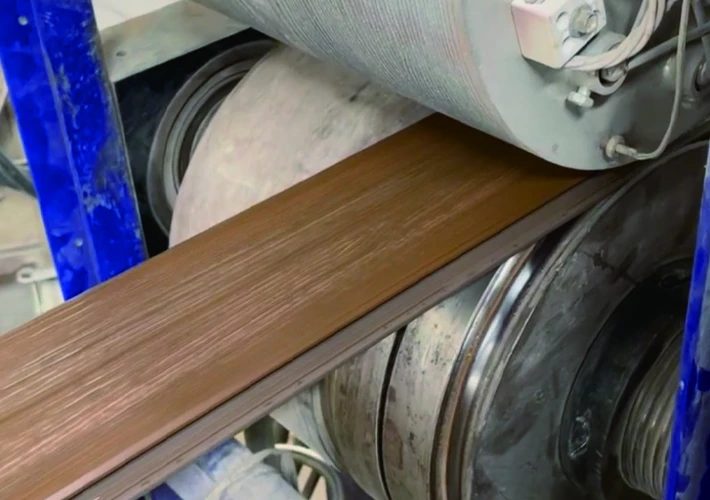
The ASA layer is integrated with the substrate through an appropriate manufacturing process, such as co-extrusion. The objective is to create a stable exterior surface that performs consistently during outdoor use.
Buyers should remember that not every ASA exterior panel has the same composition. The thickness of the ASA layer, substrate formulation, material compatibility, extrusion temperature, and manufacturing control can all influence the finished product.
Therefore, it is important to request detailed product specifications rather than evaluating panels based only on their appearance.
Key Characteristics of ASA Exterior Panels
1. Excellent UV and Weather Resistance
One of the primary reasons for choosing ASA exterior panels is their resistance to ultraviolet radiation and outdoor weathering.
Continuous sunlight can cause many traditional exterior materials to fade, crack, or deteriorate. An appropriately formulated ASA surface helps reduce these problems and supports better color retention.
This makes ASA exterior panels suitable for buildings in regions with strong sunlight, including Australia, the Middle East, Southeast Asia, and parts of North and South America.
2. Improved Color Stability
Exterior building materials are expected to maintain a consistent appearance throughout their service life.
ASA surface technology helps protect decorative colors from premature fading caused by sunlight and environmental exposure.
For commercial building projects, this is particularly valuable because exterior appearance contributes directly to architectural identity and long-term property presentation.
3. Moisture and Weather Resistance
ASA exterior panels with suitable composite substrates can offer good resistance to moisture-related outdoor conditions.
For WPC-based products, the composite structure helps reduce the moisture-related problems commonly associated with untreated natural wood.
However, water resistance should not automatically be interpreted as complete waterproofing under every installation condition. Panel joints, fixing systems, drainage design, and substrate properties remain important.
4. Low Maintenance Requirements
Compared with traditional timber cladding, ASA composite exterior panels generally require less maintenance.
They do not need regular painting, staining, or surface treatments simply to maintain their decorative finish.
Routine cleaning and periodic inspection are usually sufficient, although the actual maintenance schedule depends on the installation environment and product specifications.
5. Attractive Decorative Options
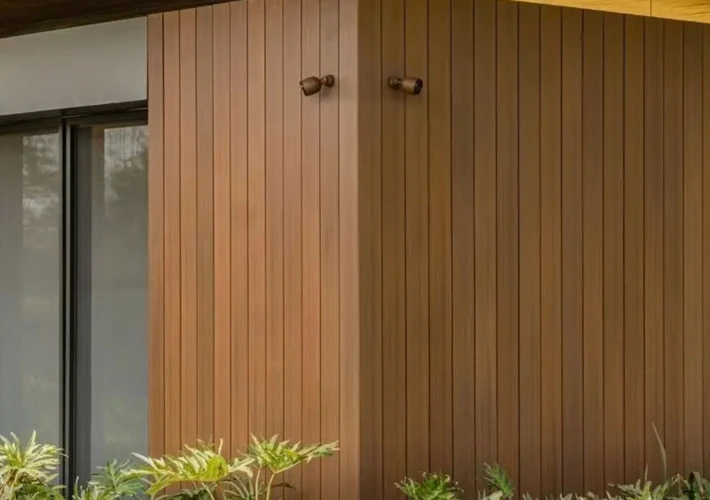
ASA exterior panels can be manufactured in different colors, textures, profiles, and dimensions.
Popular finishes include:
- Natural wood grain
- Teak-inspired finishes
- Walnut colors
- Grey and charcoal tones
- Contemporary solid colors
- Textured architectural finishes
These choices allow architects and contractors to coordinate exterior wall systems with windows, roofing materials, decking, fencing, and other architectural elements.
ASA Exterior Panels vs. Traditional Exterior Materials
| Comparison | ASA Exterior Panels | Traditional Timber | Standard WPC Panels |
|---|---|---|---|
| UV resistance | High, depending on formulation | Requires protective treatment | Depends on formulation |
| Color stability | Generally good | Can fade or weather | Varies by surface design |
| Moisture resistance | Depends on substrate and installation | Requires protection | Generally good |
| Maintenance | Relatively low | Relatively high | Relatively low |
| Appearance | Multiple decorative finishes | Natural wood appearance | Multiple finishes |
| Outdoor applications | Suitable | Suitable with maintenance | Suitable |
The comparison above represents general material characteristics. Actual performance depends on product composition, manufacturing quality, installation methods, and environmental exposure.
For buyers comparing different exterior materials, ASA exterior panels can be an attractive choice when UV resistance, decorative appearance, and reduced maintenance are important purchasing priorities.
Main Applications of ASA Exterior Panels in Residential and Commercial Projects
ASA exterior panels are used in different architectural environments because they combine decorative flexibility with outdoor-oriented material properties.
For distributors and project contractors, understanding these applications can help identify suitable products for local markets and specific construction requirements.
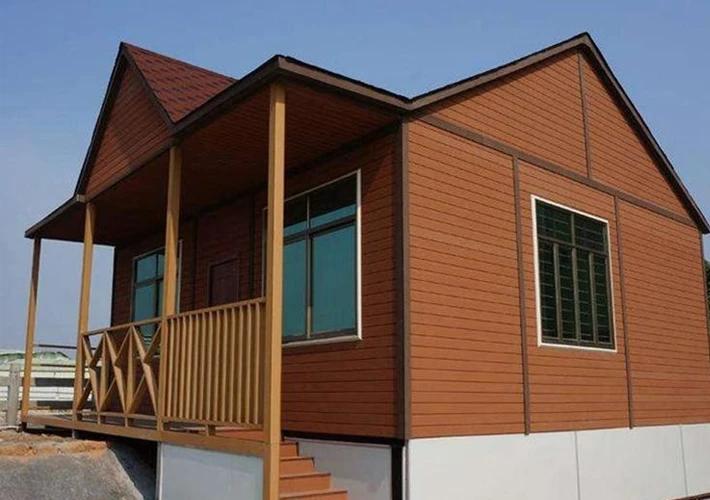
Residential Exterior Wall Cladding
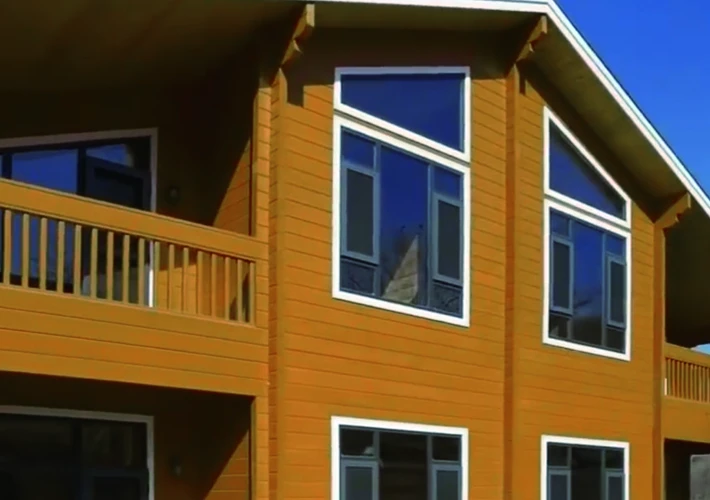
Residential exterior wall decoration is one of the most common applications for ASA-based composite panels.
Homeowners, developers, and architects often want exterior materials that create a natural wood appearance without requiring the same level of maintenance as traditional timber.
ASA exterior panels can be used for:
- House facade decoration
- Exterior feature walls
- Balcony wall cladding
- Garden building decoration
- Villa exterior renovation
- Residential entrance decoration
Wood-grain ASA panels are particularly suitable for projects that require a warm, natural appearance.
For modern residential buildings, grey, black, brown, and other contemporary colors can also create a clean architectural style.
Commercial Building Facades
Commercial buildings often require exterior materials that maintain a consistent appearance across large surfaces.
ASA exterior panels can be considered for:
- Office building facades
- Shopping centers
- Retail stores
- Hotel exterior decoration
- Restaurant facades
- Commercial entrance areas
In these applications, product consistency is especially important.
A manufacturer should be able to maintain consistent colors, panel dimensions, surface textures, and production quality across multiple batches.
For large commercial projects, buyers should also evaluate the panel’s mechanical properties, fixing system, fire performance requirements, and compatibility with the building’s facade design.
Hotels and Hospitality Projects
Hotels, resorts, restaurants, and other hospitality facilities often use exterior decorative materials to create a recognizable architectural identity.
ASA exterior panels can be used for exterior feature walls, entrance decoration, outdoor building facades, and selected covered outdoor spaces.
Wood-effect finishes are especially useful for hospitality projects that want to create a natural and comfortable atmosphere.
For hotel contractors and FF&E-related project suppliers, combining ASA exterior panels with composite decking, fencing, outdoor furniture, and other architectural materials can help create a coordinated outdoor design.
Outdoor Public and Recreational Buildings
ASA composite panels may also be suitable for selected recreational and public building applications.
Examples include:
- Clubhouses
- Sports facilities
- Garden structures
- Outdoor service buildings
- Recreational centers
- Landscape architecture projects
For these projects, buyers should consider sunlight exposure, moisture conditions, installation requirements, and expected traffic or impact levels.
Why Application Requirements Matter
Different applications require different product specifications.
A residential decorative wall panel may prioritize appearance and installation convenience, while a commercial facade project may require additional testing, engineering documentation, fire performance information, and stricter dimensional tolerances.
A reliable manufacturer should first understand the project requirements before recommending a product.
This is one reason why direct communication with a factory is important for B2B buyers.
How to Evaluate the Quality of an ASA Exterior Panel Manufacturer
Selecting a reliable manufacturer is one of the most important steps in the purchasing process.
Two factories may offer products with similar appearances but significantly different material formulations, production processes, and long-term performance.
For international importers, evaluating the manufacturing source is more important than simply choosing the lowest quotation.
The following factors can help buyers assess an ASA exterior panel factory.
1. Examine the ASA Surface Layer
The ASA surface layer plays a central role in the outdoor performance of the product.
Buyers should ask manufacturers about:
- ASA material formulation
- Surface layer thickness
- UV resistance testing
- Color retention performance
- Surface bonding quality
- Weathering test reports
A professional factory should be able to explain how the ASA layer is integrated with the structural substrate.
It is also advisable to request physical samples to evaluate surface quality, texture, color consistency, and edge finishing.
Do not assume that every product marketed as ASA exterior panel has the same ASA content or weather resistance.
2. Check the Substrate Composition
The substrate determines many of the panel’s structural characteristics.
For ASA WPC exterior panels, buyers should understand the basic formulation and manufacturing specifications.
Relevant factors include:
- Wood fiber or wood powder composition
- Polymer type
- Additive system
- Density
- Mechanical strength
- Dimensional stability
- Water absorption characteristics
A balanced formulation is essential.
An unsuitable substrate can cause problems such as excessive expansion, deformation, cracking, or poor surface bonding.
The manufacturer should be able to provide relevant technical information and explain how the substrate is designed for outdoor applications.
3. Evaluate Manufacturing Technology
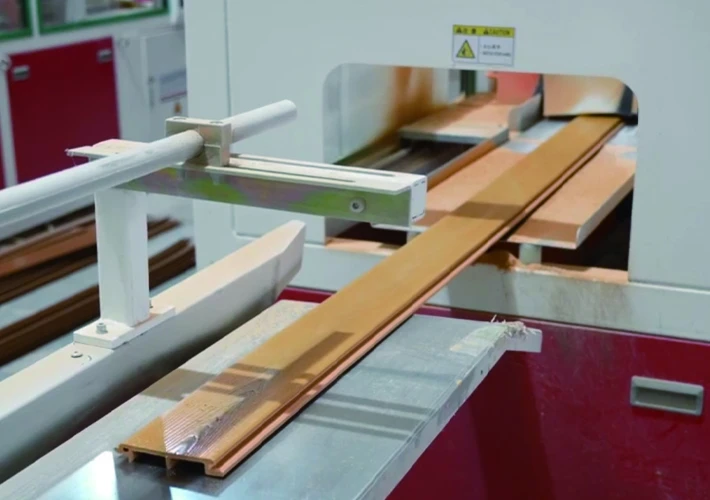
The production process has a direct influence on finished product quality.
For ASA co-extruded panels, extrusion technology is particularly important because the ASA surface and structural core must form a stable composite structure.
A professional manufacturer should have suitable extrusion equipment, controlled processing conditions, and experienced production personnel.
Important manufacturing considerations include:
- Raw material preparation
- Temperature control
- Extrusion pressure
- Surface layer consistency
- Cooling procedures
- Dimensional calibration
- Cutting accuracy
- Finished product inspection
Buyers should ask whether the manufacturer produces the products directly or purchases finished panels from another supplier.
Working with an actual production factory generally provides better communication regarding product formulation, customized specifications, production scheduling, and quality management.
4. Review Quality Control Procedures
A reliable factory should have a systematic quality inspection process rather than relying only on final visual inspection.
A complete quality control system may include several stages.
Incoming Material Inspection
Raw materials should be checked before entering production.
This helps identify inconsistencies in polymer materials, ASA components, wood-based materials, and additives.
Production Process Inspection
Production personnel should monitor extrusion conditions, surface appearance, dimensions, and product consistency.
Finished Product Inspection
Finished panels should be checked for:
- Length and width
- Thickness
- Surface defects
- Color consistency
- Edge quality
- Structural integrity
- Packaging condition
Batch Inspection
For bulk orders, manufacturers should maintain batch records and perform appropriate sampling inspections.
This is especially important for buyers who plan to distribute products through multiple dealers or use the panels across several construction projects.
5. Ask for Relevant Testing Documentation
Testing documents provide additional evidence of product performance.
Depending on the destination market and project requirements, buyers may request:
- UV aging test reports
- Artificial weathering test reports
- Water absorption test reports
- Mechanical property reports
- Dimensional stability reports
- Fire performance reports
- Environmental compliance documentation
Testing standards and certification requirements differ between countries.
For example, a product intended for a residential decorative application may have different documentation requirements from one used in a commercial building facade.
Buyers should verify that the testing documents correspond to the actual product being purchased, including its formulation, surface layer, and dimensions.
A test report for a different product model should not automatically be treated as evidence of the selected panel’s performance.
6. Evaluate Production Capacity and Delivery Reliability
A manufacturer may offer an attractive price but fail to deliver the required volume within the agreed schedule.
For wholesalers and large project contractors, production capacity is therefore an important selection criterion.
Ask the factory about:
- Monthly production capacity
- Available production lines
- Current production schedule
- Standard lead times
- Raw material availability
- Bulk order planning
- Peak-season production arrangements
For repeat orders, the supplier should also have a process for maintaining consistent product specifications between batches.
At Solidexwood, we recognize that stable production and reliable communication are important parts of long-term B2B cooperation.
Key Questions to Ask Before Choosing a China ASA Exterior Panel Factory
China is an important sourcing market for composite building materials because of its established manufacturing supply chains, industrial production capabilities, and competitive export structure.
However, not every supplier has the same manufacturing experience or product specialization.
When selecting an ASA exterior panel factory in China, international buyers should evaluate several important areas.
Is the Supplier a Real Manufacturer or a Trading Company?
The first question is whether the supplier directly manufactures the panels.
A trading company may provide access to multiple product categories, but it may have limited control over raw material formulation, production scheduling, and customized manufacturing.
A direct factory can often provide:
- More direct technical communication
- Better control over production specifications
- More flexible customization
- More transparent manufacturing information
- Easier coordination of bulk orders
- More efficient problem-solving
Buyers can request factory videos, production photographs, equipment information, and online factory inspections.
For larger orders, an independent factory audit or third-party inspection may also be appropriate.
Does the Factory Have Experience with International B2B Orders?
Export experience matters because international orders involve more than product manufacturing.
A professional export supplier should understand:
- International packaging requirements
- Container loading arrangements
- Export documentation
- Shipping coordination
- Product labeling
- Commercial invoices and packing lists
- Communication with overseas buyers
Different markets may also have specific requirements concerning product testing, labeling, and building material compliance.
A supplier familiar with export orders can help reduce communication problems and improve purchasing efficiency.
Can the Manufacturer Provide OEM and ODM Services?
Customization is increasingly important in the global exterior building materials market.
Distributors may want exclusive colors, while project contractors may need specific dimensions, surface textures, or installation profiles.
A capable ASA exterior panel manufacturer should be able to discuss:
- Customized panel lengths
- Different widths and thicknesses
- Wood-grain surface options
- Special color requirements
- Profile development
- Packaging customization
- Private-label branding
Not every customization is suitable for every production line. Buyers should confirm the technical feasibility, minimum order quantity, development cost, and lead time before placing an order.
Can the Supplier Maintain Consistent Quality Across Repeated Orders?
For distributors, consistency is essential.
If the first shipment has a different color, texture, or dimensional specification from the second shipment, it may create problems when combining inventory or supplying multiple projects.
A professional manufacturer should maintain documented product specifications and production records.
Buyers should confirm whether the factory can retain approved samples, standardize color references, and apply consistent inspection criteria to repeat orders.
Is the Quotation Transparent?
A professional quotation should include more than a single unit price.
Buyers should request details such as:
- Product model
- Material composition
- Dimensions
- Surface finish
- Color
- Unit price
- MOQ
- Packaging specifications
- Production lead time
- Payment terms
- Shipping terms
When comparing different factories, make sure that the quoted products have comparable specifications.
A cheaper panel may have a thinner ASA surface, a different substrate formulation, or a different density.
Without comparing the technical details, price comparisons can be misleading.
ASA Exterior Panel Specifications, Customization, and Purchasing Considerations
Before purchasing ASA exterior panels in bulk, importers should understand the product specifications that directly influence performance, transportation, installation, and overall project costs.
Important Product Specifications
The following table provides a practical checklist for B2B purchasing.
| Specification | What Buyers Should Check | Why It Matters |
|---|---|---|
| Panel dimensions | Length, width, thickness | Installation and project compatibility |
| ASA layer | Material and thickness | Outdoor surface performance |
| Substrate | WPC, PVC composite, or other material | Structural properties |
| Density | Manufacturer’s declared value | Weight and mechanical characteristics |
| Surface finish | Wood grain, smooth, textured | Decorative requirements |
| Color | Standard or customized | Project coordination |
| Water absorption | Tested product performance | Moisture-related suitability |
| UV resistance | Test method and results | Long-term outdoor exposure |
| Fire performance | Applicable test reports | Building code compliance |
| Packaging | Protective packaging and labeling | Transportation protection |
There is no single specification that is suitable for every project.
For example, a lightweight panel may be preferred for certain decorative applications, while a commercial exterior project may prioritize structural strength and specific installation requirements.
The best specification is the one that matches the intended application and local building regulations.
Customized Colors and Surface Textures
Appearance is an important selling point for ASA exterior panels.
Different markets have different design preferences.
In Australia and New Zealand, natural wood-inspired colors and contemporary grey finishes are popular choices in outdoor architectural design.
In Europe, architects and developers may prefer neutral colors, understated textures, and modern facade profiles.
In Southeast Asia, warm wood colors and weather-resistant outdoor materials can be attractive for residential and hospitality projects.
Middle Eastern projects may prioritize resistance to strong sunlight and high outdoor temperatures, together with colors that complement modern architectural styles.
For distributors, offering multiple colors and surface finishes can help build a more competitive product range.
Solidexwood can discuss customized product solutions according to the buyer’s market, project requirements, and order quantity.
Standard Products vs. Customized Products
| Item | Standard Products | Customized Products |
|---|---|---|
| Color | Existing color range | Custom color options |
| Dimensions | Available specifications | Negotiated specifications |
| Surface texture | Standard finishes | Selected custom textures |
| MOQ | Usually lower | May be higher |
| Development time | Generally shorter | May require additional time |
| Packaging | Standard packaging | Custom labeling and packaging |
For new distributors, starting with standard products can help reduce initial purchasing complexity.
For established importers or project contractors, customized specifications may create stronger differentiation.
MOQ and Bulk Purchasing
Minimum order quantity is another important purchasing consideration.
Factories may set different MOQs according to product profiles, colors, production methods, and customization requirements.
For standard ASA exterior panels, MOQ may be more flexible depending on available stock and production arrangements.
Customized colors, special dimensions, or new profiles may require higher minimum quantities.
Buyers should confirm:
- MOQ for standard products.
- MOQ for customized colors.
- Whether mixed colors are allowed.
- Whether mixed specifications can be loaded into one container.
- Whether sample orders are available.
- Whether repeat orders can use the same specifications.
A clear understanding of MOQ helps importers manage inventory and avoid unnecessary purchasing pressure.
Packaging and Container Loading
Exterior panels are often long products, making packaging and transportation planning particularly important.
A professional factory should consider:
- Panel length and bundle arrangement
- Protective film or surface protection
- Edge protection
- Pallet or bundle strength
- Moisture protection
- Loading efficiency
- Container space utilization
Poor packaging can lead to surface scratches, broken edges, deformation, or other transportation damage.
For international buyers, it is advisable to request packaging photographs and a proposed container loading plan before confirming a large order.
The factory should also clarify whether the quotation is based on EXW, FOB, CIF, or another agreed trade term.
ASA Exterior Panels vs. Other Exterior Cladding Materials
Choosing an exterior material requires evaluating not only the initial purchasing price but also long-term maintenance, appearance, durability, and installation requirements.
ASA exterior panels are one of several available options in the outdoor building materials market.
Understanding the differences can help importers recommend the right solution to their customers.
ASA Exterior Panels vs. Standard WPC Exterior Panels
Standard WPC exterior panels combine wood-based materials and thermoplastics to create composite products.
They are widely used for outdoor decoration because of their relatively low maintenance requirements and wood-like appearance.
However, not all WPC products offer the same UV and weathering performance.
ASA co-extruded exterior panels add a dedicated weather-resistant surface layer.
| Comparison | ASA Exterior Panels | Standard WPC Panels |
|---|---|---|
| Surface technology | ASA protective layer | Conventional composite surface |
| UV protection | Enhanced, formulation-dependent | Depends on formulation |
| Color retention | Generally improved | Varies by product |
| Decorative options | Multiple finishes | Multiple finishes |
| Maintenance | Low | Low |
| Initial cost | May be higher | Often more economical |
For buyers targeting markets with strong sunlight, ASA exterior panels may provide a more suitable solution when long-term surface appearance is a priority.
ASA Exterior Panels vs. Natural Wood Cladding
Natural timber remains attractive because of its authentic texture and traditional architectural appearance.
However, outdoor timber can require periodic painting, staining, sealing, or other maintenance.
It may also be affected by moisture, insects, fungal growth, and environmental exposure.
ASA composite exterior panels offer an engineered alternative that can reduce some of these maintenance requirements.
| Comparison | ASA Composite Panels | Natural Wood |
|---|---|---|
| Appearance | Wood-effect and other finishes | Authentic natural grain |
| Maintenance | Relatively low | Often requires regular treatment |
| Moisture behavior | Depends on substrate | Varies by wood species and treatment |
| UV performance | Designed for outdoor exposure | Can weather and change color |
| Material consistency | Manufactured specifications | Natural variation |
| Maintenance cost | Generally lower | Can be higher |
For projects that require a natural aesthetic but prefer lower maintenance, ASA wood-effect panels can be an alternative worth considering.
ASA Exterior Panels vs. PVC Exterior Panels
PVC exterior panels are used in many building decoration applications because they are lightweight and resistant to moisture.
However, the performance of PVC panels varies according to formulation, additives, structural design, and surface treatment.
ASA surface technology can provide additional benefits for outdoor exposure, particularly in applications where color stability and weathering resistance are important.
Buyers should compare actual test reports rather than relying exclusively on the material name.
How to Select the Right Material for Different Markets
For importers, market positioning is just as important as technical performance.
- Australia and New Zealand: Consider UV resistance, temperature variation, and long-term outdoor appearance.
- Europe: Evaluate product documentation, fire requirements, environmental regulations, and architectural design preferences.
- Middle East: Pay particular attention to sunlight exposure, high ambient temperatures, and surface durability.
- Southeast Asia: Consider humidity, rainfall, ventilation, and installation drainage.
- North America: Check applicable building codes, fire performance requirements, and product documentation.
A professional manufacturer should help buyers identify relevant product characteristics without making unsupported universal performance claims.
Why Choose Solidexwood as Your ASA Exterior Panel Manufacturer in China?
Finding the right factory is about building a reliable supply relationship rather than completing a single transaction.
For overseas wholesalers, distributors, and project contractors, a dependable supplier should provide stable product quality, competitive manufacturing costs, technical communication, and long-term cooperation opportunities.
Solidexwood is a China-based manufacturer and supplier of composite outdoor building materials, serving buyers who need practical solutions for exterior construction, landscaping, and outdoor architectural projects.
Our product range includes ASA decking, ASA cladding, ASA exterior panels, and other composite outdoor products.
Direct Factory Supply and Competitive Manufacturing
Working directly with a Chinese manufacturer can help international buyers establish a more efficient sourcing process.
Solidexwood focuses on factory-based supply and B2B cooperation.
By communicating directly with the manufacturing source, buyers can discuss specifications, product selection, customization, and bulk order arrangements more efficiently.
Direct factory cooperation can also reduce unnecessary intermediary costs and improve communication between the buyer and production team.
A Product Range for Outdoor Building Applications
For distributors and wholesalers, having access to related product categories can make sourcing more convenient.
Solidexwood provides composite outdoor material solutions, including:
- ASA exterior panels
- ASA cladding
- ASA decking
- WPC outdoor products
- Other composite architectural materials
Buyers can discuss product combinations according to their local market requirements and project needs.
For example, an importer developing an outdoor building materials portfolio may consider matching ASA exterior panels with composite decking and cladding products.
This can help create a more coordinated product offering for local dealers and contractors.
Customization for Different Markets
Different markets require different product specifications.
A distributor may need a specific wood-grain color to match local architectural preferences, while a project contractor may require special dimensions or a particular panel profile.
Solidexwood can discuss customization according to:
- Product dimensions
- Available colors
- Surface finishes
- Profile requirements
- Packaging specifications
- Private-label branding
The availability, MOQ, and production lead time of customized products should be confirmed according to the specific order.
B2B-Oriented Communication and Export Support
International purchasing requires clear communication at every stage.
Buyers need accurate product specifications, quotations, sample arrangements, production updates, and shipping information.
Solidexwood understands the needs of international importers, wholesalers, distributors, and construction project buyers.
We aim to provide practical support throughout the sourcing process, from initial product selection to bulk order coordination.
Long-Term Cooperation with Distributors and Project Contractors
For a professional building materials supplier, long-term cooperation is more valuable than one-time sales.
We welcome inquiries from:
- Building material importers
- Wholesale distributors
- Composite material dealers
- Exterior cladding suppliers
- Construction contractors
- Real estate developers
- Architectural project buyers
Whether you are expanding an existing product portfolio or sourcing ASA exterior panels for a specific project, Solidexwood can discuss suitable product solutions based on your requirements.
Frequently Asked Questions About ASA Exterior Panel Manufacturers in China
Q1: What is an ASA exterior panel?
An ASA exterior panel is a decorative or functional outdoor building panel featuring an Acrylonitrile Styrene Acrylate surface layer. It is designed to improve resistance to UV exposure, weathering, and color fading. The substrate may consist of WPC, PVC-based composites, or other compatible materials.
Q2: Are ASA exterior panels suitable for hot climates?
ASA exterior panels can be suitable for hot and sunny climates when their surface formulation and structural substrate are designed and tested for the intended environment. Buyers should request UV aging, heat resistance, and dimensional stability information from the manufacturer.
Q3: What is the difference between ASA cladding and standard WPC cladding?
The main difference is the surface technology. ASA cladding uses an ASA weather-resistant surface layer, while standard WPC cladding may have a conventional composite surface. ASA products are generally designed to offer improved outdoor color stability and weathering resistance, depending on formulation and manufacturing quality.
Q4: How long do ASA exterior panels last?
The service life depends on the ASA formulation, substrate composition, manufacturing quality, installation method, and environmental conditions. Buyers should avoid relying on a universal lifespan claim and should request product-specific weathering data and warranty information.
Q5: Can ASA exterior panels be customized?
Yes. Depending on the factory’s manufacturing capabilities, customization may include panel length, width, thickness, color, surface texture, and profile design. Buyers should confirm MOQ, tooling requirements, development costs, and lead times before ordering.
Q6: What is the MOQ for ASA exterior panels from China?
MOQ varies by manufacturer, product model, color, dimensions, and customization requirements. Standard products may have more flexible purchasing arrangements, while customized products generally require a higher MOQ. Contact the factory for a quotation based on your specifications.
Q7: How can I verify whether a Chinese ASA exterior panel supplier is a real factory?
Ask for factory videos, production line photographs, business information, manufacturing details, and relevant product test reports. You can also arrange a live video factory tour or an independent third-party factory inspection before placing a large order.
Q8: What documents should I request when importing ASA exterior panels?
Common purchasing and shipping documents include a commercial invoice, packing list, bill of lading, and certificate of origin where applicable. Depending on the destination market and project requirements, buyers may also need product technical data sheets, test reports, fire performance documentation, and environmental compliance documents.
Q9: Are ASA exterior panels waterproof?
The ASA surface provides good resistance to outdoor moisture, but overall water resistance also depends on the substrate, panel joints, fixing system, and installation details. Buyers should evaluate the complete product system rather than assuming that every ASA panel is completely waterproof under all conditions.
Q10: Why should I buy ASA exterior panels directly from a Chinese factory?
Direct factory sourcing can provide competitive manufacturing costs, better communication about product specifications, customization opportunities, and more direct coordination of bulk orders. It also allows buyers to establish a long-term relationship with the actual manufacturing source.
Conclusion: Choose a Reliable ASA Exterior Panel Factory for Long-Term Business
Choosing the right ASA exterior panel manufacturer in China requires a comprehensive evaluation of product quality, ASA surface technology, substrate composition, manufacturing processes, quality control, customization capabilities, and export experience.
A competitive quotation is important, but it should never be the only purchasing criterion.
For international importers, wholesalers, and project contractors, the right supplier should be able to provide consistent product specifications, relevant technical documentation, reliable production arrangements, and responsive communication.
ASA exterior panels offer an attractive solution for outdoor architectural applications where weather resistance, decorative flexibility, and reduced maintenance are important.
As a China-based supplier of composite outdoor building materials, Solidexwood welcomes inquiries from global distributors, importers, wholesalers, and project contractors.
If you are looking for an ASA exterior panel manufacturer in China, contact Solidexwood to discuss product specifications, colors, samples, customization, MOQ, and wholesale pricing.
Solidexwood – Your Reliable Partner for Composite Outdoor Building Materials.