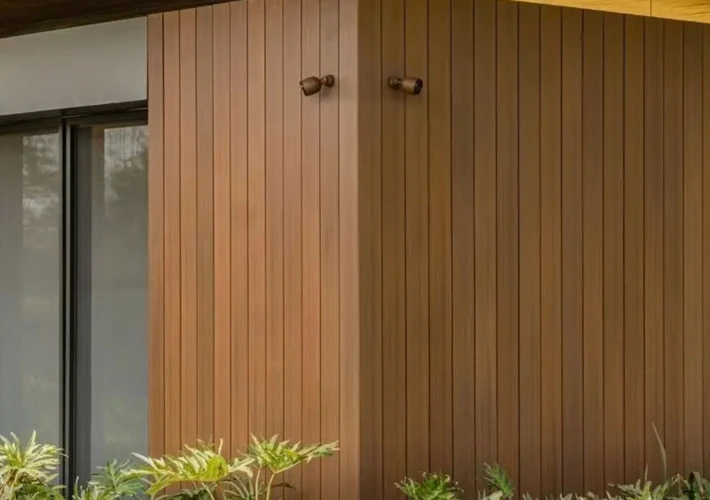
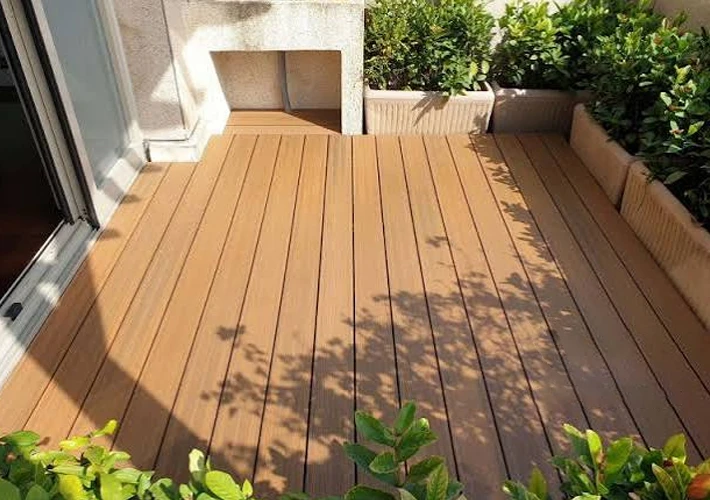
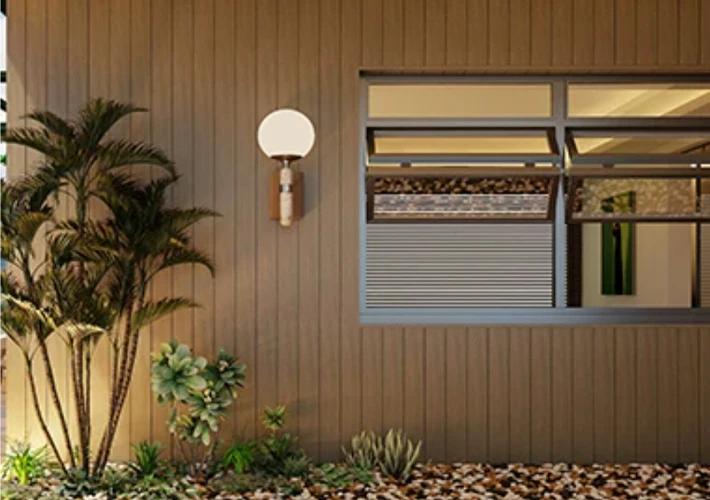
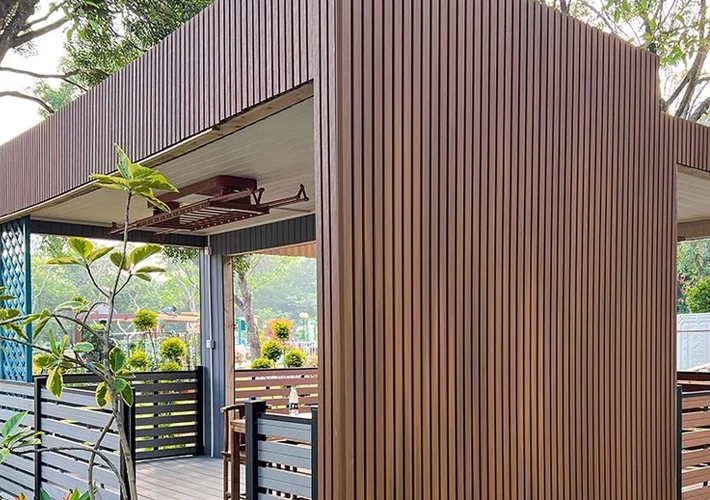
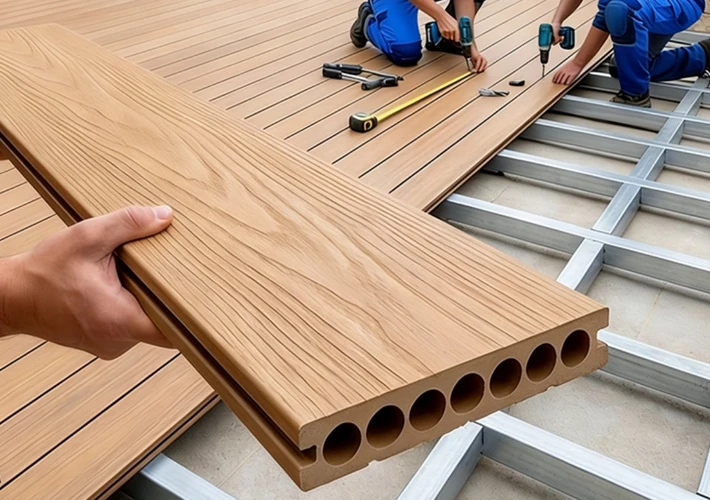
Outdoor decking materials have evolved significantly as architects, contractors, importers, and building material distributors look for products that combine long-term weather resistance, attractive appearance, manageable installation requirements, and competitive lifecycle costs. Traditional timber remains popular for its natural appearance, while conventional wood-plastic composite (WPC) decking offers an alternative with reduced routine maintenance. However, demanding outdoor environments create ongoing challenges, including UV exposure, color fading, moisture, temperature fluctuations, and surface deterioration.
Cellular PVC core ASA decking is an advanced outdoor decking solution that combines a micro-foamed PVC structural core with a weather-resistant ASA protective surface. The cellular core is designed to reduce material density and overall board weight, while the ASA layer provides additional protection against outdoor weathering and helps maintain surface appearance.
For international importers, wholesalers, building material distributors, architects, and commercial project contractors, understanding the structure of cellular PVC core ASA decking is essential before making a purchasing decision. The core formulation, ASA surface quality, board profile, extrusion process, and installation requirements all influence the final product’s performance.
As a China-based outdoor composite materials manufacturer, Solidexwood supplies ASA decking solutions for international wholesale and project applications. This guide explains how cellular PVC core ASA decking is constructed, its major benefits, where it can be used, and what professional buyers should evaluate when sourcing it from China.
What Is Cellular PVC Core ASA Decking?
Cellular PVC core ASA decking is an outdoor decking product made with a cellular, or micro-foamed, polyvinyl chloride (PVC) core and an outer protective layer of ASA, which stands for acrylonitrile styrene acrylate.
These two materials serve different purposes. The PVC core forms the main body of the decking board and contributes to its stiffness, dimensional characteristics, and structural performance. The ASA surface layer is engineered to improve resistance to sunlight, weathering, and surface aging.
The term “cellular” refers to the small cells formed inside the PVC material during a controlled foaming process. Rather than consisting entirely of dense, solid PVC, the core contains a cellular structure that reduces its density.
A typical cellular PVC core ASA decking board can be understood through the following components:
- ASA protective surface: The exterior layer provides weather-resistant surface protection and supports color and appearance retention.
- Cellular PVC core: The micro-foamed structural body provides the board’s shape, stiffness, and functional properties while reducing material density.
- Decking profile: The overall cross-sectional design determines board dimensions, installation compatibility, stiffness, drainage characteristics, and fastening options.
The exact construction varies by manufacturer. Some products use different PVC formulations, ASA cap thicknesses, surface textures, or profile geometries. Buyers should therefore request the technical data sheet for the specific model rather than assuming all cellular PVC core ASA decking products have identical properties.
How Is It Different from Conventional WPC Decking?
Conventional WPC decking generally combines wood fibers or wood flour with thermoplastic polymers and additives. Its properties depend on the polymer type, wood content, manufacturing process, and profile structure.
Cellular PVC core ASA decking uses a different material approach. In a PVC-based cellular system, the core is based on PVC rather than relying primarily on a conventional wood-plastic formulation. A protective ASA surface is then integrated with the core.
This distinction can be important for buyers comparing materials for humid environments, high-UV markets, commercial terraces, and projects where reduced board weight is desirable.
However, cellular PVC core ASA decking is not automatically superior to every WPC product. Product quality depends on the complete formulation, extrusion technology, surface construction, mechanical properties, and installation conditions.
For procurement teams, the most useful comparison is between verified technical specifications rather than broad material labels.
Why Is This Structure Relevant to B2B Buyers?
The construction of a decking board affects more than its appearance. It can influence freight costs, handling efficiency, installation labor, structural loading, maintenance planning, and replacement requirements.
For importers and distributors, understanding the structure also helps explain the product’s value to customers. A well-positioned cellular PVC core ASA decking product can serve markets that require a premium-looking outdoor material with an emphasis on weatherability and lower routine maintenance.
For architects and project contractors, the key consideration is whether the selected board meets the project’s loading, environmental, safety, and installation requirements.
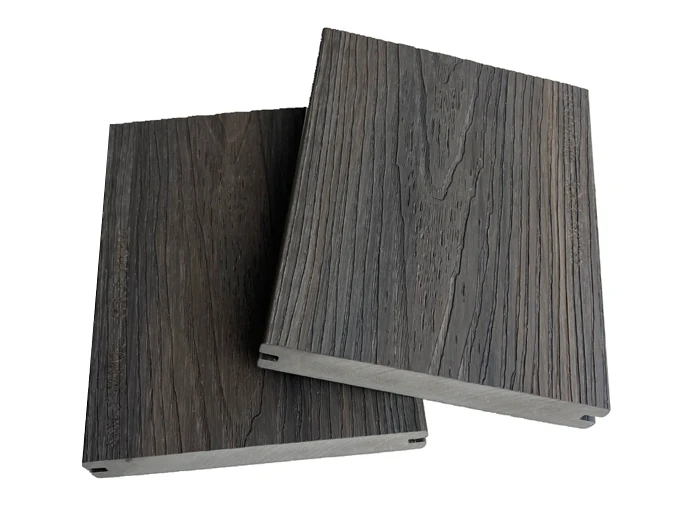
Understanding the Structure: Cellular PVC Core and ASA Surface
The core and the protective surface work together, but each has a distinct function. Evaluating them separately helps buyers assess product quality more accurately.
Cellular PVC Core: The Structural Foundation
PVC is widely used in construction products because of its useful combination of processability, moisture resistance, and durability. In cellular PVC decking, a controlled foaming process creates a lower-density internal structure.
The resulting core is designed to balance weight reduction with the stiffness and strength required for the intended decking application.
The principal considerations include:
Density and weight
A cellular structure can reduce material density compared with a comparable solid polymer profile. Lower board weight can make products easier to move, store, handle, and install.
For manufacturers and importers, reduced weight may also improve logistics efficiency, although the actual benefit depends on board dimensions, packing configuration, container payload limits, and the total number of boards shipped.
Stiffness and load performance
The core must provide sufficient stiffness for the specified application. Cellular construction alone does not establish load-bearing capacity. Board thickness, internal cell geometry, profile design, material formulation, support spacing, and fastening conditions all influence performance.
Buyers should request relevant mechanical test data and installation instructions, particularly for public walkways, elevated decks, commercial terraces, and other areas exposed to regular foot traffic.
Moisture resistance
PVC-based construction can offer advantages in moisture-exposed environments because the core does not depend on natural wood fibers for its structure. However, this does not mean that the entire installed decking system is automatically waterproof.
Water can still collect around fasteners, joints, supporting structures, and poorly designed drainage details. Installation and maintenance remain important.
Dimensional stability
Outdoor decking expands and contracts as temperatures change. The core formulation and profile design influence how a board responds to these variations.
Manufacturers should specify appropriate expansion gaps, fastening methods, and installation temperatures. These instructions become particularly important in regions with large daily or seasonal temperature changes.
ASA Surface Layer: Protection Against Outdoor Exposure
ASA is an engineering thermoplastic valued for outdoor weatherability and resistance to UV-related degradation. In decking applications, it serves as a protective outer layer designed to help preserve the board’s surface appearance.
The ASA layer can contribute to several performance characteristics.
UV and weathering resistance: Outdoor decking receives prolonged exposure to sunlight, rain, humidity, and temperature changes. ASA is selected for its weather-resistant properties, helping the surface withstand environmental exposure.
Color retention: Surface fading is an important concern in outdoor projects, especially in high-UV regions. The ASA formulation, pigment selection, layer quality, and manufacturing consistency all affect color stability.
Surface appearance: ASA decking can be manufactured with wood-inspired colors and embossed textures, allowing designers to coordinate the deck with exterior cladding, railings, outdoor furniture, and surrounding architecture.
Resistance to common outdoor exposure: The protective layer is designed to help the surface withstand environmental aging and ordinary outdoor use. Actual resistance to scratching, staining, cleaning agents, and abrasion depends on the specific product formulation and testing.
For B2B buyers, ASA cap quality should not be judged by color or appearance alone. Ask the supplier about cap-layer construction, bonding integrity, UV-weathering results, color consistency, and quality-control procedures.
How Co-Extrusion Connects the Two Layers
Co-extrusion is a manufacturing process in which two compatible material streams are extruded together to form a composite profile.
For ASA decking, the PVC-based core and ASA surface are processed so that they form an integrated board. When the materials and process parameters are properly controlled, this creates a consistent surface-to-core construction without requiring the ASA layer to function as a separately applied decorative coating.
Manufacturing control is essential. Material compatibility, extrusion temperature, flow stability, line speed, cooling, calibration, and dimensional inspection can all influence the final profile.
A professional supplier should be able to explain the manufacturing process and describe how it checks board dimensions, surface appearance, and product consistency between batches.
For Solidexwood customers, confirming these production details before ordering helps align the selected decking specification with the intended market and project requirements.
Key Benefits of Cellular PVC Core ASA Decking
The combination of a cellular PVC core and an ASA protective surface offers several potential benefits for commercial and wholesale applications. The value of each benefit depends on the actual product specification and the conditions in which the decking will be installed.
Benefit 1: Reduced Board Weight
One of the principal advantages of cellular PVC construction is the potential to reduce board density.
Compared with a heavier board of similar dimensions, a lighter cellular profile can offer practical advantages throughout the supply chain.
For manufacturers, reduced material density may support more efficient product design. For distributors and importers, lower unit weight can simplify handling and warehouse operations. For contractors, lighter boards can be easier to carry, position, cut, and install.
Solidexwood positions its PVC micro-foamed core ASA decking as a lighter alternative to its earlier-generation PE co-extruded decking. Its published product information reports a weight reduction of approximately 40% compared with that earlier product generation.
This figure applies to the manufacturer’s stated comparison and should not be treated as a universal difference between every cellular PVC and PE decking product. Buyers should request the actual weight per meter or per board for the specific models under consideration.
When comparing products, consider both board weight and structural performance. A lower-density profile must still meet the load requirements of the intended installation.
Benefit 2: Improved Outdoor Weatherability
Outdoor decking is continuously exposed to environmental conditions that can affect appearance and service performance.
Strong sunlight may contribute to color fading and polymer degradation. Rain and humidity can accelerate deterioration in susceptible materials, while temperature changes create repeated expansion and contraction.
The ASA surface in cellular PVC core ASA decking is designed to improve resistance to outdoor weathering.
This can be particularly relevant to projects in Australia, the Middle East, Southeast Asia, and other regions where strong sunlight or challenging weather conditions influence material selection.
Nevertheless, climate suitability should be established through the manufacturer’s technical data and relevant test reports. Weathering performance varies with resin quality, pigment selection, cap construction, extrusion quality, and the duration and conditions of exposure.
For projects in high-UV markets, ask suppliers to provide available UV-weathering test results and explain the test method, exposure period, and evaluation criteria.
Benefit 3: Better Color Stability Potential
Color consistency is important for both commercial projects and distribution businesses.
A hotel may require the same decking color across multiple outdoor areas. A distributor may need to reorder a particular color months after the original shipment. A contractor may need additional boards to complete a project without creating visible differences between installed sections.
ASA is valued for its outdoor color stability, and its protective surface can help reduce the visual deterioration associated with prolonged weather exposure.
However, no outdoor material should be assumed to retain its original color indefinitely. All products may experience some appearance changes depending on their formulation, exposure, maintenance, and installation environment.
Before placing a large order, buyers should request samples and confirm the manufacturer’s color-control process. Where color matching across future shipments is critical, ask whether production references, approved samples, and batch records can be retained.
Benefit 4: Moisture-Resistant Construction
Moisture is a major consideration for decks around swimming pools, resorts, outdoor restaurants, coastal properties, and landscaped commercial developments.
A PVC-based cellular core offers a material structure that does not rely on natural wood fibers for its primary composition. This can reduce concerns associated with wood-related decay and moisture-driven deterioration.
The ASA surface provides an additional protective exterior, but the board should not be treated as a complete waterproofing system unless the manufacturer has designed and tested it for that specific function.
Decks still require proper drainage, suitable substructure materials, appropriate clearances, and correct installation details.
For poolside and other wet-area applications, buyers should also verify slip performance under relevant conditions. A textured surface alone does not establish compliance with a particular slip-resistance standard.
Benefit 5: Lower Routine Maintenance Requirements
Natural timber decking may require periodic staining, sealing, sanding, or replacement of damaged sections, depending on the timber species, finish, climate, and maintenance plan.
Cellular PVC core ASA decking is designed to reduce the need for several of these routine maintenance activities. Its protective polymer surface does not require the same type of timber preservative treatment as untreated natural wood.
Typical maintenance may involve removing dust, leaves, and other debris and cleaning the surface with products approved by the manufacturer.
The actual maintenance schedule depends on environmental exposure and use. Coastal salt, food spills, grease, pollution, and heavy foot traffic may require more frequent cleaning.
For hotels, resorts, and commercial property managers, reduced maintenance requirements can help simplify operating procedures. For distributors, the ability to offer a low-maintenance alternative can be a useful product-positioning advantage.
Avoid describing the decking as completely maintenance-free unless that wording is explicitly supported by the manufacturer’s warranty and care instructions.
Benefit 6: Wood-Inspired Appearance and Design Flexibility
Many outdoor projects require the visual warmth of timber without relying exclusively on natural wood.
ASA decking can be manufactured in different colors, surface textures, and profile designs to complement contemporary, traditional, coastal, and resort-style architecture.
Depending on the available product range, buyers may select colors inspired by teak, walnut, grey weathered wood, or other common exterior finishes.
Embossed textures can add visual depth and help create a more natural-looking deck surface. The board profile and edge details also influence the finished appearance.
For architects and contractors, these options make it easier to coordinate decking with exterior wall cladding, pergolas, garden furniture, facade colors, and landscape design.
Importers and distributors can benefit from a carefully selected color range that addresses the preferences of their target markets without creating unnecessary inventory complexity.
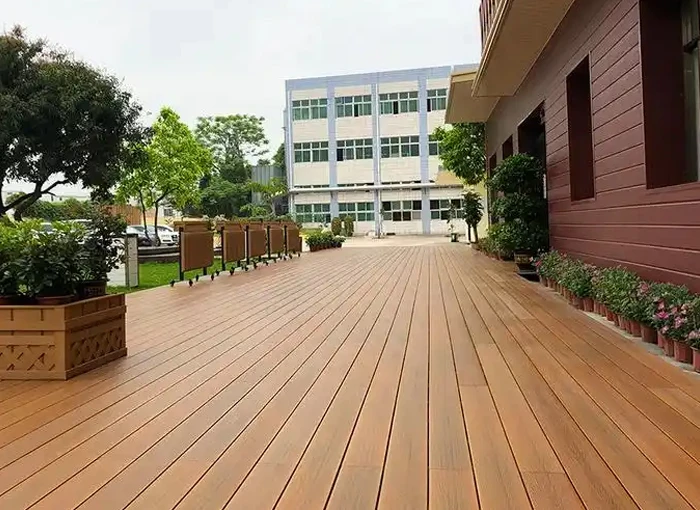
Benefit 7: Potential Lifecycle Cost Advantages
The purchase price per board is only one part of the total cost of an outdoor decking project.
A more complete assessment considers:
- Initial material cost.
- Freight and handling costs.
- Installation labor.
- Required supporting structures and fasteners.
- Routine cleaning and maintenance.
- Expected replacement requirements.
- Warranty terms and service support.
Cellular PVC core ASA decking may offer lifecycle cost advantages when its reduced maintenance requirements and other performance characteristics align with project needs.
However, the result is not automatic. A premium product may have a higher initial purchase price, and its economic advantage depends on the project environment, expected service life, installation quality, and maintenance costs.
For professional buyers, comparing total installed cost and expected maintenance expenditure provides a more useful basis for decision-making than comparing product prices alone.
Applications of Cellular PVC Core ASA Decking
Cellular PVC core ASA decking can be considered for a range of outdoor environments where a wood-inspired appearance, weather-resistant surface, and manageable maintenance requirements are important.
The suitability of each application depends on structural design, local regulations, traffic levels, drainage conditions, and the manufacturer’s product specifications.
Hotels and Resorts
Hotels and resorts often use decking to connect buildings with landscaped outdoor spaces.
Typical applications include:
- Resort terraces.
- Outdoor dining areas.
- Garden seating platforms.
- Guest recreation spaces.
- Rooftop leisure areas.
- Walkways connecting outdoor facilities.
For hospitality projects, appearance consistency is especially important. The decking should coordinate with exterior finishes, landscaping, outdoor furniture, and the property’s overall design.
The potential for reduced routine maintenance can also be attractive to property operators who need to maintain outdoor spaces without frequent refinishing.
When specifying decking for hotels, procurement teams should confirm slip performance, structural loading, cleaning requirements, fire-related requirements where applicable, and warranty coverage.
Swimming Pool Surrounds
Poolside environments combine frequent water exposure with foot traffic and regular cleaning.
Cellular PVC core ASA decking may be suitable for pool surrounds when the selected product meets the project’s requirements for wet-area use, slip resistance, drainage, and structural performance.
Buyers should ask for test results relevant to the intended wet conditions rather than relying on general claims that the board is non-slip.
The supporting structure must also be designed to manage water and allow appropriate ventilation. Fasteners and other installation components should be suitable for the environment, particularly where chlorinated water or coastal conditions are involved.
Residential Balconies and Terraces
Balconies and terraces benefit from materials that balance appearance, manageable weight, and installation practicality.
A cellular core may offer a weight advantage compared with a heavier alternative of similar dimensions, but this does not remove the need for a qualified assessment of the balcony’s load capacity.
Projects should verify local building requirements, waterproofing interfaces, drainage arrangements, and suitable fixing details.
The board profile should also be compatible with the intended support spacing and available installation system.
Commercial Restaurants and Outdoor Seating Areas
Restaurants, cafés, and hospitality venues use outdoor decking to create attractive spaces for customers.
These locations may experience frequent foot traffic, furniture movement, food spills, grease, and repeated cleaning.
ASA decking can be considered where the surface characteristics, cleaning requirements, and expected traffic are compatible with the product specification.
Procurement teams should request information about surface cleaning, stain resistance, abrasion performance, and the use of approved cleaning agents.
Where chairs, tables, and service equipment create concentrated loads, the board’s structural properties and support layout should be checked carefully.
Rooftop Decks and Urban Developments
Rooftop terraces are common in hotels, office developments, apartment buildings, and commercial leisure facilities.
For these projects, weight, drainage, maintenance access, and the supporting structure are important considerations.
A lighter cellular decking board may help reduce the weight of the decking material itself, but the complete rooftop system also includes the substructure, fasteners, furniture, planters, occupants, and other imposed loads.
The design must account for the roof’s waterproofing membrane, drainage paths, fire requirements, wind exposure, and access for inspection.
Decking boards should never be installed in a way that compromises the building’s waterproofing system.
Coastal and High-UV Environments
Coastal properties and regions with intense sunlight can place additional demands on outdoor building materials.
ASA’s weather-resistant characteristics make cellular PVC core ASA decking a product worth evaluating for these markets.
However, coastal suitability should not be interpreted as universal resistance to salt exposure, and high-UV suitability should be supported by appropriate weathering evidence.
For projects near the sea, buyers should confirm the corrosion resistance of fasteners and substructure components, while checking the manufacturer’s recommendations for cleaning and maintenance.
For high-UV regions, color stability, surface aging, and temperature-related movement should be included in the technical evaluation.
Cellular PVC Core ASA Decking vs. WPC, PE Composite, and Traditional Timber
Professional buyers frequently compare several decking materials before selecting a product for importation or project installation.
The following table provides a general comparison. It is intended as a starting point for procurement rather than a substitute for product-specific technical data.
| Evaluation factor | Cellular PVC core ASA decking | Conventional WPC decking | PE-based capped composite decking | Natural timber decking |
|---|---|---|---|---|
| Main structure | Cellular PVC core with ASA surface | Wood fibers and thermoplastic polymer | Typically a PE-based composite core with a protective cap | Natural wood |
| Board weight | Can be reduced through cellular construction | Varies by formulation and profile | Varies by formulation and profile | Depends on wood species and moisture |
| UV performance | ASA surface designed for outdoor weatherability | Depends on polymer, pigments, and surface treatment | Depends on cap material and formulation | Depends on species, coating, and maintenance |
| Moisture considerations | PVC-based core offers moisture-resistant construction | Depends on wood content, polymer, and profile | Depends on core composition and cap integrity | Depends on species, treatment, and exposure |
| Maintenance | Generally low routine maintenance | Generally lower than untreated timber | Generally lower than untreated timber | May require periodic treatment or refinishing |
| Appearance options | Multiple colors and textures may be available | Multiple colors and textures may be available | Multiple colors and textures may be available | Natural grain and species-specific appearance |
| Main purchasing consideration | Core quality, ASA surface, density, and mechanical performance | Wood-polymer formulation and moisture performance | Core composition, cap quality, and bonding | Species, grading, treatment, and maintenance |
Is Cellular PVC Core ASA Decking Better Than WPC?
The answer depends on the application.
Traditional WPC decking can be an effective choice when its composition, structural properties, and weathering performance meet the project’s needs. Cellular PVC core ASA decking may be attractive when buyers prioritize a PVC-based core, reduced board weight, and a weather-resistant ASA surface.
The two products should be compared using measurable criteria, including flexural properties, density, water absorption, thermal movement, weathering test results, and warranty conditions.
Is It Better Than PE-Based Capped Composite Decking?
Both products can use a protective outer surface, but the core material and surface formulation differ.
A cellular PVC core can reduce board density through controlled foaming, while an ASA surface is selected for its outdoor weatherability. A PE-based capped composite product may have different structural, weight, and processing characteristics.
Neither category guarantees a specific service life or performance level without product-specific evidence.
For importers, requesting comparable test reports and samples is the most reliable way to evaluate the differences.
Is It a Replacement for Natural Timber?
Cellular PVC core ASA decking can be an alternative to natural timber where low routine maintenance and consistent manufactured profiles are priorities.
However, it does not reproduce every characteristic of real wood. Natural timber has unique grain variation, tactile properties, and material authenticity that some projects specifically require.
The correct choice depends on the design brief, budget, maintenance strategy, environmental conditions, and material preferences of the project owner.
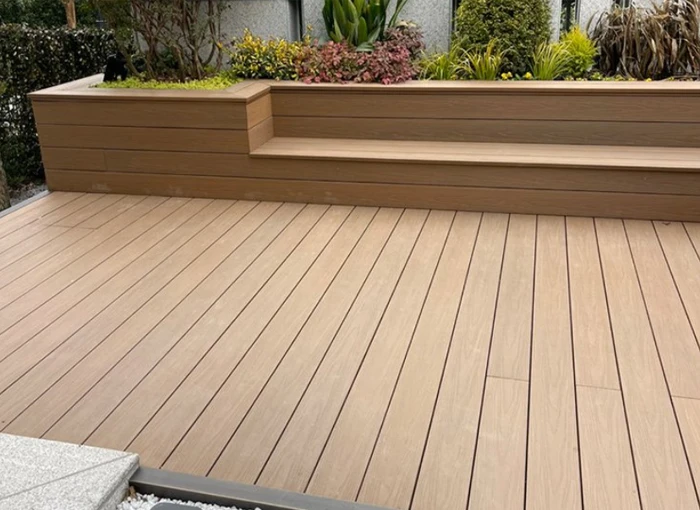
How to Choose a Reliable Cellular PVC Core ASA Decking Manufacturer in China
Selecting the right supplier is as important as selecting the right decking structure. For overseas buyers, the manufacturer influences product consistency, technical support, customization, delivery planning, and the reliability of repeat orders.
Verify the Core and Surface Specifications
Start by asking the supplier to confirm the actual construction of the product.
Important information includes:
- Core material and whether the core is cellular or solid.
- Board density and weight per meter.
- ASA surface construction and available thickness information.
- Overall board dimensions and dimensional tolerances.
- Available colors and surface textures.
- Mechanical properties and relevant test results.
- Recommended installation method.
- Warranty and maintenance requirements.
Do not assume that every product advertised as ASA decking uses the same core formulation. Some manufacturers use wood-plastic composite cores, while others use PVC-based cellular structures.
For Solidexwood buyers, identifying the exact model and specification at the beginning of the purchasing process helps prevent confusion when comparing samples, quotations, and technical documentation.
Evaluate Production and Quality Control
A reliable factory should be able to explain how it controls production consistency.
For cellular PVC core ASA decking, useful quality-control checkpoints include raw material inspection, extrusion process monitoring, dimensional measurement, surface appearance checks, profile inspection, and packaging verification.
Ask how the factory manages defects, nonconforming products, and color consistency between production batches.
If the project requires third-party testing, confirm whether the supplier can provide existing reports or support an agreed testing process.
Buyers should also distinguish between a factory’s own quality-control records and independent certification. Each serves a different purpose.
Request Samples Before Bulk Orders
Samples allow importers, distributors, and project teams to examine the product before committing to a large shipment.
A practical evaluation should cover:
- Surface texture and visual appearance.
- Color consistency under different lighting conditions.
- Board dimensions and profile geometry.
- Cut-edge appearance and core structure.
- Surface condition after ordinary cleaning.
- Compatibility with the intended fastening system.
For commercial projects, consider installing a small sample section using the proposed support spacing and fasteners. This can help identify installation questions before work begins on the full project.
Keep an approved reference sample when color matching and repeat orders are important.
Confirm Customization and OEM Capabilities
Different markets may require different colors, dimensions, lengths, textures, packaging, and branding.
For distributors and wholesalers, customization can help differentiate the product range and meet the preferences of local customers.
Before confirming an OEM or private-label order, clarify the available options, minimum order quantities, tooling requirements if applicable, sample approval process, lead time, and ownership of customized specifications.
Not every customization is commercially practical at every order volume. Ask the factory to separate standard products from options that require special production arrangements.
Assess Export Experience and Logistics Support
A dependable Chinese manufacturer should understand the practical requirements of international shipments.
Discuss the following before issuing a purchase order:
- Export packaging and edge protection.
- Pallet or bundle configuration.
- Container loading plans.
- Gross weight and net weight.
- Product identification and labeling.
- Production lead time.
- Inspection arrangements.
- Shipping documentation.
- Procedures for handling transport damage or quality claims.
For long decking boards, packaging and loading plans can influence freight efficiency and the condition of products upon arrival.
Importers should calculate the landed cost rather than relying exclusively on the factory’s unit price. Freight, insurance, customs duties, local handling, and inland delivery may materially affect the final cost.
Compare Suppliers on Total Value
A lower quotation does not necessarily represent the best purchasing decision.
When comparing manufacturers, evaluate product specifications, consistency, communication, lead time, technical support, customization options, and the supplier’s ability to support repeat orders.
For distributors, stable quality and reliable supply can be particularly important because a problem with one shipment may affect multiple customers.
For project contractors, clear installation guidance and prompt technical responses can reduce uncertainty during construction.
Solidexwood works with international B2B buyers seeking outdoor composite products for distribution and project applications. Buyers can discuss the intended market, required board specifications, color preferences, and order volume with the factory before finalizing a purchasing decision.
Installation, Maintenance, and Long-Term Performance Considerations
Even a well-manufactured decking board can perform poorly if the supporting structure, fastening system, or installation details are unsuitable.
Before installation, confirm the current instructions for the exact product model. Do not transfer installation details from a different brand or decking profile without checking compatibility.
Prepare the Supporting Structure
The substructure must provide adequate support and be appropriate for the project’s loads and environmental conditions.
Joist spacing should follow the manufacturer’s requirements and any applicable building regulations. Wider spacing than recommended can contribute to excessive deflection, movement, or damage.
The support structure should also provide appropriate drainage and ventilation. Water should not remain trapped beneath the decking for prolonged periods.
For rooftop installations, the design must preserve the integrity of the underlying waterproofing system.
Allow for Thermal Expansion
Polymer-based decking materials expand and contract as temperatures change.
The required expansion allowance depends on board length, material formulation, installation temperature, fastening arrangement, and local climate.
Installers should follow the manufacturer’s guidance for end gaps, side gaps, perimeter clearances, and board fixing. Failure to provide adequate movement allowances may lead to buckling, gaps, or other installation problems.
For long boards installed in high-temperature or high-UV regions, careful planning is particularly important.
Use Compatible Fasteners and Accessories
The fastening system should be compatible with the decking profile and supporting structure.
Depending on the product design, the installation may use face screws, concealed clips, or another approved fixing method.
Do not assume that a generic clip will fit every grooved board. Confirm compatibility, screw specifications, edge distances, and the required number of fixings.
For coastal or chemically exposed environments, evaluate the corrosion resistance of the fasteners and accessories as well as the decking boards.
Follow a Suitable Cleaning Routine
Routine maintenance generally begins with removing loose debris and cleaning the surface according to the manufacturer’s instructions.
Leaves, dust, food residue, and other contaminants should not be allowed to accumulate unnecessarily. Use compatible cleaning products and avoid aggressive chemicals or abrasive equipment unless expressly approved.
Where the decking is installed around pools, restaurants, or other demanding environments, establish a cleaning schedule that reflects the level of use and exposure.
Inspect the deck periodically for loose fasteners, drainage problems, damaged boards, or movement in the supporting structure.
Understand the Limits of the Material
Cellular PVC core ASA decking is designed for outdoor use, but its performance still depends on the conditions of installation.
The material should not be assumed to be fireproof, completely scratch-proof, universally slip-resistant, or suitable for every structural application.
Where a project has specific requirements for fire performance, accessibility, wet-area slip resistance, public loading, or chemical exposure, obtain the relevant documentation before specification.
Long-term performance is best supported by the combination of an appropriate product, correct installation, routine care, and compliance with the manufacturer’s instructions.
Frequently Asked Questions About Cellular PVC Core ASA Decking
What does cellular PVC core ASA decking mean?
It refers to decking manufactured with a cellular or micro-foamed PVC core and an ASA protective surface layer. The core provides the board’s main body and structural characteristics, while the ASA surface is designed to improve outdoor weatherability and appearance retention.
Is cellular PVC core ASA decking waterproof?
PVC-based construction provides moisture-resistant characteristics, but the term “waterproof” should be used carefully. The performance of the complete deck also depends on joints, fasteners, drainage, and the supporting structure. Confirm the manufacturer’s test data and installation instructions for the intended application.
Is cellular PVC core ASA decking suitable for high-UV climates?
It can be a suitable option to evaluate because ASA is valued for its weatherability and UV resistance. Buyers should request relevant weathering test results and verify the product’s suitability for the destination climate instead of relying on general marketing claims.
Does cellular PVC core ASA decking contain wood fibers?
Not necessarily. A PVC-based cellular core does not inherently require wood fibers, but formulations can vary by manufacturer. Buyers should request the material composition of the specific product to confirm whether wood fibers or other fillers are included.
Is it lighter than conventional composite decking?
A cellular core can reduce board density, but the actual weight difference depends on the profile dimensions, wall structure, formulation, and comparator product. Compare the manufacturer’s stated weight per meter or per board for a meaningful assessment.
Does ASA decking need painting or staining?
It is generally designed to avoid the routine painting or staining associated with many natural timber decking systems. Cleaning and inspection are still necessary, and any repair or refinishing requirements should follow the manufacturer’s guidance.
Can cellular PVC core ASA decking be used around swimming pools?
It may be suitable when the product is specified for that environment and meets the project’s requirements for slip resistance, drainage, structural performance, and maintenance. Ask for relevant test data and installation guidance before specifying it for a poolside project.
What should importers check before placing a bulk order?
Importers should confirm the core composition, ASA surface specification, board dimensions, weight, color, mechanical properties, test documentation, installation method, MOQ, lead time, packaging, container loading, and warranty. Samples and an approved technical specification should be agreed upon before production.
Why source cellular PVC core ASA decking from a Chinese manufacturer?
Working directly with a qualified factory can provide access to production information, product customization, samples, bulk pricing, packaging coordination, and export support. The most appropriate supplier is one that can demonstrate consistent manufacturing quality and provide specifications that match the requirements of the target market.
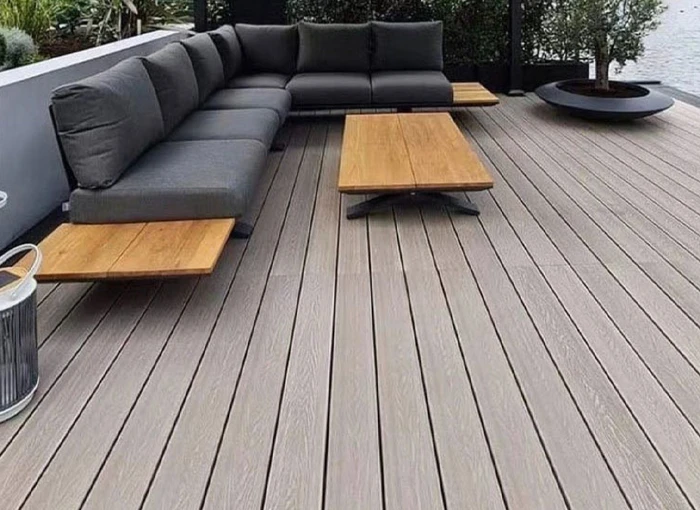
Conclusion: Source Cellular PVC Core ASA Decking from Solidexwood
Cellular PVC core ASA decking combines a micro-foamed PVC structural core with a weather-resistant ASA surface to create an outdoor decking solution designed around weight reduction, appearance retention, and manageable routine maintenance.
For importers, wholesalers, building material distributors, architects, and commercial project contractors, the material can be worth evaluating for hotels, resorts, outdoor restaurants, pool surrounds, terraces, rooftop leisure spaces, and other outdoor developments.
Its actual performance depends on the quality of the PVC core, the ASA surface construction, extrusion consistency, board profile, installation system, and environmental conditions. Buyers should therefore request technical specifications, compare relevant test results, inspect samples, and confirm installation requirements before committing to a large order.
As a China-based outdoor composite products manufacturer, Solidexwood provides ASA decking solutions for international B2B customers seeking factory-direct supply and project-oriented product support.
Whether you are developing a new decking range for your distribution business or sourcing materials for a commercial outdoor project, Solidexwood can help you evaluate available specifications, colors, samples, customization options, and bulk-order requirements.
Contact Solidexwood to discuss cellular PVC core ASA decking for your market or project. Request product details, confirm the technical specifications, and obtain a quotation based on your required dimensions, colors, order volume, and destination market.
Solidexwood — Outdoor Composite Solutions for Global Markets.