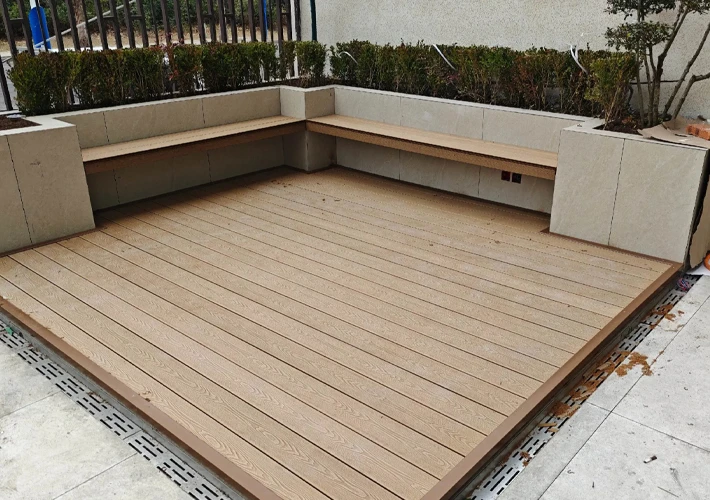
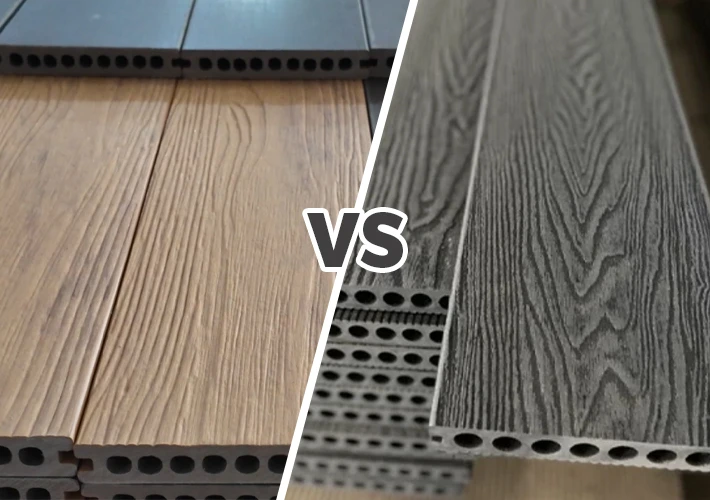
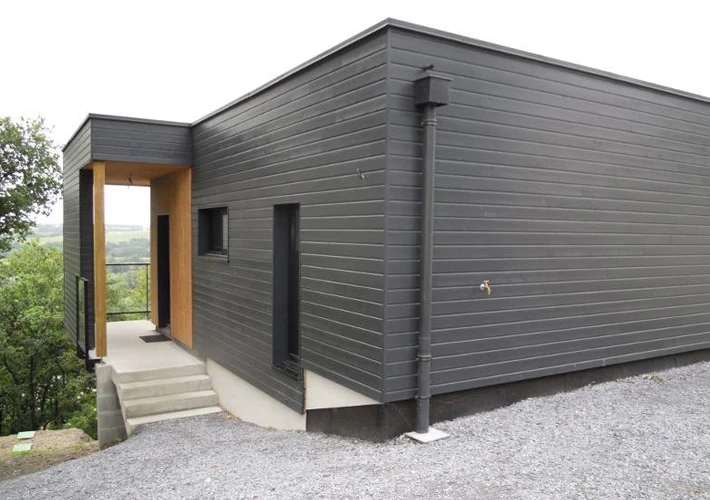
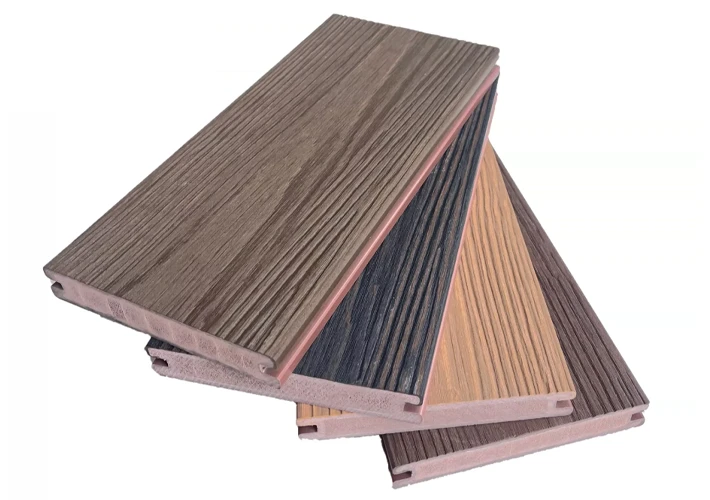
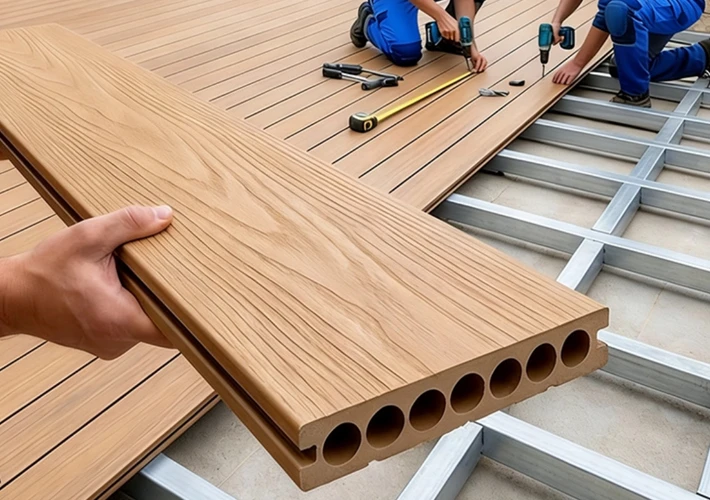
Choosing the right ASA exterior wall cladding supplier is an important decision for contractors, developers, architects, distributors, and building material importers. Exterior wall cladding is not simply a decorative product. It forms part of the building envelope, affects the appearance of a project, and must perform under outdoor conditions such as sunlight, rain, humidity, temperature changes, wind, and everyday environmental exposure.
For buyers sourcing ASA exterior wall cladding from China, supplier selection becomes even more important. Different factories may offer products with similar appearances but significant differences in raw materials, ASA surface technology, core construction, dimensional stability, color consistency, quality control, customization capabilities, packaging, and after-sales support.
A professional supplier should therefore be evaluated from more than just the quotation. The lowest unit price does not necessarily represent the lowest overall project cost. A reliable manufacturer should be able to provide consistent quality, stable production, suitable specifications, technical information, customized solutions, and dependable delivery.
This guide explains how to choose the right ASA exterior wall cladding supplier for residential, commercial, hospitality, villa, and other architectural projects, with a particular focus on buyers working with Chinese manufacturers.
What Is ASA Exterior Wall Cladding?
ASA exterior wall cladding is an outdoor wall finishing material designed to combine decorative appearance with improved resistance to environmental exposure. ASA refers to acrylonitrile styrene acrylate, a weather-resistant engineering plastic commonly used where resistance to sunlight and outdoor conditions is important.
In exterior wall cladding applications, an ASA surface layer can provide a durable decorative finish while the underlying composite structure contributes to strength, dimensional stability, and practical installation characteristics.
Compared with conventional decorative wall materials, ASA cladding is often selected for projects where buyers want a wood-like or modern architectural appearance without relying entirely on natural timber.
Depending on the product construction and manufacturer, ASA exterior wall cladding can be supplied in different profiles, textures, colors, dimensions, and surface finishes.
Typical applications include:
- Residential exterior walls
- Villas and private housing projects
- Hotels and resorts
- Commercial buildings
- Office buildings
- Restaurants and retail spaces
- Apartment developments
- Garden buildings
- Outdoor architectural features
- Balcony and façade decoration
- Renovation projects
For architects and contractors, the most important consideration is not simply whether a product is called “ASA cladding.” Buyers should understand how the product is manufactured and what performance characteristics are supported by the actual construction.
This is why selecting the right ASA exterior wall cladding supplier is critical.
Check Whether the Supplier Is a Real Manufacturer
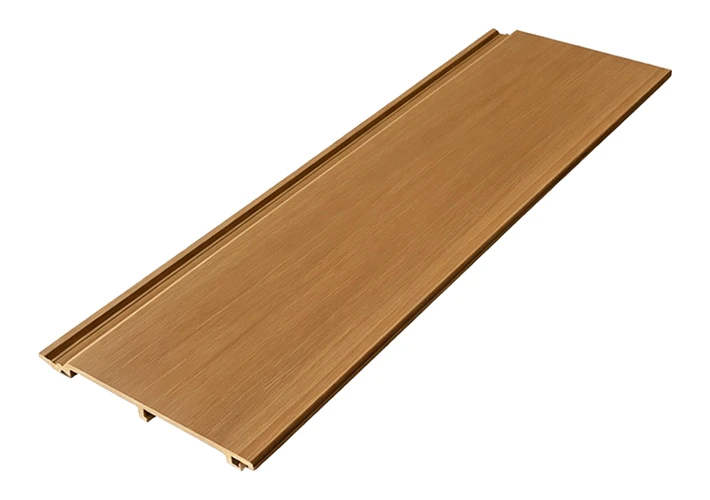
The first step when sourcing ASA exterior wall cladding is to determine whether you are dealing with a manufacturer, trading company, distributor, or a combination of manufacturing and trading operations.
A direct factory can provide several advantages for B2B buyers. These may include better control over production, more direct communication with technical personnel, greater customization flexibility, and clearer information about raw materials and production processes.
When evaluating a Chinese ASA wall cladding supplier, ask questions such as:
- Where is the factory located?
- What products are manufactured in-house?
- What production equipment is available?
- How long has the factory been producing outdoor building materials?
- What are the standard product specifications?
- What customization options are available?
- What is the normal MOQ?
- What is the production lead time?
- How does the factory control product quality?
- Can the supplier provide samples before bulk production?
- Can the factory support container-level export orders?
A professional manufacturer should be comfortable providing clear answers.
For project buyers, factory verification is also useful because the supplier’s actual production capabilities can influence delivery schedules. A company that outsources most of its production may have less control when a project requires customized colors, special profiles, or urgent replenishment.
Solidexwood is positioned as a China-based manufacturer of outdoor composite products, including its third-generation ASA outdoor series. For international B2B buyers, working directly with a factory can make communication about specifications, customization, packaging, and production requirements more straightforward.
Evaluate the ASA Surface and Material Structure
One of the most important factors when choosing an ASA exterior wall cladding supplier is understanding the actual material structure.
Two products can look almost identical in a showroom while having different construction and outdoor performance.
ASA exterior cladding is commonly evaluated according to several material characteristics:
ASA Surface Quality
The ASA surface is one of the key features that differentiates ASA outdoor products from ordinary decorative composite materials. Buyers should ask the supplier how the ASA layer is integrated into the product and whether the production process is designed for long-term outdoor exposure.
Core Material
The core structure affects strength, weight, dimensional stability, screw-holding characteristics, and overall product performance.
A supplier should be able to explain the composition of the core material rather than simply describing the product as “weather resistant.”
Surface Texture
Exterior cladding may have a wood-grain, brushed, embossed, smooth, or other decorative finish.
For large architectural projects, texture consistency is particularly important. If boards from different production batches have noticeably different surface patterns, the finished façade may look inconsistent.
Color Consistency
Color consistency matters when hundreds or thousands of square meters of cladding are installed.
A professional supplier should have procedures for controlling color between production batches. Buyers should also confirm whether future replacement orders can be produced with a reasonably consistent color specification.
Dimensional Stability
Outdoor wall cladding is exposed to temperature changes. Therefore, buyers should understand the supplier’s recommendations regarding expansion gaps, fixing systems, installation spacing, and environmental conditions.
The correct installation method is part of the product solution.
Instead of asking only “How much is ASA wall cladding per square meter?”, professional buyers should ask:
What is the material structure, how is the ASA surface manufactured, and how should the product be installed for outdoor applications?
These questions provide much more useful information for project evaluation.
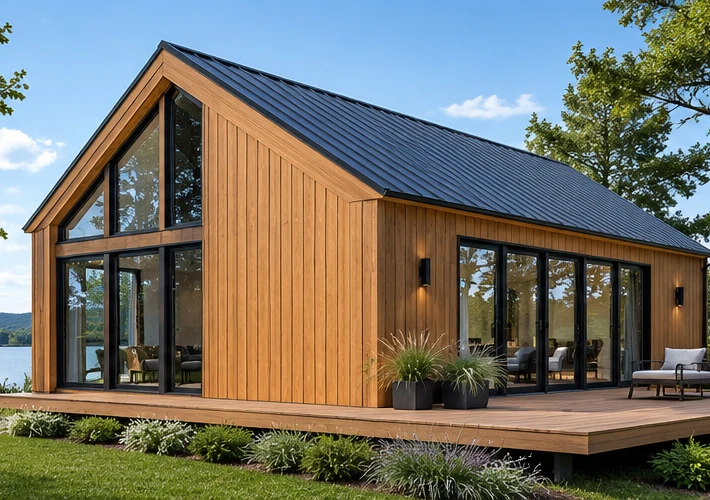
Compare Outdoor Performance, Not Just Appearance
Exterior wall cladding must deal with environmental conditions that interior decorative panels do not normally experience.
Depending on the project location, the wall system may be exposed to:
- Strong UV radiation
- Heavy rainfall
- High humidity
- Coastal environments
- Temperature fluctuations
- Wind
- Dust
- Outdoor pollution
- Frequent cleaning
- Long-term sunlight exposure
For this reason, outdoor performance should be one of the main criteria when selecting an ASA exterior wall cladding supplier.
ASA is particularly attractive for outdoor applications because of its weather-resistant characteristics. However, buyers should avoid treating the word “ASA” itself as a guarantee of every performance characteristic.
The complete product structure, manufacturing process, formulation, thickness, installation system, and application environment all matter.
A responsible supplier should provide technical information that helps buyers determine whether the product is appropriate for their intended application.
UV Resistance
For façades in regions with strong sunlight, UV resistance is a major consideration.
Projects in Australia, Southeast Asia, the Middle East, South America, and other high-UV markets may require careful evaluation of outdoor surface performance.
Ask suppliers whether they have product information, testing data, or project references relevant to high-UV environments.
Moisture Resistance
Exterior walls may be exposed to rain and high humidity. The cladding system should therefore be selected and installed according to the manufacturer’s recommendations.
Temperature Changes
Expansion and contraction should be considered when installing composite exterior cladding.
The supplier should provide recommendations regarding:
- Installation gaps
- Fixing methods
- Supporting structure
- Board spacing
- Fastener selection
- Cutting and drilling
- Edge treatment
A good supplier does not simply sell boards. It helps the buyer understand how the boards should be used.
Check Customization and OEM/ODM Capabilities
Large B2B projects frequently require customized products.
For example, an architect may specify a particular wood tone, a contractor may need a special board length, and a distributor may want private-label packaging.
Therefore, customization capability is an important factor when choosing an ASA exterior wall cladding supplier.
Typical customization requirements can include:
- Custom colors
- Custom surface textures
- Custom dimensions
- Custom profiles
- Custom packaging
- Private labeling
- OEM products
- ODM development
- Special installation requirements
A supplier with an established production system should be able to clearly explain which options are standard and which require additional development.
Custom Color Matching
Color selection is particularly important for façade projects.
Instead of selecting colors only from online images, project buyers should request physical samples. Lighting, screen settings, photography, and surrounding materials can all influence how a color appears.
For large orders, buyers should also confirm the approved color sample before mass production.
Custom Dimensions
Standard dimensions are usually easier and faster to produce. However, some architectural projects require specific lengths or profiles to reduce cutting waste or meet a design concept.
Ask about:
- Minimum order quantity
- Tooling requirements
- Development cost
- Production lead time
- Minimum production quantity
- Sample availability
This helps prevent unexpected costs later.
OEM and Private Label
For distributors and building material brands, OEM and private-label production can be valuable.
A capable China factory may be able to provide customized cartons, labels, product specifications, installation instructions, and other packaging elements according to the buyer’s requirements.
Review Quality Control and Factory Inspection
Quality control should be evaluated before placing a large order.
A reliable ASA exterior wall cladding supplier should have a defined quality-control process covering raw materials, production, finished products, packaging, and loading.
A typical quality-control system may include:
Raw Material Inspection → Production Monitoring → Dimensional Inspection → Surface Inspection → Finished Product Inspection → Packaging Inspection → Container Loading
The exact process depends on the factory and product.
Raw Material Control
The supplier should have clear standards for incoming materials. Variations in raw materials can affect product appearance and performance.
Dimensional Inspection
Important dimensions may include:
- Length
- Width
- Thickness
- Profile dimensions
- Surface flatness
- Edge condition
Dimensional consistency is particularly important for large façade installations.
Surface Inspection
Inspect the finished surface for:
- Scratches
- Uneven texture
- Color variation
- Surface defects
- Edge damage
- Inconsistent embossing
Pre-Shipment Inspection
Before shipment, buyers can request photographs, inspection reports, videos, or third-party inspection services depending on the order size and project requirements.
For a large construction project, third-party inspection may provide an additional layer of quality verification.
The goal is not simply to find defects. It is to establish a repeatable process that minimizes quality variation throughout the order.
Compare Pricing, MOQ, Lead Time and Total Procurement Cost
Price is naturally an important factor for importers and contractors, but it should not be considered independently.
When comparing quotations from different ASA exterior wall cladding suppliers, make sure the specifications are comparable.
A quotation may differ because of:
- Product thickness
- Board dimensions
- ASA surface structure
- Core material
- Surface texture
- Color
- Packaging
- Quantity
- Customization
- Loading method
- Shipping terms
For example, comparing a customized ASA cladding product with a standard product solely by price per square meter may produce a misleading result.
MOQ
Minimum order quantity is another important consideration.
A distributor testing a new market may prefer a smaller initial order, while a hotel or commercial project may require a full container.
Ask the supplier about:
- Standard MOQ
- MOQ for custom colors
- MOQ for custom profiles
- Sample order quantity
- Mixed-container possibilities
- Reorder requirements
Lead Time
Construction projects operate according to schedules. Delays in wall cladding delivery can affect installation and potentially delay other trades.
Before placing an order, confirm:
- Sample lead time
- Production lead time
- Packaging time
- Loading schedule
- Shipping arrangements
- Estimated transit time
The production lead time should be confirmed based on the actual order quantity and specifications rather than a generic estimate.
Total Cost
The real procurement cost may include:
Product Price + Customization Cost + Packaging + Inland Transportation + Shipping + Import Costs + Installation Accessories + Potential Waste
A supplier with a slightly higher product price may have a lower overall project cost if the product generates less waste, arrives with better packaging, and provides more consistent dimensions.
Evaluate Packaging, Export Experience and Project Support
International transportation is another area where supplier quality matters.
ASA exterior wall cladding may travel thousands of kilometers before reaching the project site. Packaging therefore needs to protect the product from movement, impact, moisture, and handling during transportation.
Ask the supplier how products are packaged for export.
Depending on the product, packaging may involve:
- Protective film
- Cartons
- Pallets
- Edge protection
- Moisture protection
- Customized labels
- Reinforced export packaging
The supplier should also understand container loading requirements.
Container Loading
Efficient loading can affect shipping costs and product protection.
Experienced export manufacturers should be able to calculate approximate loading quantities based on product dimensions and packaging.
For B2B buyers, useful information includes:
- Pieces per carton
- Cartons per pallet
- Square meters per carton
- Net weight
- Gross weight
- Container loading quantity
- Packaging dimensions
This information allows importers to calculate landed costs and plan warehouse space.
Project Support
A supplier’s role should not necessarily end when the container leaves the factory.
For project applications, useful support may include:
- Installation instructions
- Product datasheets
- Sample support
- CAD-related information where available
- Product photos
- Installation videos
- Packaging customization
- Technical communication
- Replacement coordination
This type of support can be particularly useful for overseas contractors and distributors.
Request Samples and Test the Supplier Before Bulk Ordering
Before committing to a large ASA exterior wall cladding order, request samples.
Samples allow buyers to evaluate characteristics that cannot be judged accurately from a product page.
Check:
- Surface texture
- Color
- Board thickness
- Edge quality
- Flatness
- Profile accuracy
- Weight
- Finish consistency
- Packaging quality
If possible, compare samples from several suppliers under the same conditions.
For projects in demanding outdoor environments, buyers may also consider independent laboratory testing or project-specific testing requirements.
The supplier should be willing to discuss the technical requirements rather than simply pushing the buyer toward the lowest-priced product.
Questions to Ask an ASA Exterior Wall Cladding Supplier
Before placing an order, B2B buyers can use the following checklist:
| Question | Why It Matters |
|---|---|
| Are you a factory or trading company? | Determines production control |
| Where is your factory located? | Helps with supplier verification |
| What is the product structure? | Helps evaluate technical suitability |
| What ASA surface technology is used? | Relevant to outdoor performance |
| What sizes are available? | Determines project compatibility |
| What colors and textures are available? | Supports architectural design |
| Can you provide samples? | Allows physical evaluation |
| What is the MOQ? | Helps with purchasing plans |
| Can you provide OEM/ODM? | Important for brands and distributors |
| What is the production lead time? | Supports project scheduling |
| How are products packaged? | Reduces transportation risk |
| How many square meters fit in a container? | Helps calculate logistics costs |
| What installation guidance is provided? | Reduces installation errors |
| Can you provide project references? | Helps evaluate practical experience |
| What quality inspection is performed? | Supports quality assurance |
A supplier that can answer these questions clearly gives buyers a better foundation for making a procurement decision.
Why Choose Solidexwood as Your ASA Exterior Wall Cladding Supplier?
Solidexwood is a China factory brand focused on composite outdoor building materials and the development of its third-generation ASA outdoor product series.
For international B2B buyers, Solidexwood focuses on providing exterior products that combine architectural appearance with practical outdoor application requirements.
The ASA product range is designed for applications such as:
- Villas
- Residential façades
- Hotels
- Resorts
- Commercial buildings
- Outdoor architectural walls
- Feature façades
- Renovation projects
One of the key focuses of the Solidexwood ASA series is the development of a more advanced outdoor surface solution compared with conventional WPC outdoor products.
The third-generation ASA series is positioned around several project-oriented requirements, including improved outdoor durability, UV resistance, surface appearance, and comfort for outdoor applications.
For buyers serving high-UV markets, Solidexwood can also discuss product specifications and application requirements according to the project environment.
China Factory Supply
Working directly with a China factory allows buyers to communicate product requirements more directly.
Solidexwood can support B2B customers with product samples, bulk orders, customization discussions, packaging requirements, and project-related product selection.
Third-Generation ASA Outdoor Series
ASA is used as an important surface technology in the Solidexwood third-generation outdoor product range.
Compared with traditional outdoor composite products, the third-generation approach focuses on improving the balance between appearance, outdoor durability, and practical application.
Customization
Different architectural projects have different design requirements.
Solidexwood can discuss customized:
- Colors
- Textures
- Dimensions
- Profiles
- Packaging
- OEM/ODM requirements
Customization should be confirmed according to the specific product, order quantity, and production requirements.
B2B Project Support
Solidexwood works with overseas importers, distributors, contractors, and project buyers.
For large projects, the supplier can work with customers to confirm specifications before production, helping reduce misunderstandings between design, procurement, and manufacturing.
Common Mistakes When Choosing an ASA Wall Cladding Supplier
Even experienced buyers can make mistakes when sourcing exterior wall materials.
Choosing Only by Price
A low quotation may result from differences in thickness, raw materials, surface construction, packaging, or specifications.
Always compare equivalent products.
Buying Without Samples
Online product photos cannot fully demonstrate texture, color, thickness, and construction quality.
Always request samples before a large order.
Ignoring Installation Requirements
Even a good cladding product can perform poorly if installed incorrectly.
Ask for installation instructions before purchasing.
Not Confirming Batch Consistency
For large projects, different production batches should be managed carefully.
Approve a reference sample and confirm color and texture requirements before mass production.
Not Calculating Container Loading
The product price alone does not show the real import cost.
Request detailed packaging and container-loading information.
Failing to Clarify Customization Conditions
Custom colors and profiles may require additional MOQ, tooling, or production time.
Confirm these conditions before approving the purchase order.
Final Checklist for Selecting the Right ASA Exterior Wall Cladding Supplier
Choosing the right ASA exterior wall cladding supplier requires a combination of technical, commercial, and service evaluation.
Before making a purchase, confirm these key points:
1. Factory capability
Verify whether the supplier has actual manufacturing capacity and suitable production equipment.
2. Product structure
Understand the ASA surface, core material, thickness, profile, and manufacturing process.
3. Outdoor performance
Consider UV exposure, moisture, temperature changes, and the climate of the project location.
4. Quality control
Ask how raw materials, dimensions, surfaces, finished products, and packaging are inspected.
5. Customization
Confirm whether the supplier can provide custom colors, textures, dimensions, profiles, and OEM/ODM services.
6. MOQ and lead time
Make sure purchasing requirements fit your project schedule and market needs.
7. Export packaging
Review packaging methods, container loading quantities, and transportation protection.
8. Technical support
Check whether installation instructions, samples, technical data, and project communication are available.
9. Sample evaluation
Never rely only on online photographs. Compare physical samples before placing a bulk order.
10. Long-term cooperation
For distributors and importers, supplier consistency matters as much as the first order price.
The right supplier should be able to provide more than an attractive quotation. A professional ASA exterior wall cladding supplier should combine manufacturing capability, consistent product quality, customization, export experience, technical communication, and project support.
For architects, contractors, developers, distributors, and importers looking for a China factory for ASA exterior wall cladding, Solidexwood provides a B2B-oriented manufacturing solution focused on its third-generation ASA outdoor product series.
If you are sourcing ASA exterior wall cladding for a villa, hotel, commercial building, residential development, or distribution business, request product samples and project specifications before making a final purchasing decision.
Solidexwood — China Factory for ASA Outdoor Building Materials
For product samples, specifications, OEM/ODM requirements, or project quotations, contact the Solidexwood team to discuss your project requirements.