Introduction: Why ASA Cladding Prices Matter to International Buyers
ASA cladding has become an important option for exterior walls in residential buildings, commercial developments, hotels, villas, resorts, and other architectural projects. By combining an acrylonitrile styrene acrylate (ASA) weather-resistant surface with a suitable core material, ASA co-extruded cladding can offer attractive wood-grain finishes, improved resistance to ultraviolet radiation, and lower routine maintenance requirements than many conventional exterior materials.
For importers, distributors, building material wholesalers, and construction contractors, the price of ASA cladding per square meter is an important purchasing consideration. However, the lowest initial quotation does not necessarily represent the best commercial value. Product dimensions, usable coverage, ASA surface-layer quality, core composition, packaging, shipping terms, and installation accessories all affect the actual cost of completing a project.
The past five years, from 2021 through 2026, have also demonstrated how international supply chains can influence building material prices. Raw material availability, energy costs, freight rates, production efficiency, and demand for outdoor composite products have changed over time. These factors affect suppliers differently, so the market does not follow one universal price curve.
As a China-based composite outdoor products manufacturer, Solidexwood focuses on helping overseas buyers evaluate ASA cladding according to product specifications, project requirements, and purchasing quantities. This guide examines the main price trends over the past five years, explains how to compare quotations, and provides practical strategies for controlling procurement costs.
One important distinction should be made at the beginning: there is no universally recognized public database recording annual transaction prices for all ASA cladding products. Therefore, the historical discussion below describes market cost pressures and pricing direction rather than claiming unsupported annual average prices. Buyers should use current, specification-matched factory quotations to establish their actual procurement budgets.
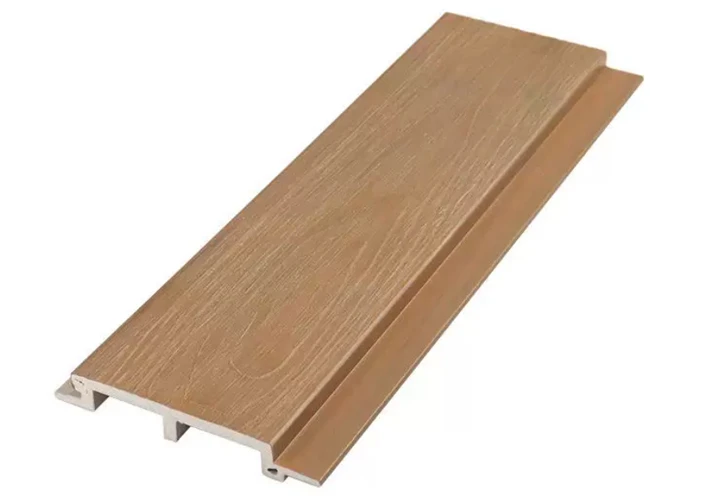
ASA Cladding Price Trends from 2021 to 2026
ASA cladding prices have been influenced by several overlapping market conditions during the past five years. Instead of assuming that every manufacturer experienced the same percentage increase or decrease, international buyers should examine the major cost factors affecting each period.
2021: Raw Material and Logistics Pressures
In 2021, the global construction materials industry experienced substantial supply chain disruption as manufacturing activity and demand recovered unevenly following the initial pandemic shock.
For ASA cladding manufacturers, the most important cost pressures included fluctuations in polymer feedstocks, limited shipping capacity, higher container freight rates, and uncertainty in delivery schedules.
ASA resin is connected to the petrochemical industry, so its cost can be affected by changes in upstream chemical availability and production expenses. The core materials used in composite cladding, including polymers, wood fibers, pigments, and processing additives, may also experience price fluctuations.
International shipping created another challenge. Even when a Chinese factory maintained a relatively stable production price, a buyer importing a container into Europe, North America, Australia, or another overseas market could face a higher landed cost because of freight and related charges.
For distributors purchasing ASA cladding during this period, the practical lesson was to evaluate the complete supply arrangement rather than treating the factory unit price as the only cost.
2022: Continued Cost Uncertainty
In 2022, energy market volatility, geopolitical uncertainty, and ongoing logistics disruption contributed to an unpredictable purchasing environment for many international building material buyers.
ASA cladding production involves extrusion equipment, heating, cooling, material preparation, surface finishing, and packaging. Changes in electricity, transportation, and upstream material costs can affect the manufacturer’s production expenses.
At the same time, freight costs and delivery reliability remained important concerns for international importers.
These pressures did not affect every supplier or market equally. Some manufacturers had existing raw material inventories or long-term supply agreements, while others faced more immediate cost increases. Buyers therefore could receive substantially different quotations for products that appeared similar in online catalogs.
For procurement teams, this period highlighted the importance of quotation validity, delivery commitments, raw material specifications, and transparent product documentation.
2023: A More Balanced Purchasing Environment
During 2023, parts of the international logistics market became less constrained than during the most difficult pandemic-era periods. However, this did not mean that every ASA cladding product automatically became cheaper.
Several costs remained relevant:
- Labor and factory operating expenses.
- Electricity and production equipment maintenance.
- Quality control and product development.
- Protective packaging and export handling.
- Compliance testing and customer-specific requirements.
Manufacturers with stable production capacity and efficient material utilization could manage costs differently from smaller suppliers with less predictable purchasing volumes.
Meanwhile, demand for low-maintenance exterior materials continued to support interest in composite cladding. Buyers increasingly compared products according to weather resistance, appearance retention, installation requirements, and maintenance expectations.
The resulting market picture was mixed: some cost pressures eased, but the final price remained highly dependent on product design, supplier capability, order size, and destination.
2024: Greater Attention to Specification and Long-Term Value
By 2024, buyers evaluating ASA cladding were increasingly concerned with the relationship between initial price and long-term performance.
For example, a distributor serving a high-ultraviolet-radiation market may prioritize surface-layer consistency and weathering performance. A contractor working on a commercial facade may focus more on dimensional tolerances, installation details, and batch consistency.
These requirements can change the price even when two products are both marketed as ASA cladding.
Manufacturing efficiency also plays a role. Standardized profiles, repeat production runs, efficient extrusion processes, and careful raw material purchasing can help factories manage their production costs.
However, a more efficient factory does not necessarily offer the same price for every specification. A customized color, new profile, special packaging arrangement, or low-volume order may require additional production time and setup expenses.
For buyers, 2024 reinforced the importance of comparing equivalent products and distinguishing genuine performance improvements from marketing language.
2025: Competitive Sourcing and Product Differentiation
In 2025, price comparisons for ASA composite cladding continued to reflect differences in product construction and supplier positioning.
Standard profiles produced in larger quantities may receive more competitive quotations than specialized profiles with customized dimensions, deep embossing, or unusual colors.
At the same time, buyers should distinguish ordinary WPC cladding from co-extruded ASA cladding. Although both products may use a wood-plastic composite core, their surface materials and production requirements can differ.
An online quotation that appears significantly lower may refer to a different profile, a price per linear meter rather than per square meter, a different minimum order quantity, or a product with different material specifications.
For international wholesalers, the most useful benchmark is therefore a quotation that clearly identifies the product structure, effective coverage width, thickness, finish, order quantity, and delivery terms.
2026: Focus on Landed Cost and Verified Performance
In 2026, buyers should continue to assess ASA cladding through both price competitiveness and documented performance.
The relevant question is not simply whether the market price has increased or decreased compared with five years ago. It is whether the selected product delivers the required appearance, weather resistance, installation compatibility, and expected service life at an acceptable total cost.
For example, a contractor comparing two exterior wall systems should account for the boards, substructure, fasteners, trims, installation labor, freight, import charges, and maintenance requirements.
The market’s direction may differ by region and product grade. Consequently, a reliable 2026 purchasing decision should be based on current quotations and verified specifications rather than a single global average.
Five-Year Trend Summary
| Period | Main pricing influences | Practical implication for buyers |
|---|---|---|
| 2021 | Material volatility and freight pressure | Confirm freight and delivery terms |
| 2022 | Energy, logistics, and supply uncertainty | Check quotation validity and lead times |
| 2023 | Improving logistics conditions but persistent operating costs | Compare suppliers using equivalent specifications |
| 2024 | Efficiency and growing emphasis on product performance | Evaluate quality alongside price |
| 2025 | Competition and differentiation between product grades | Verify material structure and effective coverage |
| 2026 | Specification, landed cost, and project value | Request current, itemized factory quotations |
This table summarizes the principal market influences, not a measured annual price index. Actual prices may move differently depending on the destination market, supplier, currency, and product configuration.
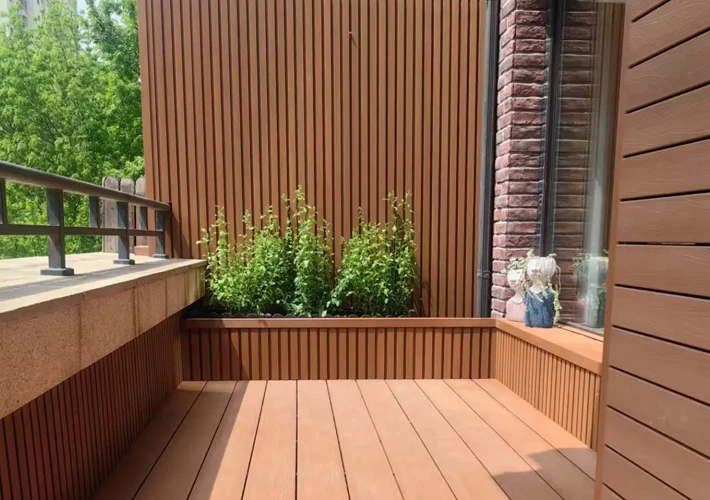
How Much Does ASA Cladding Cost per m²?
The price of ASA cladding per square meter depends on its material composition, dimensions, profile design, surface finish, order quantity, and commercial terms.
For an importer, a useful quotation should distinguish between the factory price of the boards and the total delivered cost of the cladding system.
Understanding Indicative Supplier Prices
Public supplier listings demonstrate how widely advertised prices can vary. For example, a WPC cladding supplier listing on OWA Decor describes FOB prices of approximately US$8–18/m² for WPC cladding, noting that the specification and finish influence pricing.
Other marketplace listings quote ASA co-extruded wall cladding by the linear meter rather than the square meter. One supplier listing from Anhui Avid New Materials advertises selected ASA wall-panel profiles at around US$1.05–1.15 per linear meter, with other profiles at higher prices. These are supplier-specific advertised prices, not verified market averages or guaranteed current offers.
These examples should not be compared directly without checking effective coverage width, profile thickness, material composition, minimum order quantity, and shipping terms.
A low advertised price may represent a standard hollow profile, a minimum-order offer, or a particular specification that differs from the product required for your project.
Why Price per Linear Meter Is Not the Same as Price per Square Meter
Some ASA cladding manufacturers quote prices per board or linear meter because their products are manufactured in fixed lengths.
To convert a linear-meter quotation into a square-meter quotation, the buyer needs the board’s effective installed coverage width.
The basic formula is:
Price per m² = Price per linear meter ÷ Effective coverage width in meters
For example, assume a hypothetical ASA cladding board costs US$2.00 per linear meter and provides an effective installed coverage width of 0.20 meters.
The equivalent material price is:
US$2.00 ÷ 0.20 = US$10.00/m².
This is a calculation example, not a claim about Solidexwood’s current quotation.
The effective coverage width is important because the board’s total width may include a tongue, groove, overlap, or interlocking section that is not visible after installation. Using the overall width instead of the effective coverage width can underestimate the required material quantity.
Illustrative Budget Framework for Different Product Grades
The following table is a purchasing framework rather than a verified price list. It shows how product characteristics can affect relative cost.
| Product category | Typical specification considerations | Relative price tendency |
|---|---|---|
| Standard ASA composite cladding | Regular profile, standard color, conventional surface finish | More competitive |
| Decorative wood-grain ASA cladding | Embossed texture or multi-tone appearance | May cost more |
| Premium co-extruded ASA cladding | Defined ASA surface layer and higher specification requirements | Depends on material and construction |
| Customized ASA cladding | Special dimensions, color matching, or non-standard profile | Additional setup costs may apply |
| Small-volume project order | Limited production quantity and special packing needs | Higher unit cost is possible |
| Large-volume wholesale order | Standardized specification and repeat production | Volume discounts may be available |
The actual price for any category must be confirmed through a current supplier quotation. A product described as premium does not automatically deliver better performance unless its material structure and quality can be verified.
What Should a Factory Quotation Include?
When requesting an ASA cladding quotation from a Chinese manufacturer, provide:
- Product type and intended application.
- Board width, thickness, length, and effective coverage width.
- Core composition and ASA surface-layer specification.
- Surface finish and color requirements.
- Total order quantity in square meters or linear meters.
- Required accessories, trims, fasteners, and substructure.
- Packaging and container-loading requirements.
- Delivery destination and preferred Incoterm.
- Required test reports, samples, and quality documentation.
With these details, a supplier can provide a more meaningful quotation, and the buyer can compare different offers on an equivalent basis.
The Main Factors Affecting ASA Cladding Prices
Understanding the cost structure makes it easier for buyers to negotiate effectively and identify quotations that appear unusually low.
Raw Material Prices
ASA cladding uses a weather-resistant polymer surface, often combined with a composite core. The cost of ASA resin and other formulation components can affect the final product price.
Core materials may include wood fiber, polymers, stabilizers, pigments, and processing additives. Different formulations can change the material cost, extrusion behavior, surface quality, and finished-board weight.
Raw material costs are influenced by petrochemical markets, supplier availability, purchasing volume, and currency movements.
However, the relationship between resin prices and finished cladding prices is not always immediate. Manufacturers may hold inventory, operate under longer-term supply contracts, or adjust production schedules in response to changing costs.
Buyers should therefore ask suppliers about the actual product specification instead of assuming that all ASA products use the same resin grade or material ratio.
ASA Surface-Layer Thickness and Quality
The surface layer is a key distinction between many ASA co-extruded products and conventional composite boards.
A properly specified ASA surface can help improve resistance to outdoor weathering and color fading. Its performance depends on the material formulation, layer construction, manufacturing consistency, and exposure conditions.
A supplier may offer several products under the same general ASA cladding category, but their surface-layer thickness and quality may differ.
When evaluating a quotation, request the declared ASA layer specification, relevant technical data, and available weathering-test information. Where long-term outdoor performance is important, ask whether test results apply to the actual product being supplied.
Do not assume that a thicker board automatically has a thicker ASA layer or better UV performance. Overall thickness and protective surface-layer thickness are separate specifications.
Core Composition, Density, and Profile Design
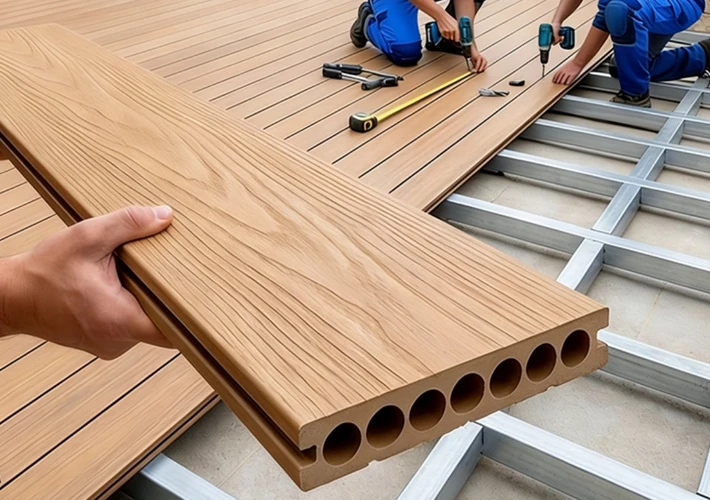
A hollow profile and a solid profile may have different material consumption and structural characteristics. Even hollow boards can differ in wall thickness, rib design, internal geometry, and weight per linear meter.
These differences influence manufacturing cost and may affect installation spacing, rigidity, and suitability for particular facade designs.
For commercial and residential projects, the correct profile should be selected according to the installation system and design requirements rather than price alone.
Buyers should request profile drawings, cross-sectional diagrams, weight information, dimensional tolerances, and installation guidance where available.
Surface Texture, Color, and Customization
Standard colors and established profiles are generally easier to produce at scale than highly customized products.
Additional costs may arise from:
- Special wood-grain patterns.
- Custom colors or multi-tone finishes.
- New extrusion dies or profile modifications.
- Special board lengths.
- Custom packaging and labeling.
- Additional product testing or documentation.
Customization may be commercially valuable for distributors developing a distinctive product range or contractors matching a project design.
To avoid unnecessary expense, buyers should determine which specifications are essential and which can be selected from the manufacturer’s standard product range.
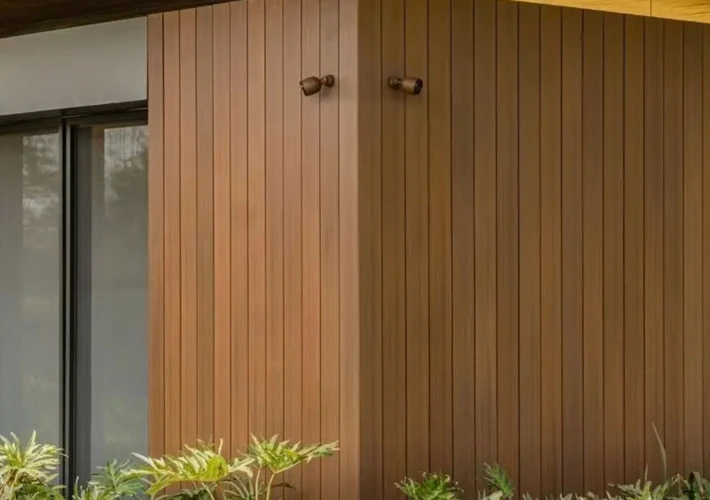
Order Quantity and Manufacturing Efficiency
Order quantity influences production planning, material purchasing, machine setup, packaging, and shipping efficiency.
A large, standardized order may reduce the cost per square meter because fixed setup costs can be spread across more boards. Larger orders may also qualify for improved factory pricing or more efficient container utilization.
However, there is no universal discount percentage. The result depends on the factory’s capacity, production schedule, minimum order requirements, and the exact product configuration.
For distributors, combining demand forecasts with repeat orders can be more effective than purchasing irregular quantities of many customized profiles.
Freight, Packaging, and Import Costs
The factory price is only one part of the landed cost.
International buyers may need to account for inland transportation in China, export documentation, ocean freight, insurance, port charges, customs duties, import taxes, destination handling, and local delivery.
Packaging also matters. Long boards must be protected against handling damage, moisture exposure during transport, and deformation caused by inappropriate storage or loading.
The final amount depends on the agreed Incoterm. An FOB quotation, for example, should not be compared directly with a DDP quotation without adding the costs covered by the latter.
For an accurate budget, request a clear breakdown of what is included and what remains payable by the buyer.
ASA Cladding vs. Standard WPC Cladding: Is the Price Difference Worth It?
Standard WPC cladding and ASA co-extruded cladding can look similar in product photographs, but their construction may differ significantly.
Traditional WPC cladding generally combines wood-based material with a polymer matrix. ASA co-extruded cladding typically adds a weather-resistant ASA surface layer over a compatible core.
This additional layer can increase the product’s manufacturing cost, but it may also improve the cladding’s suitability for applications exposed to sunlight and outdoor weather.
UV Resistance and Color Retention
Ultraviolet radiation can contribute to color changes and surface aging in outdoor building materials. The degree of change depends on material formulation, pigmentation, surface protection, exposure intensity, and installation conditions.
ASA is widely used in outdoor applications because of its weatherability. Nevertheless, performance varies between formulations and products, so buyers should request relevant test data rather than rely solely on the material name.
For markets with strong sunlight, such as parts of Australia, the Middle East, and other high-UV regions, surface-layer specifications deserve particular attention.
Maintenance and Lifecycle Cost
The economic value of cladding should be assessed over its expected service period, not only by comparing purchase prices.
A useful calculation is:
Lifecycle cost = Purchase cost + Installation cost + Maintenance cost + Expected repair and replacement cost
For example, a lower-priced board may require more maintenance or earlier replacement under a particular exposure condition. A higher-priced product may be more economical if it reduces those expenses.
However, the result depends on actual service conditions, product quality, installation practices, and maintenance requirements. Buyers should not assume that every ASA product will outlast every standard WPC product.
Appearance and Architectural Applications
ASA cladding is available in various wood-grain and decorative finishes, depending on the manufacturer.
For villas, hotels, commercial buildings, and exterior renovation projects, a consistent finish can support a more premium architectural appearance.
When selecting samples, compare color consistency, surface texture, edge quality, profile dimensions, and how the finish looks under natural light. For larger projects, approve a physical sample before confirming the full order.
How to Make a Fair Comparison
When comparing ASA cladding with standard WPC, ask each supplier to quote equivalent quantities and clearly specify:
- Core composition and product weight.
- Overall dimensions and effective coverage width.
- Surface treatment and declared weathering performance.
- Installation accessories and compatible fixing methods.
- Warranty conditions and maintenance guidance.
- Delivery terms and total landed cost.
A meaningful comparison should identify the real performance difference that justifies any price premium. If the project has limited sunlight exposure or a short intended service period, a less expensive product may be sufficient. For demanding outdoor applications, higher-specification cladding may provide better value.
How to Calculate the Total Cost of an ASA Cladding Project
A common procurement mistake is to calculate the budget by multiplying the visible facade area by the advertised price per square meter. This can underestimate the final cost.
The actual project budget should include material quantities, installation components, labor, logistics, and applicable import charges.
Step 1: Calculate the Net Facade Area
Measure the wall length and height, then subtract openings where appropriate.
For a simple rectangular facade:
Net facade area = Wall length × Wall height − Openings
For irregular elevations, multiple wall sections, or complex architectural details, calculate each section separately and add the results.
The measurement method should be consistent with the contractor’s takeoff and installation design.
Step 2: Add a Waste Allowance
Cutting, corner details, openings, and profile layout can generate offcuts. A project may therefore need more material than its net facade area suggests.
For an illustrative estimate, assume a facade measures 200 m² and the project allows 8% additional material.
Required quantity:
200 × 1.08 = 216 m².
The 8% allowance is an example only. Actual waste depends on the facade design, board length, installation direction, opening layout, and cutting plan.
Step 3: Calculate Board Costs
Assume, purely for illustration, that a supplier quotes US$12/m² for the specified ASA cladding.
For 216 m²:
216 × US$12 = US$2,592.
This is a hypothetical material calculation, not a Solidexwood price or a verified market average.
The quotation should specify whether the price includes trims, corners, fasteners, starter profiles, and other installation components.
Step 4: Add the Supporting System and Installation
Depending on the design, the complete facade may require:
- Supporting battens or a metal subframe.
- Brackets and corrosion-resistant fasteners.
- Corner trims and edge profiles.
- Flashing and drainage details.
- Suitable weather barriers or insulation layers.
- Labor, lifting equipment, and access systems.
The requirements depend on the building design, local building codes, exposure conditions, and the cladding manufacturer’s installation instructions.
Do not assume that ASA boards alone constitute a complete weatherproof facade system. Appropriate detailing and installation are essential.
Step 5: Calculate the Landed Cost
Add transportation, export handling, insurance where applicable, customs duties, taxes, destination port charges, and inland delivery.
For international procurement, a supplier’s FOB price and a local distributor’s delivered price cover different cost categories.
A useful comparison is the total cost per installed square meter:
Installed cost per m² = Total project cost ÷ Completed facade area
This figure provides a better basis for comparing alternative materials and suppliers than the board price alone.
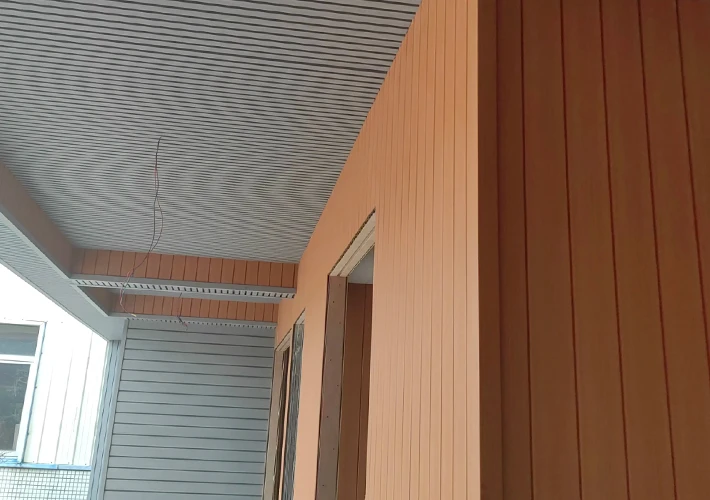
How International Buyers Can Reduce ASA Cladding Procurement Costs
Reducing costs does not necessarily mean selecting the cheapest product. The goal is to obtain the required specification at the lowest reasonable total cost without introducing avoidable quality or delivery risks.
Purchase Directly from a Manufacturer
Working directly with a China factory can simplify communication about technical specifications, production scheduling, customization, and quality control.
Solidexwood serves international buyers seeking composite outdoor product solutions. For importers and wholesalers, direct factory discussions can help clarify available profiles, production options, and packaging requirements before an order is placed.
However, factory-direct sourcing does not automatically guarantee the lowest landed cost. Buyers should still compare product specifications, commercial terms, and the supplier’s ability to meet the order requirements.
Standardize Product Specifications
Using fewer standard colors, profile sizes, and board lengths can improve production efficiency.
Standardization may reduce setup costs, simplify inventory management, and make future replenishment easier.
For distributors, a carefully selected core product range can be more economical than offering many low-volume customized variations.
Optimize Order Quantities
Before placing an order, estimate the combined demand from current projects and expected inventory requirements.
Larger orders may improve factory pricing and container utilization, but excess stock can create storage costs, working-capital pressure, and risks of holding unpopular colors or profiles.
Ask the manufacturer to quote different order quantities where practical. Compare the unit price, total order value, production lead time, and shipping efficiency rather than focusing on discounts alone.
Request Samples Before Bulk Production
A sample allows the purchasing team to check color, texture, dimensions, surface quality, and compatibility with the intended design.
For repeat orders, retain an approved reference sample and establish acceptable tolerances for color and dimensions.
If weathering performance is critical, request relevant technical documentation and test reports for the proposed product. A decorative sample by itself cannot demonstrate long-term outdoor durability.
Evaluate Supplier Reliability
A competitive quotation is useful only if the supplier can deliver the agreed specification consistently.
Before committing to a large purchase, review:
- Company and manufacturing information.
- Product drawings and material specifications.
- Available quality and performance documentation.
- Sample consistency and inspection procedures.
- Production lead times and packaging details.
- Warranty terms and after-sales communication.
For new suppliers, buyers may also consider an independent pre-shipment inspection when the order value and project risk justify the expense.
Why Choose Solidexwood as Your ASA Cladding Supplier in China?
For overseas distributors, building material importers, contractors, and project procurement teams, choosing a suitable manufacturing partner is an important part of cost management.
Solidexwood focuses on composite outdoor products, including ASA cladding and related exterior solutions. As a China-based supplier, we work with buyers who need product specifications suited to their market, project design, and purchasing quantities.
Factory-Direct Sourcing
Working with a manufacturer enables buyers to discuss product requirements directly with the production and sales team.
This helps clarify the relationship between specifications, material usage, customization, production scheduling, and final quotations.
For distributors planning repeat purchases, consistent product specifications can also support inventory management and more predictable procurement.
Customization for Different Markets
Different projects require different combinations of board dimensions, colors, surface textures, and profile designs.
Solidexwood can discuss customization requirements according to the selected product range and production feasibility. Buyers should confirm tooling requirements, minimum order quantities, sample approval, and lead times before finalizing custom orders.
Support for International B2B Buyers
International sourcing requires more than a unit price. Buyers need clear product information, appropriate packaging, reliable communication, and documentation suitable for their procurement process.
When requesting an ASA cladding quotation from Solidexwood, provide your destination market, estimated quantity, preferred profile, required color, project application, and delivery terms.
This information helps the team assess the appropriate product options and prepare a quotation based on the actual requirements.
A Practical Approach to Long-Term Value
Our approach is to help buyers evaluate composite outdoor products according to their application and purchasing objectives.
For high-UV markets, weathering performance and color stability may be important priorities. For wholesale distribution, price consistency, standardization, and replenishment availability may carry greater weight. For individual projects, the fit between the facade design, installation system, and product specification is particularly important.
Rather than treating all ASA cladding as the same product, we encourage buyers to compare technical details and commercial terms before making a purchasing decision.
Contact Solidexwood to discuss your ASA cladding requirements, request product information, and obtain a quotation based on your intended order quantity.
Conclusion: Understanding ASA Cladding Price Trends for Better Purchasing Decisions
The price of ASA cladding per square meter has been influenced by raw material costs, manufacturing expenses, freight conditions, product specifications, and changing demand over the past five years.
From the supply chain pressures experienced in 2021 and 2022 to the more specification-driven purchasing decisions of subsequent years, the market has shown why a single global price figure cannot accurately represent every ASA cladding product.
For importers, wholesalers, contractors, and project buyers, the most effective purchasing strategy is to compare equivalent products, verify effective coverage width, assess the ASA surface layer and core construction, and calculate the total landed and installed cost.
A reliable supplier should be able to explain the product specification, clarify what the quotation includes, and provide appropriate technical information to support the buying decision.
As a China-based composite outdoor products supplier, Solidexwood works with international buyers seeking ASA cladding solutions for distribution and construction projects. Contact our team with your required dimensions, color, estimated quantity, and destination to request a project-specific quotation.
Looking for an ASA cladding factory in China? Contact Solidexwood to discuss wholesale pricing, customized profiles, product samples, and supply options for your next project.
Frequently Asked Questions About ASA Cladding Prices
1. What is the average price of ASA cladding per m²?
There is no single reliable global average covering all ASA cladding products. Prices depend on the core material, ASA surface layer, profile dimensions, finish, order quantity, and delivery terms. Request current quotations for the same specification before establishing a purchasing benchmark.
2. Have ASA cladding prices increased over the past five years?
The market has experienced changing cost pressures rather than one uniform price movement. Raw materials, freight, energy, and production expenses affected prices differently across suppliers and regions. A valid year-by-year comparison requires historical quotations for the same product specification and commercial terms.
3. Why is ASA cladding more expensive than some WPC cladding?
ASA co-extruded cladding typically incorporates a weather-resistant ASA surface layer that can improve outdoor weatherability and color retention. The actual price premium depends on the material formulation, layer specification, profile design, and manufacturing process.
4. Is buying ASA cladding directly from China cheaper?
Factory-direct sourcing can reduce intermediate costs and simplify technical communication. However, the final cost also depends on freight, import duties, taxes, handling, and delivery. Compare the landed cost of equivalent products rather than factory prices alone.
5. How can I calculate the price per m² from a price per linear meter?
Divide the price per linear meter by the effective coverage width in meters. For example, US$2 per linear meter divided by 0.20 m of effective coverage equals US$10/m². Confirm the installed coverage width with the manufacturer.
6. What information is needed for an accurate ASA cladding quotation?
Provide the required dimensions, profile, core and surface specifications, color, finish, quantity, destination, packaging needs, accessories, and delivery terms. A project drawing or reference sample can further improve quotation accuracy.
7. Is ASA cladding suitable for Australia and other high-UV regions?
ASA cladding is often considered for high-UV environments because of the weatherability of ASA surface materials. Actual suitability depends on the specific product formulation, test results, installation system, and local building requirements. Buyers should request relevant performance documentation before ordering.
8. How can I obtain a wholesale quotation from Solidexwood?
Contact Solidexwood with your product requirements, target market, order quantity, and destination port or delivery address. The team can discuss suitable product options and the details needed for a project-specific quotation.