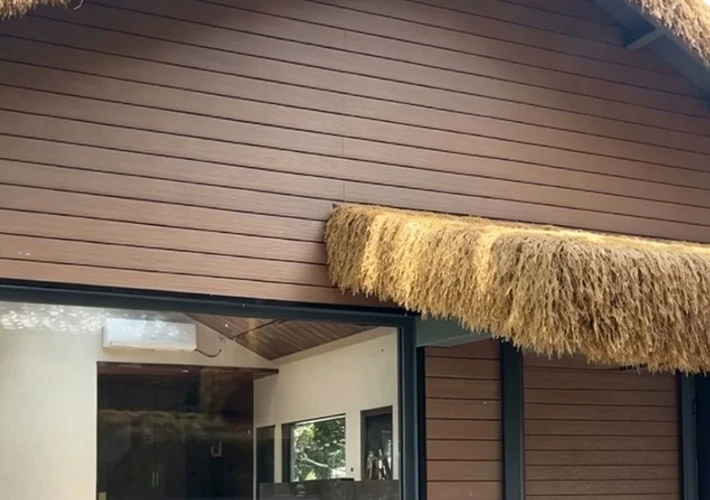
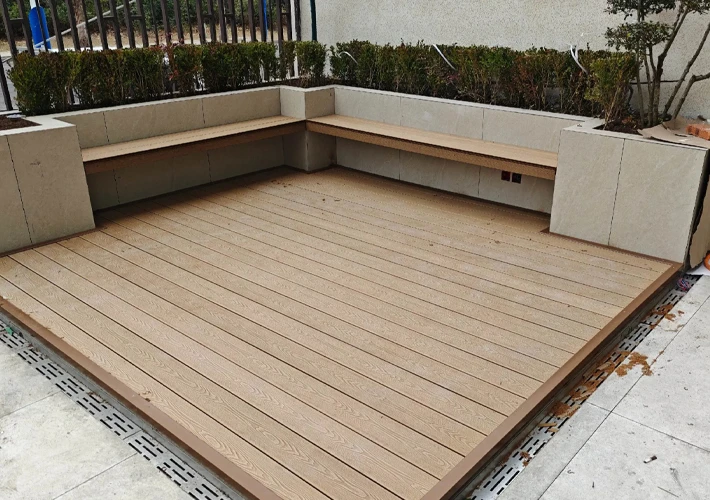
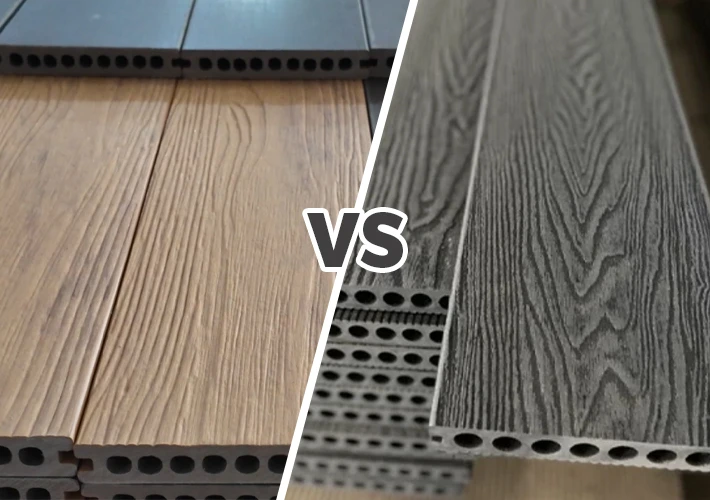
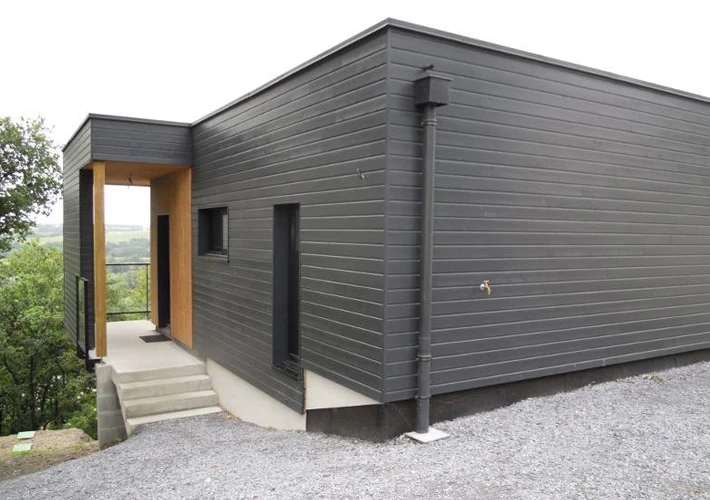
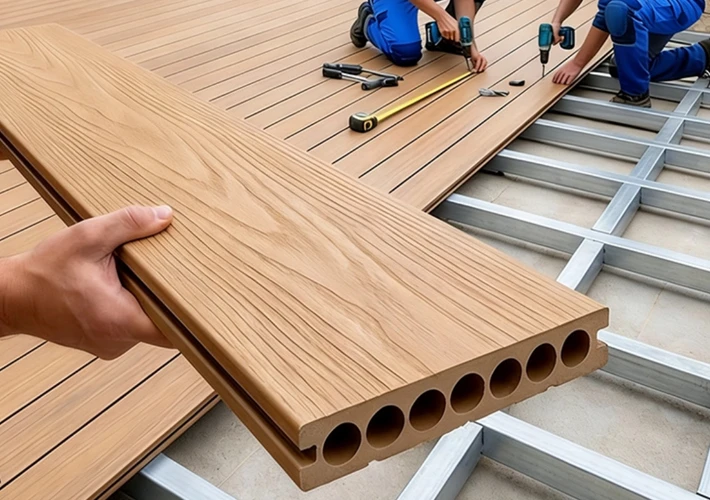
Commercial outdoor spaces require decking materials that can balance appearance, durability, safety, maintenance, and long-term project costs. From hotels and resorts to restaurants, apartment developments, commercial terraces, pool areas, and public leisure spaces, the decking material selected by a contractor or distributor can directly affect both project performance and maintenance requirements.
ASA decking has become an increasingly important option for commercial outdoor projects because it combines a composite core with an ASA protective surface. Compared with conventional wood and some traditional WPC decking products, ASA decking is designed to provide improved resistance to outdoor exposure while maintaining a realistic wood-like appearance.
For importers, distributors, architects, developers, and project contractors, however, choosing the right ASA decking is not simply a matter of comparing colors or prices. Factors such as core composition, ASA surface quality, profile structure, dimensions, installation system, UV resistance, slip performance, quality control, packaging, container loading, MOQ, and supplier capability all need to be considered.
As a China factory specializing in outdoor composite products, Solidexwood supplies ASA decking and related outdoor materials for commercial projects and wholesale applications. This guide explains the main benefits, applications, purchasing considerations, and supplier evaluation points for ASA decking.
What Is ASA Decking?
ASA decking is a type of outdoor composite decking that uses ASA (Acrylonitrile Styrene Acrylate) as a protective surface layer over a composite decking core.
The core generally provides structural strength and dimensional stability, while the ASA layer is designed to protect the visible surface from outdoor exposure. The combination creates a decking product intended for demanding exterior applications where appearance and weather resistance are important.
The basic structure can be understood as:
ASA protective layer + composite decking core + structural profile
The ASA layer is particularly important because commercial decking is exposed to sunlight, rain, humidity, temperature changes, foot traffic, dirt, and repeated cleaning.
Unlike ordinary wood decking, ASA composite decking does not depend on natural timber fibers alone for its outdoor performance. Unlike some basic composite decking products, the ASA surface provides an additional protective layer specifically designed for exterior applications.
For B2B buyers, the exact formulation should still be confirmed with the manufacturer. Different factories can use different core materials, ASA formulations, surface structures, and profile designs, so the term “ASA decking” should not automatically be treated as a uniform specification.
Typical ASA decking characteristics
Depending on the manufacturer’s formulation and testing results, commercial ASA decking can offer:
- Wood-like appearance
- Improved UV resistance
- Weather resistance
- Moisture resistance
- Low routine maintenance
- Consistent dimensions
- Resistance to common outdoor exposure
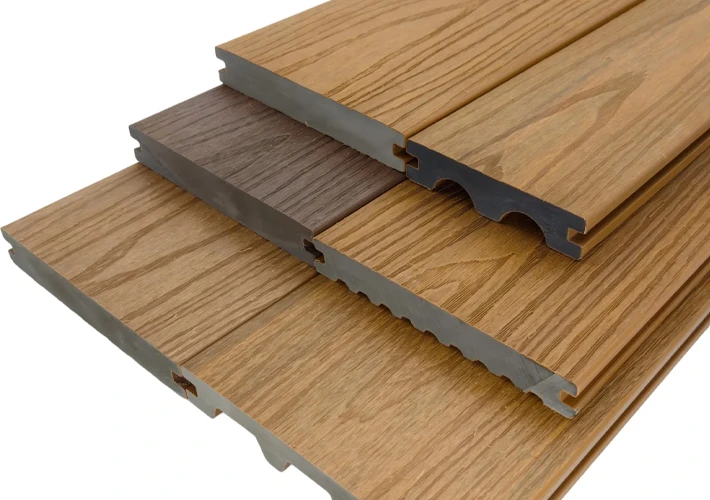
- Multiple colors and surface textures
- Custom profile options
- Compatibility with concealed fastening systems
- Suitability for large commercial projects
For professional procurement, these characteristics should be supported by technical specifications and, where necessary, third-party test reports rather than relying only on marketing descriptions.
Why Choose ASA Decking for Commercial Projects?
Commercial projects have different requirements from residential outdoor spaces. A homeowner may only need a small terrace, while a hotel, resort, shopping center, or property development may require hundreds or thousands of square meters of decking.
This makes lifecycle performance particularly important.
1. Better resistance to outdoor exposure
Commercial decking can remain outdoors for years. Continuous exposure to sunlight, rain, humidity, and temperature changes can gradually affect ordinary outdoor materials.
ASA is widely used as an exterior protective material because of its resistance to weathering and UV exposure.
For commercial projects in regions with strong sunlight, such as Australia, Southeast Asia, the Middle East, and parts of South America, UV performance should be one of the first specifications reviewed when selecting decking.
However, buyers should distinguish between ASA material itself and the actual performance of a finished decking product. The final result depends on ASA formulation, thickness, processing technology, color, composite core, and manufacturing quality.
2. Wood-like appearance
A major reason architects and developers choose composite decking is the ability to create a timber-inspired outdoor appearance without relying entirely on natural wood.
ASA decking can be manufactured with realistic grain patterns, embossed textures, and contemporary color options.
Common commercial design directions include:
- Natural oak-style colors
- Teak-inspired tones
- Walnut-style shades
- Grey wood
- Dark brown
- Charcoal
- Modern neutral colors
This allows decking to coordinate with exterior wall cladding, outdoor furniture, landscaping, facades, and architectural elements.
For hotels and resorts, visual consistency is particularly important because outdoor decks are often part of the overall guest experience.
3. Lower routine maintenance
Natural timber decking can require regular cleaning, staining, oiling, sealing, and other maintenance depending on the species and local climate.
ASA composite decking is generally designed to reduce these routine maintenance requirements.
For commercial property owners, this can be valuable because maintenance costs are not limited to material costs. They can also include:
- Labor
- Cleaning equipment
- Coatings
- Surface treatments
- Temporary closure of outdoor areas
- Replacement of damaged boards
Reducing maintenance requirements can make composite decking attractive for properties with large outdoor areas.
4. Suitable for high-traffic environments
Commercial outdoor areas often experience significantly more foot traffic than private residential decks.
Hotels may have guests walking between pools, restaurants, gardens, and outdoor lounges. Restaurants may have customers moving between indoor and outdoor seating. Commercial developments may have continuous pedestrian traffic.
The decking specification therefore needs to consider:
- Board structure
- Load requirements
- Joist spacing
- Fastening system
- Surface wear
- Installation quality
- Local building regulations
ASA decking can be designed for commercial applications, but buyers should always request the manufacturer’s recommended installation specifications rather than assuming all profiles have identical load-bearing performance.
5. More consistent supply for large projects
Natural wood can vary significantly in color, grain, moisture content, and availability.
For commercial projects requiring large quantities, composite decking provides manufacturers with greater control over production consistency.
A professional factory can provide consistent:
- Dimensions
- Surface patterns
- Color batches
- Profile structures
- Packaging
- Production schedules
This is particularly important for distributors and contractors who need to supply multiple projects using the same product specification.
Major Applications of ASA Decking
ASA decking can be used in many commercial outdoor environments. The correct product specification depends on the project’s traffic, climate, installation structure, and local regulations.
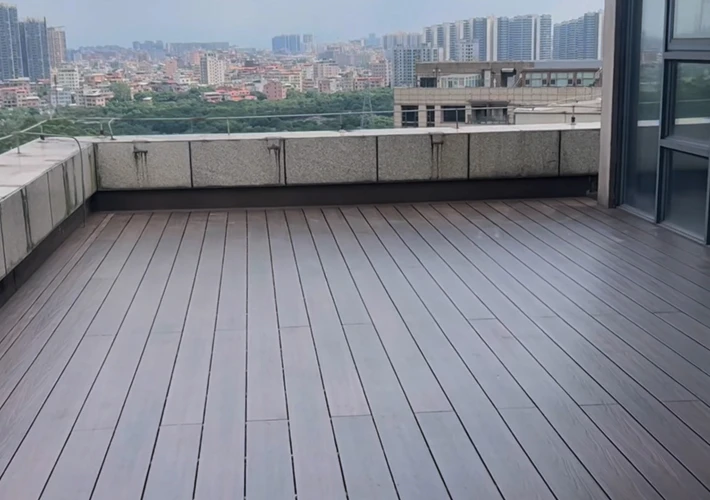
Hotel and Resort Decking
Hotels and resorts are among the most visible applications for premium outdoor decking.
Typical locations include:
- Poolside platforms
- Outdoor restaurants
- Resort terraces
- Guest recreation areas
- Garden walkways
- Rooftop leisure areas
- Beach resort decks
- Outdoor lounges
The appearance of the decking is important because it contributes to the hotel’s architectural style.
ASA decking can help designers create a consistent wood-inspired appearance while reducing some of the maintenance requirements associated with natural timber.
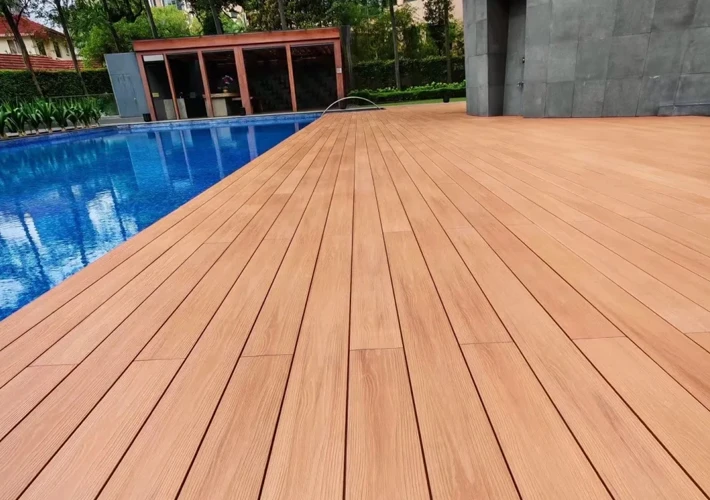
Poolside Applications
Pool areas require special attention because decking is exposed to water, moisture, cleaning chemicals, and frequent foot traffic.
ASA decking can be considered for:
- Swimming pool surrounds
- Resort pools
- Hotel pool decks
- Private club pools
- Spa outdoor areas
- Water recreation facilities
However, buyers should specifically request slip-resistance test data if the product will be installed around swimming pools or other wet areas.
A decking product should not be considered suitable for a poolside project solely because it is waterproof or moisture resistant.
Restaurant and Café Terraces
Outdoor dining areas need materials that look attractive while being practical for regular cleaning and commercial use.
ASA decking can be used for:
- Restaurant terraces
- Café patios
- Rooftop dining
- Outdoor bars
- Food and beverage areas
- Hotel restaurants
Dark and medium wood tones are often selected for premium hospitality environments, while grey and natural colors can suit contemporary architectural designs.
Residential and Mixed-Use Developments
Although this article focuses on commercial projects, ASA decking is also applicable to shared outdoor spaces in:
- Apartment developments
- Condominiums
- Townhouse communities
- Mixed-use developments
- Clubhouses
- Shared terraces
Developers can use one decking specification across multiple buildings or shared facilities, helping simplify procurement and project management.
Public and Leisure Spaces
ASA composite decking can also be considered for:
- Parks
- Viewing platforms
- Pedestrian decks
- Outdoor recreation areas
- Commercial waterfront developments
- Community leisure spaces
For public projects, buyers should pay particular attention to local fire, structural, slip-resistance, accessibility, and environmental requirements.
ASA Decking vs. Traditional Wood and Standard WPC
Before purchasing ASA decking, commercial buyers usually compare it with natural timber and conventional WPC decking.
| Factor | ASA Decking | Traditional Wood | Standard WPC |
|---|---|---|---|
| Wood appearance | High | Natural | High |
| UV protection | Designed for strong exterior exposure | Depends on species and coating | Depends on formulation |
| Moisture resistance | High | Depends on wood species/treatment | Generally high |
| Routine maintenance | Relatively low | Often higher | Relatively low |
| Color consistency | High | Natural variation | High |
| Surface protection | ASA layer | Natural wood/coating | Composite surface |
| Custom colors | Available | Limited by species/coating | Available |
| Commercial suitability | Suitable with correct specification | Suitable with maintenance | Suitable with correct specification |
| Long-term appearance | Depends on quality and exposure | Can weather naturally | Depends on formulation |
The purpose of this comparison is not to suggest that one material is universally suitable. Project conditions determine the correct choice.
For example, natural timber may be preferred for projects specifically requiring authentic wood material, while ASA decking may be considered where the project prioritizes weather resistance, consistent appearance, and reduced maintenance.
How to Choose ASA Decking for a Commercial Project
Choosing an ASA decking supplier requires more than comparing the quoted price per square meter.
1. Check the ASA surface
The ASA layer is one of the defining features of this product.
Ask the supplier:
- What ASA material is used?
- What is the surface layer thickness?
- How is the ASA layer bonded to the core?
- What UV/weathering tests are available?
- How does the supplier control color consistency?
- Is the surface embossed or brushed?
- What surface textures are available?
A supplier should be able to provide technical information instead of simply stating that the product is “UV resistant.”
2. Evaluate the composite core
The core determines much of the product’s structural behavior.
Important factors include:
- Raw material composition
- Density
- Profile structure
- Internal reinforcement
- Dimensional stability
- Water absorption
- Thermal expansion
- Recommended joist spacing
For commercial applications, buyers should request the complete technical data sheet.
3. Consider climate conditions
Different markets create different challenges.
For example:
Australia: strong sunlight and high UV exposure can make weathering performance particularly important.
Southeast Asia: high humidity, rainfall, and temperature can make moisture resistance and dimensional stability important.
Middle East: high temperatures and intense sunlight require careful evaluation of outdoor weathering performance.
Europe: freeze-thaw cycles and seasonal temperature changes may need to be considered depending on the location.
The supplier should understand the intended destination before recommending a specification.
4. Confirm dimensions and profile
Common decking dimensions vary between manufacturers.
Buyers should confirm:
- Board width
- Board thickness
- Standard length
- Weight per meter
- Hollow or solid structure
- Surface profile
- Groove design
- Installation system
For large projects, the profile should be selected based on structural requirements rather than appearance alone.
5. Check installation requirements
A quality decking product can still perform poorly if installed incorrectly.
The supplier should provide guidance on:
- Joist spacing
- Expansion gaps
- Fastener selection
- Starter clips
- Intermediate clips
- Edge finishing
- Ventilation
- Drainage
- Board orientation
- Thermal expansion allowances
Professional manufacturers can also provide installation drawings or technical guidance for contractors.
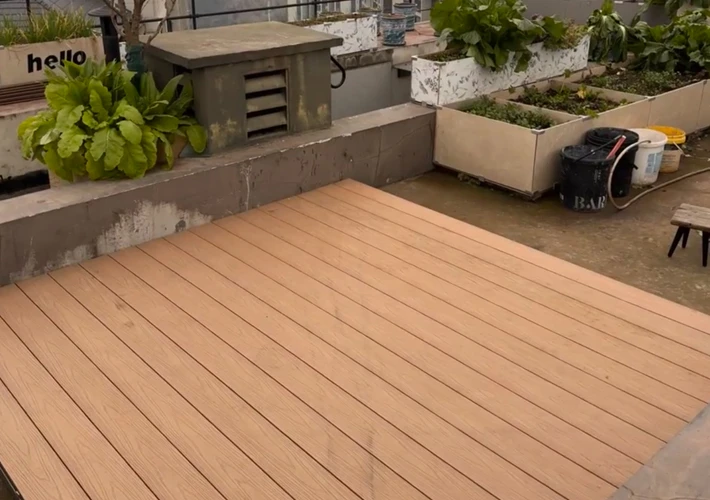
Why Supplier Capability Matters for B2B Buyers
For importers and distributors, purchasing ASA decking is not simply a one-time transaction. The supplier needs to support repeated orders, quality consistency, packaging, logistics, and product development.
A professional China factory can provide advantages such as:
Factory-direct production
Buying directly from a manufacturer can reduce unnecessary supply-chain layers and make technical communication easier.
For distributors, this can also provide more flexibility when discussing:
- MOQ
- Container quantities
- Private labeling
- Custom colors
- Custom dimensions
- Packaging
- New product development
OEM and ODM capability
Commercial projects sometimes require specifications that are not available in standard catalogs.
OEM/ODM services can include:
- Custom colors
- Surface textures
- Dimensions
- Packaging
- Product branding
- Profile development
For distributors developing their own product lines, OEM capability can be particularly useful.
Quality control
A commercial decking supplier should have quality control procedures covering incoming raw materials, production, surface quality, dimensions, packaging, and final inspection.
For larger orders, buyers can also request:
- Pre-production samples
- Production samples
- Inspection reports
- Loading photos
- Container loading records
- Third-party inspection
These steps can reduce misunderstandings between the factory and overseas buyer.
How to Calculate the Cost of ASA Decking
The purchase price of ASA decking is only one part of the total project cost.
A B2B buyer should consider:
Total landed cost = product cost + packaging + inland transportation + shipping + customs + duties/taxes + local transportation + installation accessories + installation labor
The quoted price may also vary according to:
- Product dimensions
- ASA surface specification
- Color
- Order quantity
- Customization
- Packaging
- Container loading efficiency
- Destination
- Incoterms
For this reason, comparing two suppliers only by price per square meter can be misleading.
A supplier offering a lower initial price may have different product specifications, packaging, accessory requirements, or container loading efficiency.
For commercial procurement, it is better to compare suppliers using the same technical specification and the same delivery terms.
Ordering ASA Decking from a China Factory
For importers, contractors, and distributors, a professional purchasing process can follow several steps.
Step 1: Send project requirements
Provide:
- Project type
- Destination country
- Estimated quantity
- Required dimensions
- Preferred colors
- Installation method
- Expected delivery date
The more information provided, the more accurately the factory can prepare a quotation.
Step 2: Request samples
Samples allow buyers to evaluate:
- Color
- Texture
- Surface finish
- Board structure
- Dimensions
- Packaging
- Overall appearance
For commercial projects, it is recommended to evaluate samples under actual project conditions where possible.
Step 3: Confirm technical specifications
Before placing an order, confirm the final specification in writing.
This should include:
- Product name
- Dimensions
- Color
- Surface finish
- Core specification
- Quantity
- Packaging
- Accessories
- Quality standard
- Delivery terms
Step 4: Confirm container loading
Because decking is a relatively long product, container loading efficiency can have a significant effect on logistics costs.
The factory should provide estimated loading quantities based on the selected dimensions and packaging.
Step 5: Production and inspection
For larger B2B orders, buyers can arrange factory inspection or third-party inspection according to the contract.
Step 6: Installation support
The supplier should provide installation instructions and technical recommendations so that the overseas contractor can install the system correctly.
Solidexwood ASA Decking for Commercial Buyers
Solidexwood is a China factory specializing in composite outdoor products, including ASA decking, composite decking, composite cladding, fencing, and related exterior materials.
Our ASA decking is developed for buyers who need a combination of wood-inspired appearance and exterior performance for commercial applications.
Solidexwood supports B2B customers such as:
- Importers
- Building material distributors
- Outdoor product wholesalers
- Contractors
- Developers
- Architects
- Project procurement companies
- Private-label brands
For commercial projects, we can discuss different product specifications according to the destination market, application requirements, order quantity, and project design.
Our factory-direct model also supports communication on product customization, packaging, container loading, and repeat orders.
For distributors, product consistency is particularly important. When the same product needs to be reordered several months later, maintaining the same dimensions, color, surface texture, and packaging specification can help simplify inventory management.
FAQ About ASA Decking for Commercial Projects
Is ASA decking suitable for hotels?
Yes, ASA decking can be used for hotel terraces, pool areas, outdoor restaurants, resort walkways, gardens, and leisure spaces when the selected product meets the project’s structural, slip-resistance, fire, and local building requirements.
Is ASA decking suitable for poolside areas?
It can be used for poolside applications, but buyers should verify the specific product’s slip resistance, moisture performance, installation requirements, and applicable local standards. Poolside suitability should be based on technical data rather than the ASA label alone.
Is ASA decking better than WPC?
ASA decking is itself a type of composite decking system in which an ASA protective surface is used. The practical difference depends on the construction and formulation of the specific products being compared. Buyers should compare the complete specifications rather than comparing the names alone.
Does ASA decking require maintenance?
ASA decking generally requires less routine maintenance than many natural timber decking systems. Regular cleaning is still necessary, particularly in commercial environments with heavy foot traffic.
Can ASA decking be customized?
Depending on the manufacturer, customization can include colors, dimensions, surface textures, profiles, packaging, and branding. MOQ requirements should be confirmed before production.
What should I ask an ASA decking manufacturer?
At minimum, ask about:
- ASA surface specification
- Core material
- Product dimensions
- Weight
- UV/weathering performance
- Slip resistance
- Load-bearing information
- Recommended joist spacing
- Installation system
- Available colors
- MOQ
- Production lead time
- Packaging
- Container loading
- Warranty
- Testing and certifications
Conclusion
ASA decking is increasingly relevant to commercial outdoor projects where appearance, weather resistance, maintenance, and supply consistency all need to be considered together.
For hotels, resorts, pool areas, restaurants, terraces, apartment developments, and other commercial environments, the material can provide a wood-inspired appearance combined with the practical characteristics expected from modern composite outdoor products.
However, the quality of ASA decking depends heavily on the complete product construction and manufacturing process. The ASA layer, composite core, profile design, installation system, testing, and quality control should all be evaluated before purchase.
For B2B buyers, choosing a manufacturer rather than simply selecting a product can also make a major difference. A capable factory can provide samples, technical specifications, customization, packaging, container loading, quality inspection, and ongoing supply support.
Solidexwood provides factory-direct ASA decking and outdoor composite solutions for international distributors, importers, contractors, developers, and commercial projects. If you are sourcing ASA decking for a hotel, resort, poolside, commercial terrace, or large outdoor development, contact Solidexwood to discuss specifications, samples, customization, MOQ, and container orders.
Solidexwood — Outdoor Composite Solutions from China.