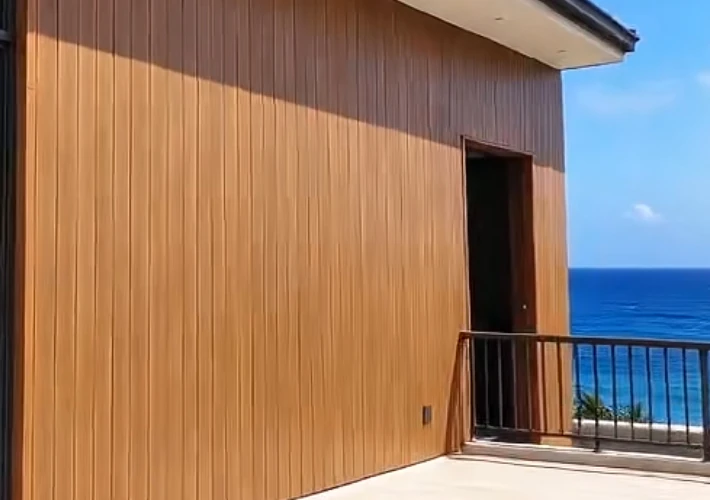
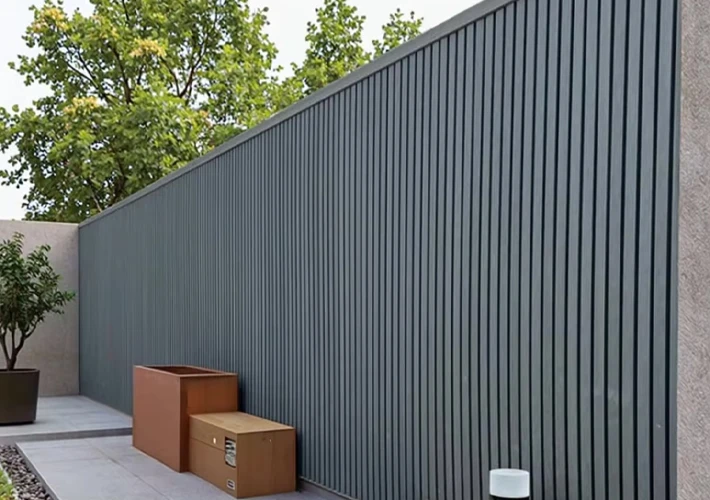
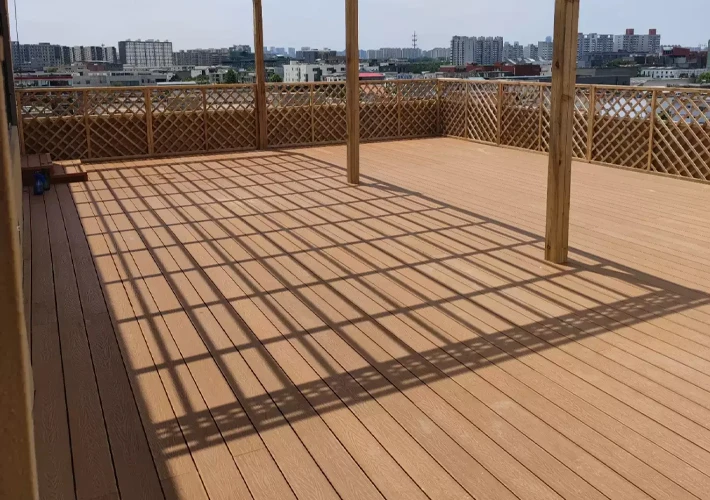
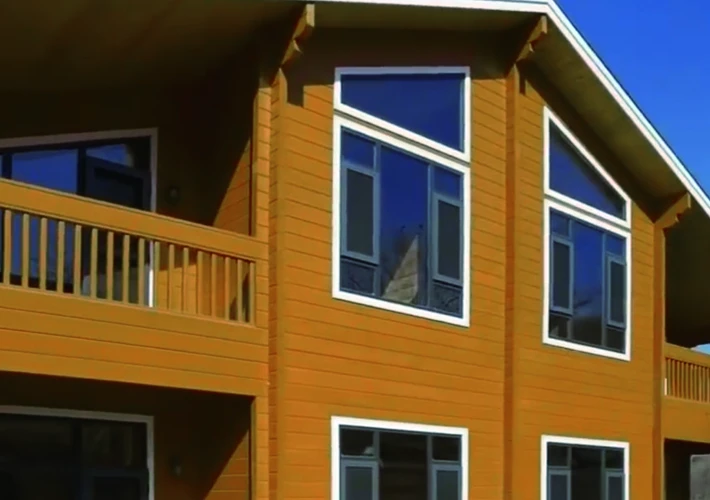
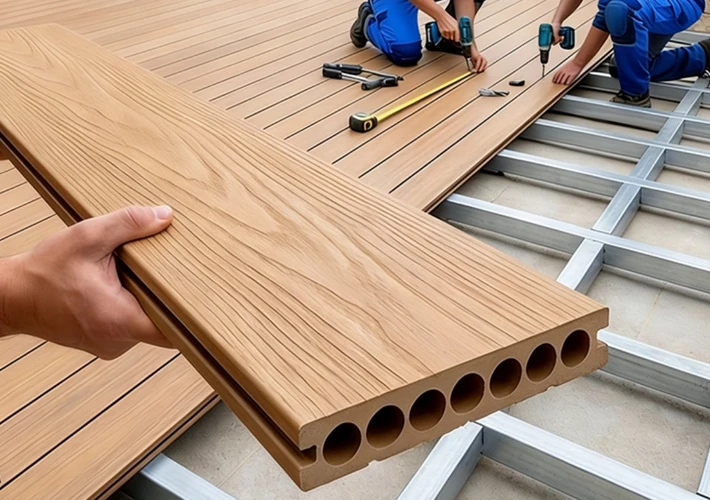
ASA floor decking is an advanced outdoor flooring solution that combines weather-resistant polymer technology with an engineered structural core. Unlike traditional timber decking and conventional wood-plastic composite (WPC) decking, ASA decking uses specialized materials to improve UV resistance, color stability, moisture resistance, and long-term outdoor performance.
But what makes ASA decking different from other outdoor flooring materials? The answer lies in its material composition. From Acrylonitrile Styrene Acrylate (ASA) resin to PVC-based composite cores, mineral fillers, reinforcing materials, and processing additives, each component plays a specific role in determining the final product’s performance.
For importers, wholesalers, building material distributors, architects, and outdoor construction contractors, understanding these materials is essential when evaluating decking products from China. The composition affects not only product durability but also weight, dimensional stability, surface quality, maintenance requirements, and overall purchasing costs.
As a professional China outdoor composite decking manufacturer, Solidexwood focuses on advanced ASA decking solutions designed for demanding outdoor environments. Its ASA decking combines a PVC micro-foamed core with an ASA co-extruded protective surface, creating a material structure that balances lightweight construction with outdoor weather resistance.
This article explores the unique materials used in ASA floor decking, explains their individual functions, examines how they work together, and provides practical purchasing considerations for international B2B buyers.
Understanding the Material Structure of ASA Floor Decking
Before examining individual materials, it is important to understand how ASA floor decking is constructed.
ASA decking is not a single-material product. It is an engineered composite system consisting of a structural core and a protective exterior layer. These two components have different material properties and perform complementary functions.
The core is responsible for the board’s structural characteristics, including stiffness, weight, dimensional stability, and mechanical strength. The outer ASA layer is designed to protect the visible surface against sunlight, moisture, temperature fluctuations, and other environmental conditions.
For Solidexwood ASA decking, the basic construction can be described as:
- Outer layer: ASA (Acrylonitrile Styrene Acrylate) weather-resistant polymer.
- Core layer: PVC (Polyvinyl Chloride) micro-foamed composite structure.
- Formulation components: Depending on the production formulation, stabilizers, processing aids, mineral fillers, pigments, and other functional additives may be incorporated into the core or surface compound.
Each layer is developed to perform a specific function rather than simply combining different materials for convenience.
ASA Surface Layer: Outdoor Protection
The ASA surface is one of the most distinctive components of ASA decking. It is engineered to withstand outdoor exposure and maintain the product’s appearance over time.
Natural timber can gradually lose its original color because of sunlight, moisture, and weathering. Conventional composite decking can also experience surface fading, staining, or aging depending on its polymer formulation and protective technology.
ASA resin offers an alternative because of its strong outdoor weatherability and resistance to UV-related degradation.
In co-extruded decking, the ASA material forms a protective outer layer over the structural core. This layer also contributes to the board’s visible color, texture, and decorative finish.
PVC Micro-Foamed Core: Structural Support
The core of Solidexwood ASA decking uses PVC micro-foaming technology.
PVC is a thermoplastic material widely used in construction products because of its moisture resistance, chemical resistance, and versatility in processing.
The micro-foaming process creates a controlled cellular structure inside the core. Compared with a fully solid structure using the same basic material system, this approach can reduce material density and board weight while maintaining the required structural characteristics through appropriate formulation and profile design.
This is particularly useful for large outdoor decking projects where transportation, handling, installation efficiency, and structural requirements all influence procurement decisions.
Why the Combination Matters
Using ASA and PVC together allows the two materials to perform different jobs.
ASA focuses on the exposed surface, while the PVC-based core provides the main body of the board.
This separation of functions is an important characteristic of modern composite decking technology. Rather than expecting one material to provide every performance feature, manufacturers can optimize the surface and core independently.
However, not every product marketed as ASA decking has the same structure. Some manufacturers use wood-plastic composite cores, while others use PVC-based or mineral-filled composite systems. Buyers should therefore verify the actual construction and technical specifications of each product before placing bulk orders.
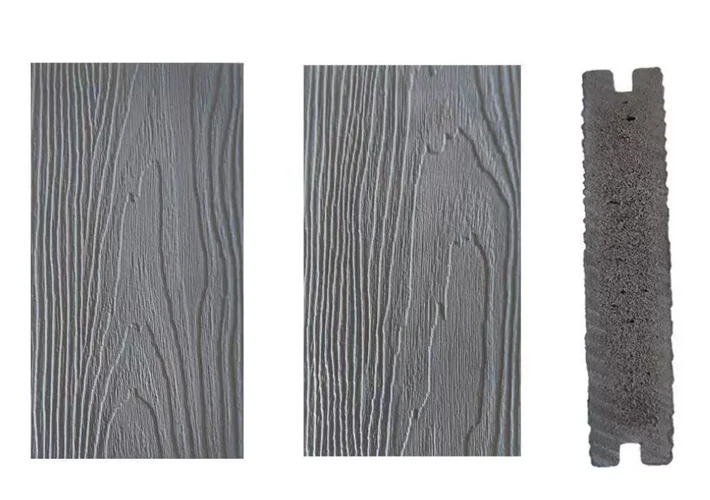
ASA Resin: The Key Material Behind Weather Resistance and Color Stability
The most recognizable material in ASA decking is ASA resin.
ASA stands for Acrylonitrile Styrene Acrylate, an engineering thermoplastic developed for applications that require good mechanical properties and long-term resistance to outdoor environmental conditions.
Its molecular composition combines three important components, each contributing to the overall material performance.
Acrylonitrile: Chemical and Mechanical Performance
Acrylonitrile contributes to the material’s chemical resistance, rigidity, and mechanical characteristics.
In outdoor decking applications, these properties help the ASA formulation maintain its performance under different environmental conditions.
Outdoor boards may be exposed to cleaning products, dust, rainwater, and other common contaminants. A suitable ASA formulation helps maintain surface integrity during regular use.
Styrene: Processability and Surface Quality
Styrene contributes to the polymer’s processing characteristics, rigidity, and surface appearance.
For decking manufacturers, processing consistency is important because the ASA material must pass through extrusion equipment and form a uniform outer layer.
A stable surface compound helps manufacturers control:
- Surface smoothness and consistency.
- Color distribution.
- Extrusion stability.
- Surface appearance across production batches.
- Compatibility with different decorative textures.
These characteristics are particularly important for distributors and project contractors who need consistent product appearance across large orders.
Acrylate: UV Resistance and Outdoor Weatherability
The acrylate component is particularly important in ASA’s outdoor performance.
One of the biggest challenges for outdoor flooring is continuous exposure to ultraviolet radiation.
UV radiation can gradually damage many polymer materials, leading to changes in color, surface appearance, and mechanical properties.
ASA is valued for its improved resistance to outdoor weathering compared with conventional ABS-type materials. Its acrylic rubber component contributes to better resistance against UV-related aging and environmental exposure.
For outdoor decking manufacturers, this makes ASA a valuable material for products used in:
- Swimming pool surroundings.
- Garden terraces.
- Outdoor balconies.
- Hotel outdoor platforms.
- Commercial walkways.
- Resort landscaping.
- Coastal outdoor developments.
Why Is ASA Better Suited to Outdoor Applications?
The main advantage of ASA is not simply that it is a strong plastic. Its value comes from the combination of polymer properties that make it suitable for exterior applications.
Compared with many conventional surface materials, properly formulated ASA offers:
- Improved UV resistance: Helps reduce the impact of prolonged sunlight exposure.
- Color stability: Helps maintain the original appearance of the decking surface.
- Weather resistance: Performs well under changing outdoor environmental conditions.
- Moisture resistance: Helps protect the exposed surface from rain and humidity.
- Surface durability: Supports long-term use in outdoor environments.
- Decorative flexibility: Can be formulated in different colors and finished with wood-like textures.
For B2B customers, color stability is especially important. When a hotel, resort, or commercial development uses hundreds or thousands of square meters of decking, inconsistent fading can affect the overall appearance of the project.
ASA’s weather-resistant properties help address this concern, although actual performance depends on resin quality, formulation, cap-layer thickness, manufacturing conditions, and exposure levels.
ASA Resin and the Development of Third-Generation Decking
Outdoor composite decking has evolved through several material generations.
Traditional WPC decking combines wood fibers with thermoplastic polymers. Later capped products introduced an additional polymer protective layer to improve surface protection.
ASA decking represents a further development in exterior surface technology by using ASA as the protective polymer.
For this reason, ASA decking is often positioned in the premium segment of the outdoor composite market.
For wholesalers and importers, the important question is not simply whether a product contains ASA. They should also examine the quality of the resin, the consistency of the co-extruded layer, the bonding between the layers, and the product’s actual weathering test results.
A high-quality ASA surface is the result of both material selection and manufacturing control.
PVC Resin and Micro-Foaming Technology: The Structural Core of Solidexwood ASA Decking
While ASA receives much of the attention because it protects the visible surface, the core material is equally important.
Solidexwood uses a PVC micro-foamed core in its ASA decking system. This material structure differs from traditional wood-plastic composite cores that primarily use wood fibers combined with PE or PP polymers.
PVC, or Polyvinyl Chloride, is one of the most widely used polymers in the construction industry.
It is commonly found in pipes, window profiles, wall panels, doors, flooring materials, and other building products.
Its versatility makes it suitable for manufacturing engineered outdoor decking profiles.
What Makes PVC Suitable for Decking?
PVC offers several characteristics that are valuable for outdoor flooring applications.
First, moisture resistance.
PVC does not behave like natural wood when exposed to moisture. It does not rely on wood fibers for its structural composition and does not undergo the same wood-related swelling, rotting, or biological deterioration mechanisms.
This makes PVC-based decking an attractive option for outdoor environments where rain, humidity, and frequent cleaning are common.
Second, chemical resistance.
PVC has good resistance to many commonly encountered chemicals. This is useful in outdoor applications where the surface may come into contact with cleaning agents and environmental contaminants.
Third, processing flexibility.
PVC can be formulated and extruded into different shapes and internal structures. Manufacturers can develop decking boards with different dimensions, profiles, and mechanical characteristics.
Fourth, dimensional performance.
With appropriate formulation and manufacturing control, PVC-based composite profiles can offer consistent dimensions and useful dimensional stability.
These characteristics make PVC a suitable structural material for modern composite decking.
What Is PVC Micro-Foaming Technology?
Micro-foaming is a manufacturing technology that introduces a controlled cellular structure into the material.
During processing, a foaming system creates numerous small cells within the PVC compound.
Instead of producing a completely dense material, the extrusion process creates a lightweight internal structure.
The purpose is to optimize the relationship between material consumption, board weight, and mechanical performance.
A micro-foamed PVC core can provide several advantages:
- Reduced material density compared with an equivalent solid construction.
- Lower overall board weight.
- Easier transportation and manual handling.
- Potentially improved material efficiency.
- Flexibility in designing different decking profiles.
However, foaming quality is critical. Excessive or inconsistent foaming can reduce mechanical strength and affect screw-holding performance.
Therefore, manufacturers must carefully control processing temperature, extrusion pressure, material formulation, and cooling conditions.
Why Is a Lightweight Core Important for B2B Buyers?
For international buyers, product weight influences more than installation convenience.
It can also affect logistics and project costs.
Consider a distributor importing several containers of decking products. Differences in board density and profile construction can influence container loading, handling requirements, and transportation costs.
For contractors, lighter boards can make installation and material movement easier, particularly on large terraces, elevated platforms, and commercial developments.
For project developers, the combination of lower weight and suitable mechanical performance can provide greater flexibility when selecting an outdoor flooring system.
However, a lightweight product should never be evaluated by weight alone.
Buyers should request information about:
- Board density.
- Board dimensions.
- Internal profile structure.
- Flexural performance.
- Impact resistance.
- Screw-holding performance.
- Recommended joist spacing.
- Maximum installation span.
The most suitable product is one that meets the structural requirements of the intended application rather than simply offering the lowest weight.
PVC Core vs. Traditional Wood-Plastic Composite Core
A traditional WPC core usually contains wood flour or wood fibers combined with plastic polymers such as polyethylene or polypropylene.
Solidexwood’s PVC micro-foamed ASA decking uses a different structural approach.
| Comparison | Traditional WPC Core | Solidexwood ASA Decking Core |
|---|---|---|
| Main polymer system | Often PE or PP | PVC |
| Wood fiber | Commonly included | Not the defining structural component |
| Internal structure | Solid or hollow composite | Micro-foamed PVC |
| Main function | Structural support | Structural support |
| Moisture behavior | Depends on formulation and wood content | PVC-based moisture-resistant structure |
| Surface protection | Depends on product design | ASA co-extruded layer |
| Weight | Depends on density and profile | Optimized through micro-foaming |
This comparison highlights why buyers should not assume that all composite decking products have identical material structures.
When evaluating ASA decking, understanding the core is just as important as identifying the outer polymer.
Mineral Fillers, Reinforcing Materials, and Functional Additives
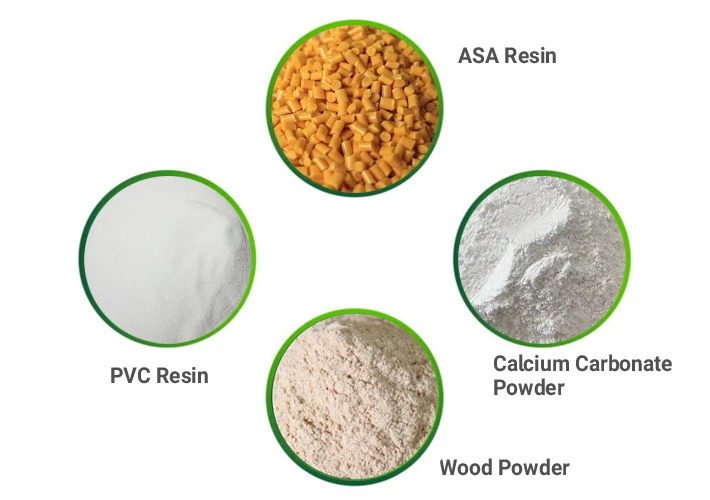
ASA resin and PVC resin are the primary materials to understand when evaluating Solidexwood’s ASA decking structure. However, engineered polymer products generally require additional formulation components to achieve consistent processing and finished-product performance.
Depending on the manufacturer’s specific formulation, these can include mineral fillers, reinforcing materials, heat stabilizers, processing aids, lubricants, pigments, and other functional additives.
It is important to distinguish between common industry formulation options and the confirmed bill of materials of a particular product. The exact ingredients and proportions should be obtained from the manufacturer rather than assumed from the product category.
Calcium Carbonate: A Common Mineral Filler
Calcium carbonate (CaCO3) is a widely used mineral filler in the plastics and construction materials industries.
It can be incorporated into PVC-based formulations for several purposes.
Cost and formulation control
Calcium carbonate can help manufacturers manage raw material costs and adjust the physical properties of a compound.
Rigidity
Depending on particle size, surface treatment, loading level, and compatibility with the polymer, mineral fillers can influence stiffness and dimensional behavior.
Processing characteristics
The correct filler formulation can contribute to consistent extrusion and help manufacturers develop the required material density.
Surface and mechanical properties
Particle characteristics and dispersion can affect the final material’s surface quality and mechanical performance.
However, adding more calcium carbonate does not automatically produce better decking.
Excessive or poorly dispersed filler may negatively affect impact resistance, toughness, and processing stability.
Professional manufacturers need to balance the filler content with the polymer system and the intended mechanical requirements.
Glass Fiber: A Potential Reinforcing Material
Glass fiber is another material used in some engineered composite decking formulations.
It is valued for its ability to improve stiffness and mechanical performance when properly incorporated into a suitable polymer matrix.
Potential functions include:
- Increasing rigidity.
- Improving dimensional stability.
- Supporting mechanical performance.
- Reducing deformation under certain loading conditions.
Glass-fiber reinforcement is not a universal ingredient in ASA decking. Some products use it, while others rely on different formulation systems.
Buyers interested in reinforced decking should ask manufacturers to confirm whether glass fiber is included and request relevant technical data.
Heat Stabilizers: Supporting PVC Processing
PVC requires appropriate heat stabilization during manufacturing because it can undergo thermal degradation when exposed to excessive processing temperatures.
Heat stabilizers help protect the PVC compound during extrusion and support consistent processing.
They are important for controlling:
- Thermal stability.
- Processing consistency.
- Material appearance.
- Long-term compound quality.
A well-designed stabilizer system helps manufacturers maintain a stable extrusion process and produce boards with consistent physical characteristics.
Processing Aids and Lubricants
Processing aids and lubricants are commonly used in PVC extrusion formulations.
They help regulate material flow, fusion, extrusion behavior, and surface formation.
Their importance becomes particularly clear in co-extrusion manufacturing, where two different polymer compounds must be processed simultaneously.
Inconsistent material flow can result in uneven board dimensions, surface defects, or inconsistent bonding between the core and protective layer.
Appropriate processing additives help manufacturers achieve a more stable production process.
Pigments and Colorants
Color is an important purchasing consideration in outdoor decking.
Popular colors include:
- Teak.
- Walnut.
- Light oak.
- Grey.
- Charcoal.
- Dark brown.
- Natural wood tones.
Pigments and colorants are used to create the required appearance of the ASA surface.
For international distributors, color consistency across batches is especially important because customers may reorder the same product months or years after the initial purchase.
A professional factory should maintain color references, sample records, and production quality-control procedures to reduce unnecessary color differences.
Why Material Formulation Matters More Than Ingredient Quantity
A common mistake in composite material purchasing is assuming that a product containing more additives or fillers must be better.
In reality, performance depends on how the materials interact.
For example, a suitable PVC formulation must balance:
- Polymer quality.
- Filler content.
- Stabilizer selection.
- Processing characteristics.
- Foaming consistency.
- Mechanical requirements.
Similarly, ASA surface quality depends on resin characteristics, pigment dispersion, layer thickness, and co-extrusion conditions.
A well-balanced formulation is more valuable than a list of impressive-sounding ingredients.
For B2B buyers, requesting actual product specifications and test results is the most reliable way to evaluate a manufacturer’s material quality.
Co-Extrusion Technology: How Different Materials Work Together
The performance of ASA decking depends not only on the materials themselves but also on how they are combined during manufacturing.
Co-extrusion is one of the most important technologies used in producing ASA-capped composite decking.
Unlike ordinary surface painting or decorative film application, co-extrusion allows the core and protective surface material to be processed together through specialized extrusion equipment.
This creates an integrated multi-layer decking board.
What Is ASA Co-Extrusion?
Co-extrusion is a manufacturing process in which two or more different polymer compounds are extruded simultaneously through a specially designed die.
For ASA decking, the process generally involves:
- Preparing the PVC-based core compound.
- Preparing the ASA surface compound.
- Feeding the materials into their respective extrusion systems.
- Bringing the materials together inside a co-extrusion die.
- Forming the decking profile with an integrated ASA surface.
- Cooling and calibrating the board.
- Cutting, finishing, and inspecting the final product.
The PVC compound forms the main structural body, while the ASA compound creates the exterior protective layer.
The two materials are joined during extrusion rather than being treated as completely separate finished products.
Why Is Co-Extrusion Important?
The quality of the interface between the ASA layer and the PVC core is a critical factor in the final product.
If the bonding is inconsistent, the surface layer may experience defects or separation during use.
A professional manufacturer must control several production variables:
Material compatibility
The ASA and PVC compounds must be suitable for the selected co-extrusion process. Their processing characteristics must be properly matched.
Extrusion temperature
Different materials have different processing requirements. Temperature control is necessary to ensure that both compounds flow and form correctly.
Extrusion pressure
Stable pressure helps maintain consistent material distribution and profile formation.
Cap-layer thickness
The ASA protective layer must be sufficiently uniform across the intended surface area.
Cooling and calibration
The board must be cooled under controlled conditions to maintain its dimensions and profile accuracy.
These factors influence the consistency and durability of the finished decking.
Co-Extrusion vs. Ordinary Surface Coating
There are important differences between co-extruded decking and decking that uses ordinary surface coatings.
| Feature | Ordinary Surface Coating | ASA Co-Extrusion |
|---|---|---|
| Manufacturing method | Coating after profile formation | Simultaneous material extrusion |
| Surface material | Paint or applied coating | ASA polymer compound |
| Surface integration | Depends on coating adhesion | Integrated during extrusion |
| Layer consistency | Depends on application process | Controlled through extrusion |
| Main purpose | Decorative and protective finishing | Integrated weather-resistant surface |
| Quality considerations | Coating thickness and adhesion | Resin quality, bonding, and cap thickness |
Co-extrusion does not automatically guarantee superior performance. The quality of the materials, equipment, process settings, and quality-control procedures still matters.
However, a properly manufactured ASA co-extruded board offers a more integrated protective surface system than a product relying only on ordinary decorative paint.
Why Does ASA Layer Thickness Matter?
The thickness of the ASA layer is an important specification that professional buyers should check.
A protective layer that is too thin may not provide the expected long-term surface protection. On the other hand, increasing the layer thickness without optimizing the material formulation and production process can increase manufacturing costs without necessarily delivering proportionate performance improvements.
The appropriate thickness depends on the product design, exposure conditions, and manufacturer specifications.
When sourcing ASA decking, importers should ask for:
- Nominal ASA cap-layer thickness.
- Surface coverage.
- Co-extrusion structure.
- Bonding or adhesion test information.
- UV aging test results.
- Color stability data.
- Applicable product warranties.
These details help buyers distinguish genuine engineered ASA decking from products that use ASA mainly as a marketing description.
How Unique ASA Decking Materials Improve Outdoor Performance
The combination of ASA resin, a PVC micro-foamed core, and suitable formulation additives provides several advantages for outdoor decking applications.
Each material contributes different properties, but the final performance depends on the complete product structure.
Improved UV Resistance and Color Retention
Outdoor flooring is constantly exposed to sunlight.
In regions such as Australia, the Middle East, Southeast Asia, and parts of South America, strong solar radiation can create additional challenges for outdoor construction materials.
Ordinary plastics and some composite surfaces may gradually experience discoloration or surface aging under prolonged UV exposure.
ASA is specifically valued for its weatherability and resistance to UV-related degradation.
The ASA protective layer helps maintain the decking’s original appearance for longer, reducing the visual deterioration associated with outdoor exposure.
For commercial projects, this is especially important.
Hotels, resorts, restaurants, and public outdoor spaces often need to maintain a consistent appearance because the decking is part of the overall architectural design.
A weather-resistant surface can help reduce the frequency of appearance-related maintenance and replacement.
Moisture Resistance for Outdoor Environments
Rain, humidity, and water exposure are common challenges for outdoor flooring.
Traditional timber can absorb moisture, swell, develop cracks, or become vulnerable to biological deterioration when it is not properly maintained.
PVC-based composite materials offer a different moisture-resistance mechanism.
PVC does not contain natural wood fibers as its defining structural component. This reduces concerns associated with wood-fiber moisture absorption and biological decay.
The ASA outer layer also helps protect the exposed surface from environmental moisture.
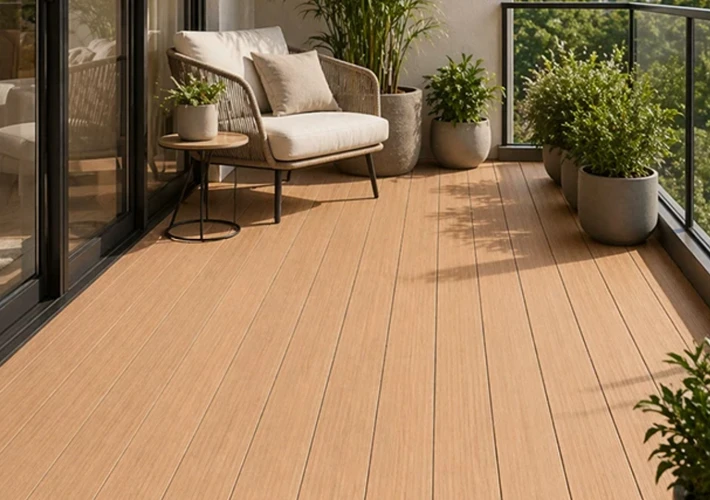
This makes ASA decking suitable for many outdoor applications, including garden terraces, balconies, and poolside platforms.
However, it is important to distinguish between material moisture resistance and a completely waterproof installed decking system.
Decking joints, drainage, substructure design, expansion gaps, and installation details still influence how water behaves around the finished platform.
Reduced Maintenance Requirements
Natural wood decking typically requires periodic maintenance to preserve its appearance and protect it against environmental exposure.
Depending on the timber species and climate, maintenance may include sanding, staining, sealing, or repainting.
ASA composite decking can reduce the need for these treatments.
Its protective surface and polymer-based core are designed for outdoor use without requiring routine wood preservation.
Regular cleaning is generally sufficient for normal dirt and surface contamination.
This can be beneficial for commercial property operators who manage:
- Hotel terraces.
- Resort walkways.
- Restaurant outdoor seating.
- Swimming pool surroundings.
- Public landscape platforms.
- Commercial rooftop decks.
Lower maintenance requirements can reduce long-term operating costs, particularly in large projects.
Actual cleaning frequency and maintenance requirements depend on the installation environment and product instructions.
Lightweight Construction and Installation Efficiency
The PVC micro-foamed core used in Solidexwood ASA decking is designed to reduce board weight while maintaining the required structural characteristics.
Lightweight construction can provide practical advantages during transportation, unloading, material handling, and installation.
For distributors, it can help optimize handling operations.
For contractors, it can simplify the movement of boards around construction sites.
For projects involving elevated terraces or rooftop platforms, weight is also an important design consideration.
Nevertheless, decking should always be installed according to the manufacturer’s structural recommendations. Lightweight construction does not eliminate the need for suitable joists, supports, fastening systems, and load calculations.
Resistance to Common Outdoor Deterioration
ASA and PVC-based materials offer useful resistance to several environmental factors.
These include:
- Rainwater and humidity.
- Common outdoor dirt and contaminants.
- UV exposure.
- Temperature fluctuations within the product’s specified operating conditions.
- Surface staining, depending on the formulation.
- Wood-related biological deterioration mechanisms.
The exact performance varies according to the product formulation and installation conditions.
For coastal environments, buyers should also consider salt exposure, metal fastener corrosion, drainage, and the suitability of the entire installation system.
A More Consistent Wood-Look Appearance
Many customers want the appearance of natural timber without the maintenance requirements associated with real wood.
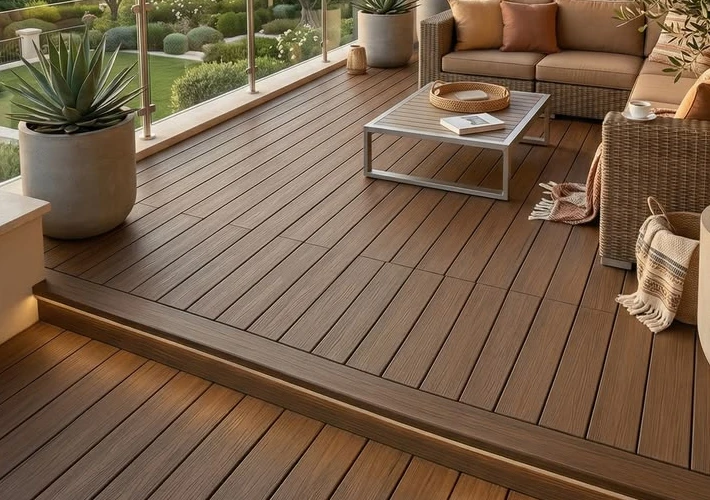
ASA decking can be manufactured in different colors and surface textures to reproduce the visual character of timber.
Popular finishes include:
- Natural teak.
- Dark walnut.
- Light oak.
- Grey wood grain.
- Deep brown.
- Contemporary charcoal.
Embossing and surface-texturing technologies can create more realistic wood-grain patterns.
For architects and landscape designers, these options make it easier to coordinate outdoor flooring with building facades, garden furniture, exterior wall panels, and landscape elements.
Performance in High-Temperature Environments
Outdoor decking in hot climates faces challenges beyond UV exposure.
High surface temperatures, thermal expansion, and repeated temperature fluctuations can influence the performance of the entire decking system.
ASA offers good outdoor weatherability, but it should not be interpreted as a guarantee that decking will remain cool under direct sunlight.
Likewise, the PVC micro-foamed core does not eliminate thermal expansion.
For projects in the Middle East, Australia, or other high-temperature markets, buyers should request information about:
- Recommended installation temperature.
- Thermal expansion coefficients.
- Required expansion gaps.
- Maximum joist spacing.
- Surface temperature characteristics.
- Suitable fastening methods.
Proper installation design is just as important as the choice of materials.
ASA Decking vs. Traditional WPC, PE Capped Decking, and Natural Wood
Understanding the unique materials used in ASA decking becomes easier when comparing them with other common outdoor flooring options.
Natural wood, traditional WPC, PE-capped WPC, and ASA composite decking all have different material structures.
The most appropriate option depends on the project’s budget, climate, appearance requirements, maintenance expectations, and structural specifications.
ASA Decking vs. Traditional WPC Decking
Traditional WPC decking is usually made from a combination of wood fibers or wood flour, thermoplastic polymers, and functional additives.
It offers the appearance of timber while reducing some of the maintenance requirements associated with natural wood.
However, because many WPC products contain natural wood-based components, their performance can be influenced by moisture absorption, formulation, profile design, and production quality.
ASA decking with a PVC-based core takes a different approach.
Its PVC core provides the structural body, while ASA provides the protective surface.
| Feature | Traditional WPC | ASA Decking |
|---|---|---|
| Core material | Usually wood fiber and PE/PP | PVC-based or other composite systems |
| Surface protection | Depends on product type | ASA protective layer |
| UV performance | Varies by formulation | Designed for improved weatherability |
| Moisture performance | Depends on wood content and formulation | PVC-based systems offer low water absorption |
| Maintenance | Generally low | Generally low |
| Appearance | Wood-like textures | Wood-like textures and colors |
| Main market | Residential and commercial | Premium outdoor applications |
The comparison is based on common material structures. Actual performance should be evaluated using product-specific test results.
ASA Decking vs. PE-Capped Composite Decking
PE-capped composite decking generally combines a wood-plastic composite core with an outer protective layer made from polyethylene-based material.
The protective cap helps improve the surface performance compared with many uncapped WPC products.
ASA decking uses a different surface polymer.
ASA is valued for its resistance to outdoor weathering and color degradation, making it attractive for markets with demanding sunlight and climate conditions.
| Feature | PE-Capped Decking | ASA Decking |
|---|---|---|
| Surface polymer | PE-based material | ASA resin |
| Core | Commonly WPC | PVC-based or other engineered composite |
| UV resistance | Depends on formulation | Strong outdoor weatherability |
| Color stability | Good in suitable formulations | A major ASA material advantage |
| Weather exposure | Suitable for many outdoor applications | Designed for demanding exterior applications |
| Market positioning | Mid-range to premium | Often premium |
The surface polymer is only one factor in determining decking quality. Buyers should also examine cap thickness, core composition, mechanical performance, and manufacturing consistency.
ASA Decking vs. Natural Wood
Natural timber remains popular because of its authentic grain, natural appearance, and traditional architectural appeal.
However, timber requires maintenance and may be affected by moisture, insects, fungi, and weather exposure depending on the species and treatment.
ASA composite decking offers a more engineered alternative.
| Feature | Natural Wood | ASA Composite Decking |
|---|---|---|
| Main material | Natural timber | ASA polymer and composite core |
| Appearance | Authentic wood grain | Wood-like engineered finishes |
| Moisture resistance | Depends on species and treatment | High potential with PVC-based construction |
| Insect resistance | Depends on timber species and treatment | Not dependent on natural wood fibers |
| UV performance | Can fade and weather | ASA surface helps retain color |
| Maintenance | Often requires periodic treatment | Generally low |
| Material consistency | Natural variations | Controlled manufacturing dimensions and colors |
For luxury projects that prioritize genuine natural timber, wood may remain the preferred choice.
For commercial developments that prioritize consistent appearance, lower routine maintenance, and engineered outdoor performance, ASA decking can be a practical alternative.
Which Material Is Best for Different Applications?
There is no single decking material that is ideal for every project.
- Residential gardens: Traditional WPC may offer an attractive balance of cost and appearance.
- Luxury hotels and resorts: ASA decking can be suitable where long-term exterior appearance is important.
- Swimming pool surroundings: PVC-based ASA decking can be considered where moisture resistance and surface durability are priorities.
- Commercial terraces: ASA decking can provide a low-maintenance alternative to timber.
- Coastal projects: ASA decking may be suitable, but the entire installation system must be designed for salt exposure and corrosion conditions.
- High-UV regions: ASA’s weather-resistant surface is an important consideration.
For professional procurement, buyers should compare complete decking systems rather than evaluating only the polymer name.
How to Choose High-Quality ASA Decking from a China Manufacturer
For international importers, wholesalers, distributors, and construction contractors, understanding ASA decking materials is only the first step.
The next challenge is selecting a reliable manufacturer that can provide consistent quality, competitive factory pricing, and dependable production capacity.
Not all ASA decking products have the same material composition or manufacturing standards. Two products may both be advertised as ASA decking but have significant differences in core materials, ASA resin quality, surface thickness, and extrusion technology.
The following factors should be considered before placing a bulk order.
1. Verify the ASA Surface Material
The first step is confirming whether the product actually uses ASA resin as its protective outer layer.
Ask the manufacturer about:
- ASA resin specifications.
- ASA cap-layer thickness.
- Surface coverage.
- UV resistance.
- Color stability.
- Weathering test results.
A reliable supplier should be able to explain the surface structure and provide relevant product information.
Do not evaluate a product only by its color or wood-grain appearance.
2. Understand the Core Composition
The core determines the board’s structural characteristics.
Buyers should confirm whether the product uses:
- PVC micro-foamed core.
- Wood-plastic composite core.
- Mineral-filled polymer composite.
- Other engineered composite structures.
For Solidexwood ASA decking, the core uses PVC micro-foaming technology.
This construction is designed to provide a lightweight structural body with suitable mechanical characteristics for outdoor decking applications.
Understanding the core material also helps distributors position products correctly in their target markets.
3. Check Mechanical Performance
A visually attractive decking board is not necessarily suitable for every outdoor project.
Mechanical properties should be evaluated according to the intended application.
Important parameters include:
| Technical Parameter | Why It Matters |
|---|---|
| Density | Influences board weight and material structure |
| Flexural strength | Indicates resistance to bending under load |
| Impact resistance | Helps evaluate resistance to physical impacts |
| Water absorption | Indicates moisture-related performance |
| Dimensional stability | Helps assess changes in board dimensions |
| Screw-holding performance | Important for installation security |
| Thermal expansion | Helps determine installation gaps |
| Slip resistance | Important for pedestrian safety |
For public walkways, hotels, commercial terraces, and poolside applications, project-specific technical requirements should be established before selecting a product.
Where necessary, request third-party laboratory reports using relevant testing standards.
4. Evaluate Surface Quality and Color Consistency
Color consistency is particularly important for distributors and large construction projects.
A project may require hundreds of boards in the same color. Differences between production batches can create an inconsistent finished appearance.
Before confirming an order, buyers should request physical samples and review:
- Color uniformity.
- Wood-grain definition.
- Surface embossing.
- Texture consistency.
- Surface defects.
- Edge finishing.
- ASA layer appearance.
It is also useful to retain approved reference samples for future repeat orders.
5. Examine Manufacturing Capabilities
A professional factory should have suitable extrusion equipment, experienced production personnel, and a systematic quality-control process.
For ASA decking, manufacturing capability is particularly important because the production process involves two different material systems.
Buyers should evaluate whether the factory can maintain stable control over:
- Raw material preparation.
- PVC compound processing.
- Micro-foaming consistency.
- ASA co-extrusion.
- Profile dimensions.
- Surface finishing.
- Cooling and calibration.
- Final inspection.
Manufacturing consistency becomes increasingly important when importing full containers or supplying multiple projects.
6. Confirm Customization and OEM/ODM Services
Different markets have different preferences for decking colors, dimensions, textures, and installation systems.
For example, Australian distributors may prioritize natural timber colors, while European buyers may prefer grey, charcoal, or contemporary wood-grain finishes.
Professional manufacturers should be able to discuss customization options, including:
- Different decking colors.
- Wood-grain surface patterns.
- Board dimensions.
- Solid or hollow profile designs, where available.
- Grooved or square-edge profiles.
- Customized packaging.
- OEM branding.
- Project-specific product specifications.
Customization capabilities help importers develop differentiated product lines instead of competing only on standard product prices.
7. Consider Logistics and Bulk Order Requirements
International procurement involves more than the factory price.
Shipping, packaging, loading efficiency, product weight, and delivery schedules can all influence the final landed cost.
Before ordering, buyers should confirm:
- Minimum order quantity (MOQ).
- Standard board lengths.
- Available dimensions.
- Packaging specifications.
- Container loading quantities.
- Production lead time.
- Sample availability.
- Payment terms.
- Export documentation.
A supplier that understands international B2B procurement can help reduce communication costs and improve order coordination.
Why Choose Solidexwood for ASA Decking?
Solidexwood is a China-based manufacturer specializing in outdoor composite materials, including ASA decking, composite decking, exterior cladding, and related outdoor building products.
As a factory supplier, Solidexwood focuses on providing outdoor material solutions for international importers, wholesalers, distributors, building material suppliers, and project contractors.
Its ASA decking combines a PVC micro-foamed structural core with an ASA co-extruded protective surface.
This material structure is developed for customers looking for an alternative to traditional timber and conventional WPC decking.
Solidexwood’s product and supplier advantages include:
Advanced Material Structure
- PVC micro-foamed core construction.
- ASA co-extruded protective surface.
- Lightweight structural design.
- Outdoor-oriented material formulation.
Product Customization
- Multiple wood-look colors.
- Different surface textures.
- Various decking profile options.
- Customized specifications according to product availability and project requirements.
Factory Supply Capabilities
- Direct communication with the China factory.
- Bulk order support.
- OEM/ODM cooperation.
- Product samples for evaluation.
- Export-oriented packaging and loading arrangements.
International B2B Cooperation
Solidexwood works with overseas building material importers, distributors, wholesalers, and construction companies looking for reliable outdoor composite products.
Whether you are developing a new decking product line or sourcing materials for a commercial outdoor project, Solidexwood can help you evaluate suitable ASA decking specifications.
Frequently Asked Questions About ASA Floor Decking Materials
1. What is ASA decking made of?
ASA decking generally consists of two main components: an ASA (Acrylonitrile Styrene Acrylate) protective surface and a composite structural core.
The core composition varies by manufacturer. Some products use wood-plastic composite materials, while others use PVC-based or mineral-filled composite structures.
Solidexwood ASA decking uses a PVC micro-foamed core combined with an ASA co-extruded outer layer.
2. What does ASA stand for in decking?
ASA stands for Acrylonitrile Styrene Acrylate.
It is an engineering thermoplastic known for its resistance to outdoor weathering, UV exposure, and color degradation.
In decking applications, ASA is mainly used as a protective outer layer to improve surface durability and long-term appearance.
3. Is ASA decking made from PVC?
Not all ASA decking is made from PVC.
ASA describes the protective surface material, not necessarily the structural core.
Different manufacturers may use PVC-based cores, wood-plastic composite cores, or other engineered composite materials.
Solidexwood uses a PVC micro-foamed core in its ASA decking products.
4. Why is ASA used instead of ordinary PE for outdoor decking?
ASA is selected because of its excellent outdoor weatherability and resistance to UV-related degradation.
PE is widely used in conventional composite decking, including co-extruded products. However, ASA offers a different polymer chemistry that is particularly valued for exterior color stability and long-term weather exposure.
The choice should be based on the complete product formulation and actual performance data rather than the polymer name alone.
5. Is ASA decking waterproof?
ASA decking with a PVC-based core offers strong moisture-resistant characteristics.
PVC does not have the same moisture-related vulnerabilities as natural wood fibers. The ASA outer layer also provides additional protection to the exposed surface.
However, the finished decking installation is not automatically a waterproof roofing or waterproofing system. Proper drainage, board spacing, joints, and substructure design remain important.
6. Does ASA decking fade in sunlight?
All outdoor materials can experience some degree of aging under prolonged environmental exposure.
However, ASA is specifically valued for its UV resistance and color stability.
Compared with many conventional outdoor plastics, properly formulated ASA can help maintain color and surface appearance for longer.
Actual results depend on resin quality, pigmentation, cap thickness, UV exposure, and manufacturing quality.
7. Is ASA decking suitable for hot climates?
Yes, ASA decking is a suitable material to consider for many hot and sunny outdoor environments because of its weather-resistant surface.
It can be considered for projects in Australia, the Middle East, Southeast Asia, and other regions with significant sunlight exposure.
However, buyers should also evaluate thermal expansion, surface temperature, installation gaps, and the manufacturer’s recommended operating conditions.
8. Is ASA decking better than traditional WPC decking?
ASA decking can offer improved surface weatherability and color stability compared with many conventional WPC products.
However, the comparison depends on the core structure, polymer formulation, production technology, and actual testing results.
For buyers who prioritize outdoor surface protection and long-term appearance, ASA decking is worth considering.
9. What is the difference between ASA decking and ASA cladding?
Both products can use ASA resin as an exterior protective material, but they are designed for different applications.
ASA decking is developed for horizontal outdoor flooring and pedestrian use. It needs suitable mechanical strength, load-bearing performance, slip resistance, and installation support.
ASA cladding is designed for exterior wall applications. Its main considerations include weather resistance, dimensional stability, fastening systems, and facade installation requirements.
The material technology may be similar, but their structural requirements and product specifications are different.
10. Can ASA decking be customized for wholesale orders?
Yes. Many ASA decking manufacturers offer customization options depending on their production equipment and product range.
Common customization requirements include colors, surface textures, board dimensions, profiles, packaging, and OEM branding.
Solidexwood provides factory-direct cooperation for international B2B buyers interested in customized outdoor decking products.
11. What is the expected service life of ASA decking?
There is no universal service-life figure for all ASA decking products.
Actual service life depends on the ASA formulation, core composition, cap thickness, manufacturing quality, installation method, climate, maintenance, and usage intensity.
Importers should request product-specific durability information, accelerated weathering results, and written warranty terms before making long-term project commitments.
12. How should ASA decking be maintained?
ASA composite decking generally requires less maintenance than untreated natural timber.
Routine maintenance usually involves:
- Removing leaves and accumulated dirt.
- Washing the surface with water.
- Using a suitable mild cleaning solution for stubborn stains.
- Keeping drainage gaps clear.
- Inspecting fastening systems periodically.
Avoid aggressive cleaning methods or chemicals unless they are approved by the manufacturer.
Conclusion: Material Innovation Makes ASA Decking a Competitive Outdoor Flooring Solution
The unique materials used in ASA floor decking are what distinguish it from many traditional outdoor flooring products.
ASA resin provides the weather-resistant exterior surface, while the structural core determines the board’s strength, weight, and dimensional characteristics. In Solidexwood’s ASA decking system, PVC micro-foaming technology provides a lightweight core structure, and co-extrusion integrates the ASA protective layer with the core.
Additional formulation components, such as mineral fillers, stabilizers, processing aids, and pigments, may also contribute to the production process and final material properties.
Together, these technologies create an outdoor decking solution designed to balance appearance, weather resistance, moisture resistance, and practical installation requirements.
For international B2B buyers, selecting the right ASA decking product requires looking beyond its surface appearance. Core composition, ASA resin quality, co-extrusion technology, mechanical performance, quality control, and supplier capabilities all deserve careful consideration.
Solidexwood, a professional China outdoor composite materials manufacturer, provides ASA decking solutions for importers, wholesalers, distributors, and commercial construction projects.
If you are looking for a reliable ASA decking supplier in China, contact Solidexwood to request product samples, technical specifications, available colors, factory pricing, and OEM/ODM cooperation details.
Solidexwood – Your Professional China ASA Decking Manufacturing Partner.