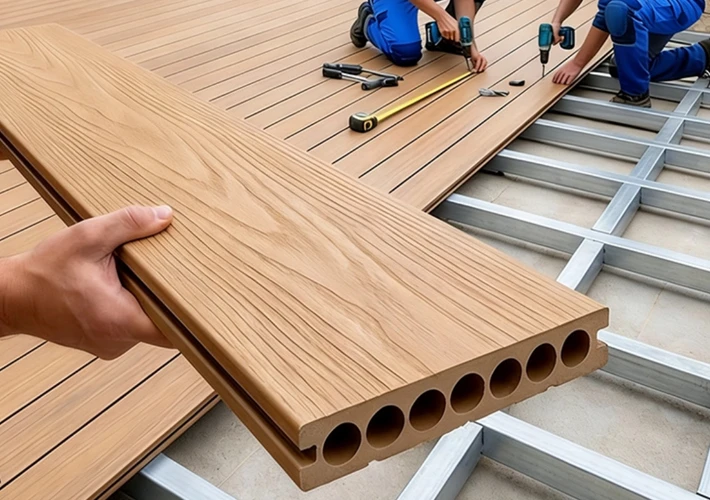
Outdoor decking has changed significantly over the past several decades. Traditional natural wood was once the dominant material for terraces, gardens, balconies, pool surrounds, resorts, and commercial outdoor spaces. However, natural wood requires frequent maintenance and can face problems such as moisture absorption, cracking, fading, insect damage, mold, and dimensional instability.
To solve some of these problems, wood-plastic composite decking, commonly known as WPC decking, entered the market. WPC decking combined wood fibers with plastic materials to create a more durable alternative to natural wood. As market demand continued to evolve, co-extrusion technology further improved the performance of composite decking by adding a protective outer layer.
Today, ASA decking, often described as third-generation outdoor wood-plastic composite decking, represents the next stage in the development of composite outdoor flooring. It is designed to provide improved weather resistance, color stability, surface durability, moisture resistance, and long-term outdoor performance.
For distributors, wholesalers, contractors, developers, landscape companies, and project buyers, understanding the differences between traditional wood decking, conventional WPC decking, co-extrusion decking, and ASA decking is important when selecting materials for demanding outdoor environments.
As a professional Chinese manufacturer and global supplier, Solidexwood provides third-generation ASA decking solutions for residential, commercial, hospitality, landscaping, and outdoor construction projects.
What Is ASA Decking?
ASA decking is an advanced type of composite decking manufactured with a structural composite core and a high-performance ASA protective surface layer.
ASA stands for Acrylonitrile Styrene Acrylate, a weather-resistant polymer known for its strong performance in outdoor environments. It is commonly selected for applications where resistance to sunlight, rain, humidity, temperature changes, and long-term weather exposure is important.
In ASA decking, the composite core provides structural strength, while the ASA surface layer acts as an outer protective shield.
A simplified ASA decking structure can be described as:
ASA weather-resistant surface layer + composite structural core
The inner core may contain a combination of polymer materials, wood fibers or other reinforcing materials, depending on the manufacturer’s formulation and product design. The ASA layer is engineered to improve the surface performance of the decking.
Compared with earlier generations of outdoor decking, ASA decking focuses more strongly on long-term weatherability and surface protection.
The key purpose of the ASA layer is to help protect the decking from:
- Strong UV exposure
- Color fading
- Rain and moisture
- Surface aging
- Temperature fluctuations
- Staining from common outdoor substances
- Mold and mildew growth
- Everyday scratching and wear
This combination makes ASA decking suitable for outdoor projects where appearance and durability are both important.
Solidexwood ASA decking is positioned as a third-generation outdoor composite decking solution, developed for customers looking for a modern alternative to conventional WPC decking and natural timber.
The Evolution of Outdoor Decking: From Natural Wood to Third-Generation ASA Decking
The development of outdoor decking materials reflects changing expectations from homeowners and commercial project buyers.
First Stage: Traditional Natural Wood Decking
For centuries, natural wood was the primary material used for outdoor flooring.
Wood remains popular because of its natural appearance and texture. Different species can provide distinctive grain patterns, colors, and visual styles.
However, natural wood also has several limitations when used outdoors.
Continuous exposure to rain, sunlight, humidity, insects, and temperature changes can cause:
- Cracking
- Warping
- Rotting
- Fading
- Splintering
- Mold growth
- Insect damage
To maintain natural wood decking, owners may need regular painting, staining, sealing, sanding, or replacement of damaged boards.
These maintenance requirements can increase the long-term cost of an outdoor decking project.
Second Stage: Conventional WPC Decking
As demand increased for lower-maintenance outdoor materials, WPC decking became a popular alternative.
WPC decking generally combines wood fibers or similar plant-based materials with thermoplastic polymers.
Compared with natural wood, conventional WPC decking offers several advantages:
- Better moisture resistance
- Reduced risk of insect damage
- No need for regular painting
- More consistent dimensions
- Lower maintenance requirements
- The appearance of wood combined with synthetic materials
However, early generations of WPC decking could still face challenges under long-term outdoor exposure.
Depending on material formulation and product quality, traditional composite decking may experience:
- Surface fading
- Staining
- Moisture absorption
- Surface scratching
- Mold accumulation
- Weather-related aging
Third Stage: Co-Extrusion Composite Decking
The next major development was co-extrusion technology.
Instead of relying only on the composite core, co-extrusion decking added a protective polymer layer around the surface of the board.
This helped improve resistance to moisture, stains, and outdoor exposure.
Co-extrusion technology represented an important improvement in the composite decking industry because manufacturers could combine structural materials inside the board with more protective materials on the exterior.
Fourth Development Direction: ASA Decking
ASA decking further develops the protective-surface concept by using ASA as a high-weatherability surface material.
ASA is especially valued for its ability to perform under outdoor environmental conditions. This makes it suitable for projects exposed to strong sunlight, heavy rainfall, humidity, and seasonal temperature variation.
For this reason, ASA decking is increasingly regarded as a new generation or third-generation outdoor decking solution, depending on how manufacturers classify the evolution of composite decking technologies.
The major development trend can be summarized as:
Natural Wood → Conventional WPC → Co-Extrusion Composite Decking → Advanced ASA Surface Decking
The direction of this evolution is clear: outdoor materials are being developed to provide longer service life, lower maintenance requirements, and better appearance retention.
For B2B buyers, this evolution also creates new opportunities to offer higher-value products to customers who are no longer satisfied with basic outdoor WPC decking.
How ASA Decking Is Manufactured
The manufacturing process of ASA decking involves advanced extrusion and surface-layer technology.
Although the exact production process may vary depending on the manufacturer, the basic concept involves combining a composite structural core with an ASA protective layer.
The process generally includes several stages.
Raw Material Preparation
The first step involves preparing the materials used for the decking core.
Depending on the product design, these materials may include:
- Polymer materials
- Wood fibers
- Mineral or reinforcing materials
- Processing additives
- Stabilizers
- Color materials
The raw materials must be properly mixed to achieve consistent quality.
For composite decking manufacturers, raw material control is important because variations in formulation can affect strength, density, surface appearance, and long-term durability.
Composite Extrusion
The core materials are processed and formed through extrusion equipment.
During this stage, the material is shaped into the required decking profile.
Different profiles can be developed according to market requirements, including:
- Solid decking boards
- Hollow decking boards
- Round-hole structures
- Square-hole structures
- Lightweight profiles
- Heavy-duty commercial profiles
ASA Surface Application
The ASA protective material is applied to the surface through an advanced co-extrusion process.
The ASA layer becomes an integrated protective surface around the composite structure.
This outer layer is designed to provide additional resistance against outdoor environmental factors.
A properly manufactured ASA surface should have consistent thickness and strong bonding with the composite core.
This is one of the reasons why production technology and quality control are important when sourcing ASA decking.
Surface Treatment
After extrusion, the decking can receive different surface finishes.
Popular surface options include:
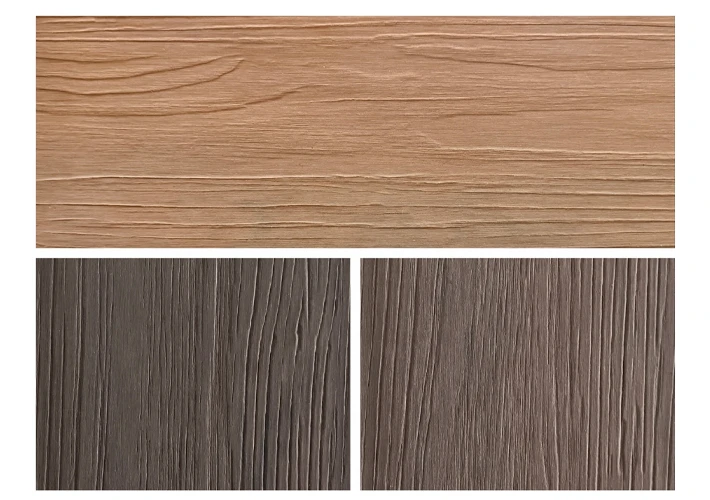
- Wood grain
- Embossed textures
- Brushed surfaces
- Anti-slip textures
- Deep wood patterns
- Modern linear designs
These options allow ASA decking to imitate the visual appearance of natural wood while offering the advantages of an engineered composite material.
Cutting, Inspection, and Packaging
After production, decking boards are cut to the required length and inspected.
For export projects, manufacturers may provide customized:
- Board lengths
- Colors
- Surface finishes
- Packaging
- Private labels
- Logos
- Accessories
At Solidexwood, customization can be an important advantage for distributors and project buyers who want to develop their own outdoor decking product line.
The Main Advantages of ASA Decking
ASA decking offers several performance advantages that make it suitable for demanding outdoor applications.
Excellent Weather Resistance
Weather resistance is one of the most important characteristics of ASA decking.
Outdoor flooring can be exposed to:
- Intense sunlight
- UV radiation
- Rain
- Snow
- Humidity
- Temperature changes
- Coastal environments
- Seasonal climate changes
The ASA surface layer is designed to provide improved protection against environmental exposure.
This makes ASA decking particularly suitable for markets with strong sunlight or challenging weather conditions.
For example, outdoor projects in Australia, the Middle East, Southeast Asia, Southern Europe, and tropical regions may require materials that can maintain their appearance under high levels of UV exposure and humidity.
Improved UV Resistance and Color Stability
Color fading is a major concern for outdoor decking.
Traditional materials can gradually lose their original appearance after long-term exposure to sunlight.
ASA is known for its weatherability and resistance to UV-related aging. The protective surface helps ASA decking maintain a more stable appearance over time compared with lower-performance outdoor materials.
However, buyers should understand that no outdoor material is completely unaffected by environmental exposure. Actual color performance can vary depending on:
- Geographic location
- UV intensity
- Product formulation
- Installation direction
- Maintenance
- Length of exposure
For B2B buyers, it is important to request samples and relevant product test information before placing large orders.
Strong Moisture Resistance
Outdoor decking is frequently exposed to rain and humidity.
Traditional wood can absorb moisture, which may lead to swelling, cracking, rotting, and biological degradation.
ASA decking combines a composite structure with a protective surface layer that helps reduce direct moisture penetration.
This makes it suitable for applications such as:
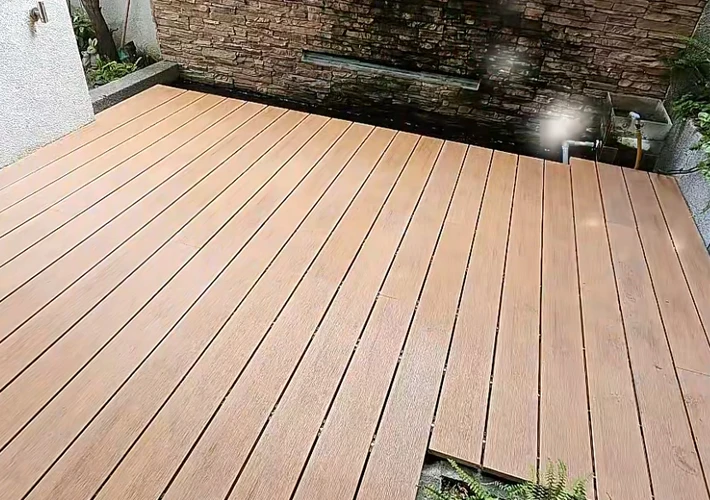
- Garden decks
- Balconies
- Pool surrounds
- Resort walkways
- Outdoor terraces
- Waterfront projects
Proper installation remains important. Even water-resistant decking systems require suitable drainage and ventilation underneath the boards.
Low Maintenance Requirements
One of the main reasons buyers choose composite decking is to reduce maintenance.
Natural wood may require repeated:
- Painting
- Staining
- Sealing
- Sanding
- Anti-insect treatment
ASA decking generally requires much simpler maintenance.
Regular cleaning with appropriate methods can help maintain the appearance of the decking.
For commercial property owners, hotels, resorts, and public facilities, reduced maintenance can help lower long-term operating requirements.
Resistance to Mold and Mildew
Humid environments can create ideal conditions for mold and mildew.
The protective ASA surface helps reduce the ability of moisture and contaminants to penetrate into the surface.
This can make cleaning easier compared with more porous materials.
However, dirt, leaves, standing water, and organic debris should still be removed regularly.
Even highly weather-resistant outdoor materials can develop surface contamination if they are not properly cleaned.
Attractive Wood-Like Appearance
Many customers want the appearance of natural wood without the high maintenance requirements.
ASA decking can be designed with realistic:
- Wood grain
- Natural color variations
- Brushed textures
- Embossed surfaces
This makes it suitable for modern residential and commercial projects.
Popular colors may include:
- Teak
- Walnut
- Grey
- Dark brown
- Coffee
- Oak-inspired shades
- Customized colors
The ability to combine performance with decorative design is one of the reasons advanced composite decking is becoming increasingly popular in the outdoor building materials market.
Good Surface Durability
Outdoor decking is exposed to daily foot traffic, furniture movement, pets, and general outdoor use.
The ASA surface provides an additional protective layer designed to improve surface durability.
For commercial projects, buyers can select heavier-duty profiles according to expected traffic levels.
However, not all decking boards are designed for the same load conditions. Project buyers should evaluate:
- Board thickness
- Board width
- Profile design
- Joist spacing
- Installation method
- Expected traffic
A swimming pool walkway and a high-traffic commercial terrace may require different specifications.
Environmentally Responsible Material Options
Composite decking can also provide environmental advantages when manufacturers use recycled or efficiently sourced materials.
Some ASA decking systems are designed to reduce dependence on natural timber.
This can help reduce the need for repeated replacement of traditional wood decking.
When evaluating environmental performance, B2B buyers should request specific documentation from suppliers rather than relying only on general environmental claims.
Relevant documentation may include:
- Material information
- Environmental test reports
- Compliance documents
- Product certifications
Solidexwood can provide product-related documentation and samples according to project and market requirements.
ASA Decking vs Traditional WPC Decking
The main difference between ASA decking and conventional WPC decking is the advanced protective surface.
Traditional WPC decking typically relies mainly on the composite material itself for performance.
ASA decking adds a high-weatherability ASA surface layer.
The comparison can be summarized as follows:
| Feature | Traditional WPC Decking | ASA Decking |
|---|---|---|
| Surface technology | Composite surface | ASA protective surface |
| UV resistance | Moderate, depending on formulation | Enhanced weatherability |
| Color stability | May fade over time | Improved color retention potential |
| Moisture protection | Good | Enhanced surface protection |
| Stain resistance | Standard | Improved surface resistance |
| Surface durability | Depends on formulation | Protective outer layer |
| Maintenance | Low | Low |
| Weather resistance | Good | Designed for demanding outdoor exposure |
| Market positioning | Standard composite decking | Premium next-generation decking |
ASA decking is not simply a replacement for every conventional WPC product.
Instead, it provides an upgraded option for customers who require stronger weather resistance and a higher-performance outdoor surface.
For distributors, this creates the opportunity to develop different product levels:
- Entry-level WPC decking
- Premium co-extrusion decking
- High-performance ASA decking
This product structure can help distributors serve customers with different budgets and performance expectations.
Where Can ASA Decking Be Used?
ASA decking is suitable for a wide range of outdoor applications.
Residential Decks
Homeowners can use ASA decking for:
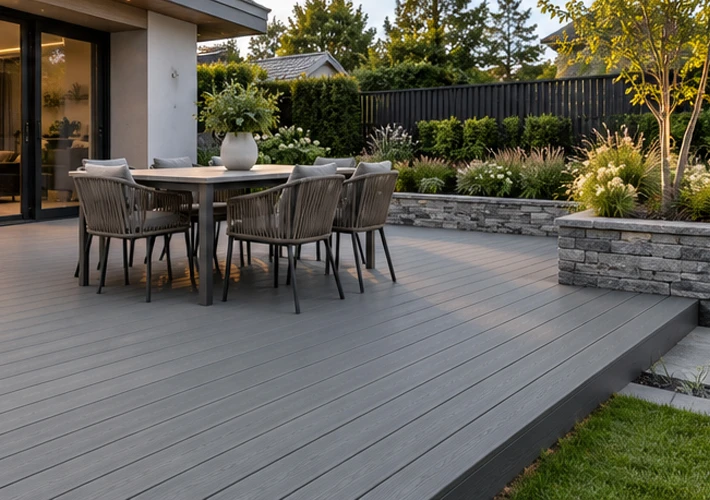
- Garden terraces
- Backyard decks
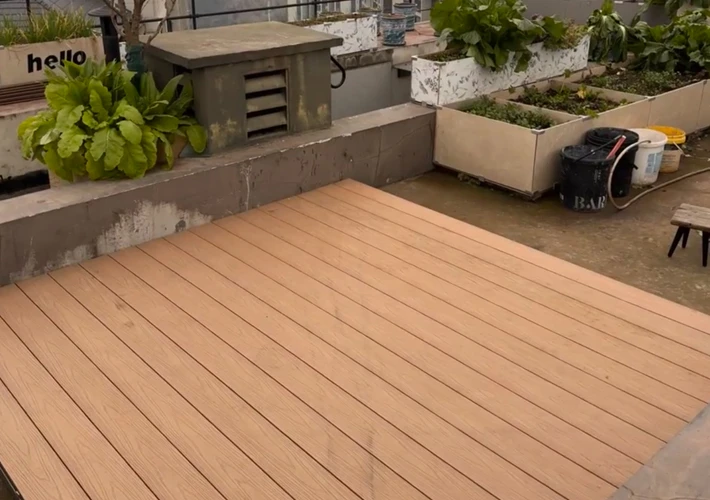
- Balconies
- Rooftop areas
- Outdoor dining spaces
The wood-like appearance allows the decking to integrate with modern architecture and landscape design.
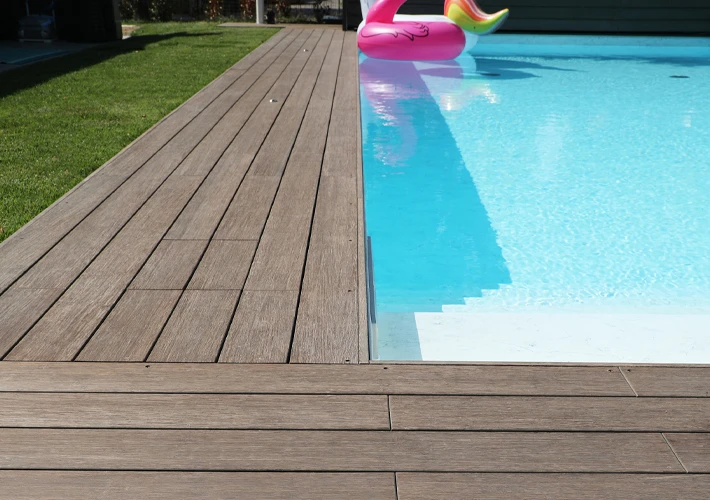
Swimming Pool Areas
Pool surrounds are demanding environments because they combine water exposure, sunlight, chemicals, and heavy foot traffic.
ASA decking can be an effective material option because of its weather-resistant and moisture-resistant surface.
For pool projects, buyers should select products with suitable surface textures and installation systems.
Hotels and Resorts
Hotels and resorts require outdoor materials that combine appearance with durability.
Decking may be installed around:
- Swimming pools
- Villas
- Outdoor restaurants
- Garden walkways
- Beach resorts
- Lounge areas
For hospitality projects, consistent product supply and color availability are also important.
As a Chinese ASA decking manufacturer, Solidexwood can support bulk orders and project-based customization.
Commercial Outdoor Spaces
ASA decking can also be used for:
- Restaurants
- Cafés
- Shopping areas
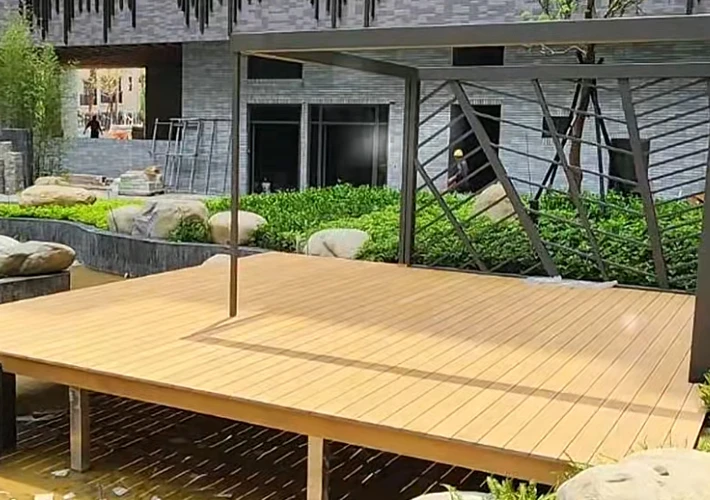
- Public terraces
- Exhibition spaces
- Landscape platforms
Commercial buyers should select suitable board profiles based on traffic and structural requirements.
Gardens and Landscape Projects
Landscape architects and contractors can use ASA decking to create:
- Garden paths
- Raised platforms
- Viewing decks
- Outdoor seating areas
- Park facilities
The availability of multiple colors and surface designs allows the material to fit different architectural styles.
Coastal and High-Humidity Areas
High humidity and frequent rainfall can be challenging for natural wood.
ASA decking can offer a more stable alternative for projects located in tropical, coastal, or rainy regions.
However, project designers should still consider drainage, ventilation, substructure materials, and installation details.
Key Features Buyers Should Check Before Purchasing ASA Decking
Not all ASA decking products are manufactured to the same standard.
For importers and project buyers, evaluating the following factors can help reduce sourcing risks.
ASA Layer Quality
The performance of the outer layer is critical.
Buyers should ask suppliers about:
- Surface material
- Production technology
- Layer bonding
- Weather-resistance testing
- Color stability
A premium ASA decking product requires a properly integrated surface layer rather than simply a decorative coating.
Decking Core Structure
The internal structure affects the mechanical performance of the board.
Common options include:
- Solid profiles
- Hollow profiles
- Reinforced structures
Solid boards may be preferred for heavy-duty applications, while hollow profiles can reduce material weight and transportation costs.
Board Dimensions
Standard dimensions may vary by manufacturer.
Buyers should consider:
- Width
- Thickness
- Length
- Effective coverage
- Weight per square meter
Container loading efficiency can also be important for international buyers.
Surface Design
The surface should match the target market.
For example:
- European markets may prefer modern grey and natural wood colors.
- Resort projects may prefer teak-inspired designs.
- Commercial projects may require more textured surfaces.
- Residential customers may focus more on decorative appearance.
Solidexwood can support customized product designs for distributors and project buyers.
Installation System
The installation system affects project efficiency.
Common components may include:
- Joists
- Clips
- Screws
- Starter clips
- Edge trims
- Fascia boards
A complete decking system can make installation easier and create a more professional finished appearance.
Supplier Experience
For large-volume buyers, choosing the right supplier is just as important as choosing the right material.
Before working with an ASA decking manufacturer, buyers should evaluate:
- Factory production capability
- Export experience
- Quality control
- Customization ability
- Packaging standards
- Delivery time
- Technical support
- Documentation
A supplier should be able to support not only the first order but also future product consistency.
Why Choose Solidexwood as Your ASA Decking Supplier?
Solidexwood focuses on providing modern outdoor composite products for global B2B customers.
As a Chinese manufacturer and supplier, Solidexwood serves customers such as:
- Importers
- Wholesalers
- Building material distributors
- Contractors
- Developers
- Landscape companies
- Hotel and resort projects
Third-Generation ASA Decking Solutions
Solidexwood provides advanced ASA decking designed for modern outdoor applications.
The combination of a composite structural core and weather-resistant ASA surface helps meet the growing demand for higher-performance outdoor decking.
Factory Supply for Global Markets
Working directly with a manufacturer can provide advantages for bulk buyers.
These may include:
- Competitive factory pricing
- Stable supply
- Customized specifications
- OEM and private-label support
- Export packaging
- Container orders
Multiple Designs and Colors
Different markets require different product designs.
Solidexwood can support customers looking for various:
- Wood grain styles
- Colors
- Surface textures
- Dimensions
- Packaging requirements
This flexibility can help distributors build a differentiated outdoor decking product range.
Support for Wholesale and Project Orders
Whether you are sourcing ASA decking for a distribution business or a specific construction project, product selection should be based on the application.
Solidexwood can support bulk orders and customized solutions for international customers.
For large projects, buyers can discuss requirements such as:
- Required quantity
- Target market
- Board dimensions
- Color
- Surface design
- Packaging
- Accessories
- Shipping requirements
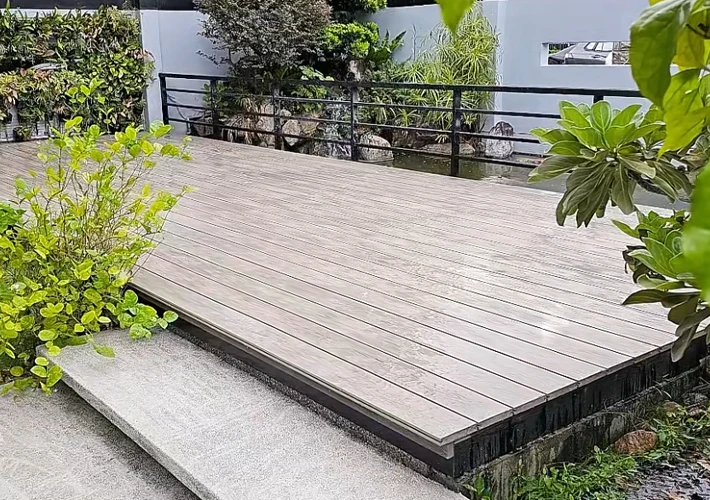
The Future of ASA Decking and Outdoor Composite Materials
The global outdoor living market continues to influence the development of decking materials.
Homeowners and commercial developers increasingly want outdoor spaces that function as extensions of indoor living areas.
As a result, the demand for durable and decorative outdoor materials is expected to remain strong.
Several trends are shaping the future of composite decking.
Higher Weather Resistance
Customers increasingly expect outdoor materials to maintain their appearance for longer periods.
Advanced surface technologies such as ASA are likely to become more important in markets with strong UV exposure and demanding climates.
Lower Maintenance
Consumers want outdoor spaces that require less maintenance.
Products that reduce the need for painting, sealing, and frequent replacement can offer strong long-term value.
More Natural Surface Designs
Manufacturers continue to improve wood grain patterns, textures, and color variations.
The goal is to provide the visual appeal of natural timber while improving durability.
Customized Outdoor Solutions
Instead of selling only standard boards, manufacturers are increasingly providing complete systems.
These may include:
- Decking boards
- Joists
- Clips
- Fascia boards
- Edge finishes
- Other outdoor decorative products
This system-based approach can simplify sourcing for contractors and distributors.
Premium Product Segmentation
As the composite decking market becomes more competitive, product segmentation is becoming increasingly important.
Basic WPC decking may continue to serve price-sensitive markets, while ASA decking can target customers looking for premium outdoor performance.
For distributors, offering multiple product levels can help reach a broader customer base.
Conclusion: Is ASA Decking a Good Choice for Outdoor Projects?
ASA decking is an advanced outdoor composite material that combines a structural composite core with a weather-resistant ASA surface layer.
As a third-generation outdoor wood-plastic decking solution, it is designed to provide improved:
- Weather resistance
- UV resistance
- Color stability
- Moisture resistance
- Surface durability
- Stain resistance
- Mold resistance
- Decorative performance
- Low-maintenance benefits
Compared with traditional natural wood, ASA decking can reduce many common outdoor maintenance concerns. Compared with conventional WPC decking, the ASA protective layer provides an additional level of surface protection for demanding outdoor environments.
For residential gardens, swimming pools, hotels, resorts, commercial terraces, and landscape projects, ASA decking can offer a modern balance between appearance and performance.
However, the quality of ASA decking depends heavily on material formulation, production technology, structural design, and supplier quality control. Buyers should evaluate product specifications, samples, test information, installation systems, and supplier capabilities before placing a large order.
As demand for durable and low-maintenance outdoor materials continues to grow, third-generation ASA decking is expected to become an increasingly important product category in the global composite decking market.
Solidexwood is committed to supplying high-quality ASA decking and outdoor composite solutions for global distributors, wholesalers, contractors, and project buyers. With factory supply, customization capabilities, export experience, and a focus on next-generation outdoor materials, Solidexwood helps customers build competitive product lines for modern outdoor living and construction projects.
Looking for a reliable ASA decking manufacturer in China? Contact Solidexwood to request product specifications, samples, customized colors, project solutions, and wholesale pricing for your market.