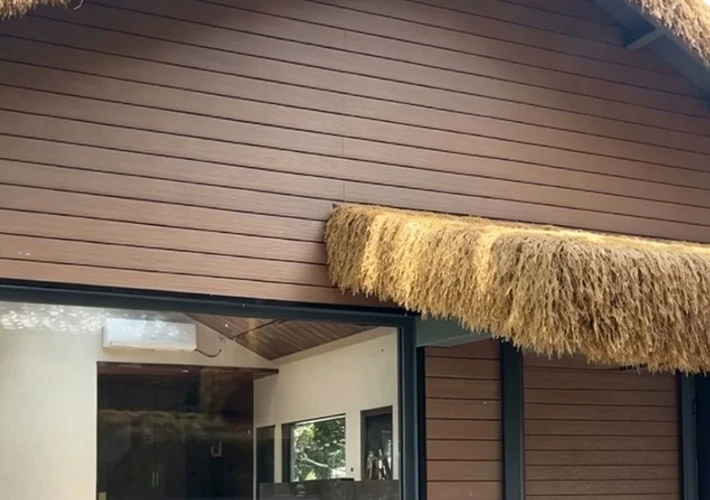
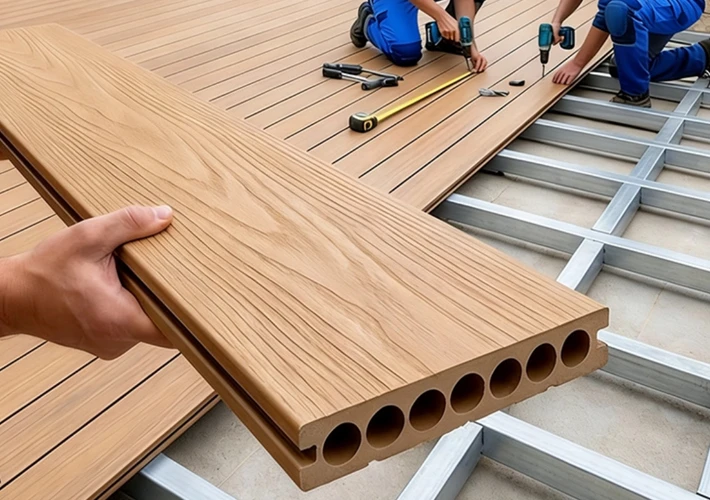
Composite wood siding has become one of the fastest-growing exterior cladding materials in residential, commercial, and hospitality construction projects. With increasing demand for low-maintenance, weather-resistant, and aesthetically appealing façade materials, builders and distributors worldwide are turning to composite siding as an alternative to traditional wood, fiber cement, and PVC panels.
For importers, contractors, wholesalers, and project developers, understanding the common dimensions for composite wood siding is essential. The dimensions of siding panels directly affect installation efficiency, transportation costs, structural performance, and overall project appearance.
As a professional Chinese composite siding manufacturer, Solidexwood supplies a wide range of composite wood siding dimensions for global B2B clients. This guide explains the standard sizes, thicknesses, lengths, profiles, and custom options commonly used in the international market.
Why Composite Wood Siding Dimensions Matter
The dimensions of composite wood siding influence much more than appearance. Choosing the right size can determine:
- Installation speed
- Labor costs
- Structural stability
- Wind resistance
- Thermal expansion performance
- Transportation efficiency
- Visual style
- Waste reduction
For large-scale construction projects, selecting the correct siding dimensions helps contractors improve efficiency and reduce material loss.
For distributors and wholesalers, understanding standard sizes also simplifies inventory planning and market targeting.
In North America, Europe, Southeast Asia, Australia, and the Middle East, different markets often prefer different panel dimensions due to local construction standards and architectural styles.
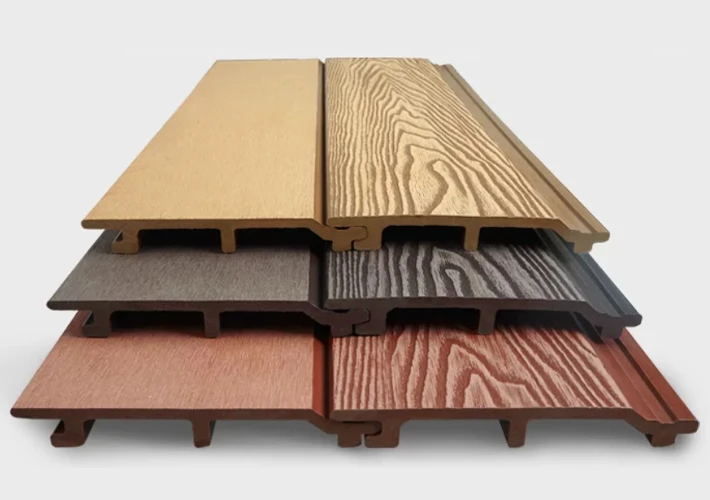
Common Widths of Composite Wood Siding
One of the most important dimensions is panel width. Composite siding is available in narrow, medium, and wide profiles.
Narrow Composite Siding Panels
Typical widths:
- 100 mm
- 120 mm
- 140 mm
Applications:
- Residential villas
- Traditional-style homes
- Decorative exterior accents
- Small façade areas
Advantages:
- More detailed visual texture
- Easier to replace individual boards
- Better for curved or irregular surfaces
Narrow panels are often chosen for projects seeking a classic wood plank appearance.
Medium Width Composite Siding Panels
Typical widths:
- 150 mm
- 156 mm
- 160 mm
- 170 mm
Applications:
- Modern residential buildings
- Hotels
- Commercial projects
- Apartment exteriors
Advantages:
- Balanced aesthetics
- Faster installation
- Lower joint visibility
- Better material efficiency
These dimensions are among the most popular in export markets because they fit both modern and traditional architectural designs.
At Solidexwood, medium-width composite siding profiles are among the highest-volume export products due to their versatility.
Wide Composite Siding Panels
Typical widths:
- 180 mm
- 200 mm
- 220 mm
Applications:
- Luxury commercial buildings
- Modern minimalist architecture
- High-rise decorative façades
- Large wall surfaces
Advantages:
- Faster installation
- Fewer seams
- Contemporary appearance
- Reduced labor cost
Wide panels are increasingly popular in modern architectural projects because they create clean horizontal or vertical visual lines.
However, wider panels generally require stronger substructures and more careful thermal expansion
Standard Thicknesses for Composite Wood Siding
Thickness affects durability, impact resistance, insulation performance, and structural strength.
Common Thickness Range
Most composite wood siding panels range between:
- 8 mm
- 10 mm
- 12 mm
- 15 mm
- 18 mm
- 20 mm
- 25 mm
Different thicknesses are suitable for different environments and installation systems.
Thin Composite Siding Panels (8–10 mm)
Characteristics:
- Lightweight
- Economical
- Easy transportation
- Suitable for decorative applications
Applications:
- Interior wall decoration
- Low-impact exterior areas
- Temporary structures
- Small residential projects
Advantages:
- Lower shipping cost
- Easier handling
- Reduced installation weight
However, thinner panels may have lower impact resistance in harsh climates.
Medium Thickness Panels (12–18 mm)
This is the most common thickness category in global markets.
Applications:
- Residential exterior walls
- Commercial façades
- Hotels
- Retail buildings
Advantages:
- Good balance between strength and weight
- Better thermal stability
- Enhanced durability
- Suitable for most climates
Solidexwood frequently recommends 15 mm or 16 mm composite siding for overseas projects because these dimensions offer strong performance while remaining cost-effective.
Heavy-Duty Composite Siding (20–25 mm)
Applications:
- High-wind regions
- Coastal environments
- Public buildings
- Industrial projects
Advantages:
- Superior impact resistance
- Higher structural stability
- Improved lifespan
- Better sound insulation
Thicker panels are particularly popular in areas with typhoons, heavy rain, or strong UV exposure.
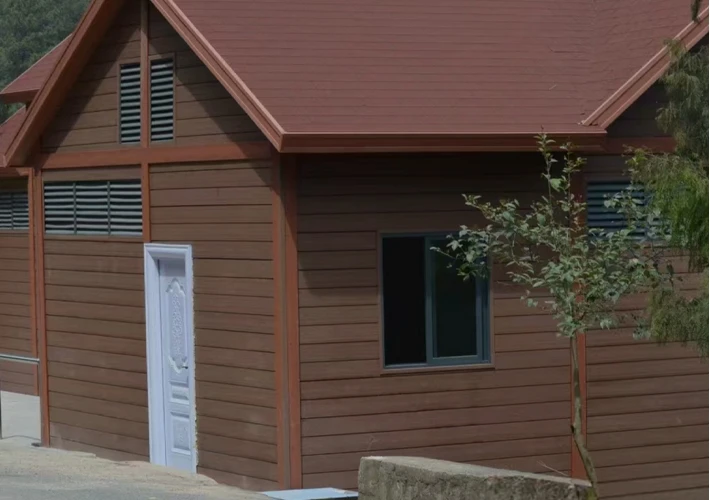
Common Lengths of Composite Wood Siding
Length is another critical factor affecting installation efficiency and transportation logistics.
Standard Export Lengths
The most common composite siding lengths include:
- 2.2 meters
- 2.4 meters
- 2.8 meters
- 2.9 meters
- 3.0 meters
- 3.6 meters
- 4.0 meters
The choice depends on market preferences, container loading efficiency, and project requirements.
2.2m to 2.4m Panels
Advantages:
- Easier transportation
- Lower risk of bending
- Convenient for retail distribution
Applications:
- DIY projects
- Residential renovations
- Small-scale buildings
These shorter lengths are especially common in retail markets.
2.8m to 3.0m Panels
This is the global mainstream standard.
Advantages:
- Good installation efficiency
- Reduced visible joints
- Easy container loading
- Suitable for most wall heights
Most international construction projects prefer 2.9m or 3m composite siding because they align well with standard building dimensions.
3.6m to 4.0m Panels
Applications:
- Large commercial façades
- High-end villas
- Hotel projects
- Vertical installations
Advantages:
- Fewer seams
- More premium appearance
- Faster installation on large walls
Longer panels require careful packaging and transportation management to avoid deformation.
As a professional factory, Solidexwood uses reinforced packaging systems for long composite siding exports.
Common Composite Wood Siding Profiles
Dimensions are not limited to width and thickness. Different profile structures also influence performance and aesthetics.
Flat Composite Siding
Characteristics:
- Smooth appearance
- Modern style
- Minimalist design
Typical dimensions:
- 150 × 15 mm
- 160 × 20 mm
- 180 × 18 mm
Applications:
- Contemporary architecture
- Commercial buildings
- Office façades
Grooved Composite Siding
Characteristics:
- Wood-like texture
- Better visual depth
- Enhanced water drainage
Typical dimensions:
- 156 × 21 mm
- 150 × 16 mm
Applications:
- Villas
- Resorts
- Outdoor decorative walls
Grooved profiles are among the most popular export designs because they closely resemble natural timber.
Co-Extrusion Composite Siding
Co-extrusion technology adds a protective outer layer.
Typical dimensions:
- 150 × 20 mm
- 156 × 21 mm
- 220 × 26 mm
Advantages:
- Enhanced UV resistance
- Better stain resistance
- Longer lifespan
- Superior color stability
This profile category is increasingly preferred in premium international markets.
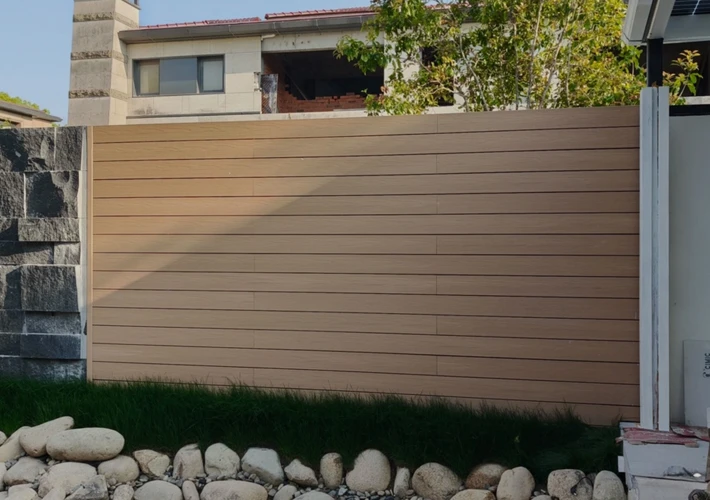
Regional Preferences for Composite Wood Siding Dimensions
Different countries and regions often prefer different dimensions.
North America
Popular dimensions:
- Width: 140–200 mm
- Thickness: 15–20 mm
- Length: 2.9–3.6 m
Characteristics:
- Preference for wider boards
- Demand for wood grain textures
- Strong interest in co-extrusion technology
Europe
Popular dimensions:
- Width: 120–170 mm
- Thickness: 12–18 mm
- Length: 2.2–3.0 m
Characteristics:
- Modern minimalist design
- Focus on sustainability
- Demand for fire-resistant materials
Southeast Asia
Popular dimensions:
- Width: 150–180 mm
- Thickness: 15–25 mm
- Length: 2.9–4.0 m
Characteristics:
- Need for moisture resistance
- Preference for tropical wood colors
- High UV resistance requirements
Australia
Popular dimensions:
- Width: 156–220 mm
- Thickness: 18–25 mm
- Length: 3.0–4.0 m
Characteristics:
- Strong weather resistance requirements
- Demand for bushfire-compliant products
- Preference for large-format panels
Factors to Consider When Choosing Composite Siding Dimensions
Selecting the right dimensions depends on multiple technical and commercial factors.
Building Height
Large buildings often benefit from wider and longer panels to reduce installation time.
Smaller residential projects may use narrower boards for a more detailed appearance.
Climate Conditions
Hot climates require panels with better thermal stability.
Coastal regions usually prefer thicker panels with enhanced moisture resistance.
Installation Method
Horizontal installation often uses wider boards.
Vertical installation may require narrower profiles for better structural stability.
Transportation Costs
Longer and thicker panels increase shipping volume and freight costs.
Factories like Solidexwood help overseas clients optimize container loading to improve shipping efficiency.
Architectural Style
Modern minimalist designs usually prefer:
- Wider boards
- Longer lengths
- Hidden fastening systems
Traditional architecture often uses:
- Narrower profiles
- Wood-textured surfaces
- Decorative grooves
Custom Composite Wood Siding Dimensions
Many overseas construction projects require customized sizes.
As a Chinese factory, Solidexwood provides OEM and ODM services including:
- Custom widths
- Custom lengths
- Special thicknesses
- Custom textures
- Personalized colors
- Unique installation systems
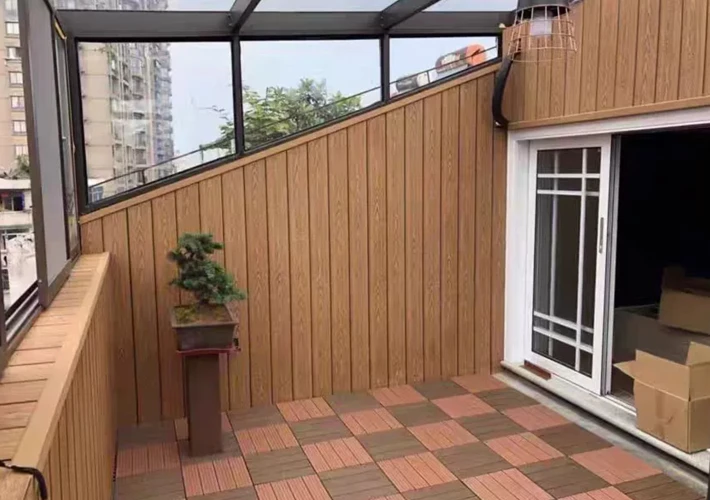
Custom dimensions help developers create differentiated architectural designs.
For large hotel, resort, and commercial projects, custom composite siding has become increasingly common.
Advantages of Standardized Composite Siding Dimensions
Using standard sizes offers multiple benefits.
Faster Production
Standard molds improve manufacturing efficiency.
Lower Cost
Mass production reduces unit costs.
Faster Delivery
Factories can maintain inventory for popular dimensions.
Easier Installation
Contractors are already familiar with common sizes.
Simplified Replacement
Future maintenance becomes easier when standard dimensions are used.
How Solidexwood Manufactures Composite Wood Siding
As a professional Chinese composite wood siding manufacturer, Solidexwood focuses on:
- Advanced extrusion technology
- Stable dimensional accuracy
- UV-resistant formulations
- Moisture-resistant structures
- Strict quality inspection
- OEM customization
- Global export standards
Our factory supplies composite siding solutions for:
- Residential buildings
- Hotels
- Commercial centers
- Villas
- Resorts
- Retail projects
- Public infrastructure
We support distributors, wholesalers, importers, contractors, and developers worldwide.
Future Trends in Composite Wood Siding Dimensions
The global market is evolving toward larger and more efficient siding formats.
Emerging trends include:
Wider Panels
Architects increasingly prefer seamless façades.
Longer Boards
Longer lengths reduce visible joints and improve installation efficiency.
Lightweight High-Strength Profiles
New material formulations improve strength while reducing weight.
Integrated Insulation Systems
Composite siding dimensions are increasingly designed to integrate with thermal insulation systems.
Custom Architectural Profiles
Modern architecture is driving demand for personalized panel dimensions and textures.
Conclusion
Understanding the common dimensions for composite wood siding is essential for selecting the right exterior cladding solution. Width, thickness, length, and profile design all influence project aesthetics, durability, installation efficiency, and overall cost.
The most common composite wood siding dimensions in the global market generally include:
- Widths from 120 mm to 220 mm
- Thicknesses from 10 mm to 25 mm
- Lengths from 2.2 m to 4.0 m
Different regions and architectural styles require different specifications, making flexibility and customization increasingly important.
As a trusted Chinese factory, Solidexwood provides high-quality composite wood siding solutions with customizable dimensions, advanced production technology, and professional export services for global B2B clients.
Whether you are a distributor, importer, contractor, or project developer, choosing the correct composite siding dimensions can significantly improve both project performance and long-term value.
For wholesale inquiries, OEM customization, and project cooperation, Solidexwood is ready to support your business with reliable manufacturing capacity and international export experience.