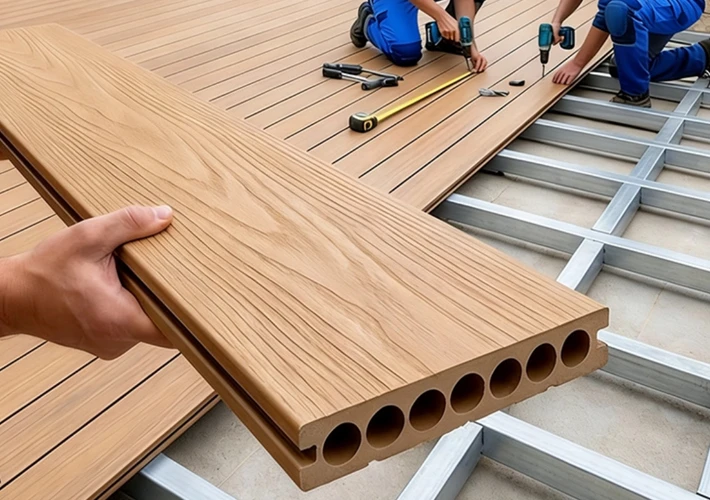
Composite lumber decking has become one of the fastest-growing materials in the global outdoor building materials market. From residential backyards and rooftop terraces to hotels, resorts, commercial plazas, and waterfront projects, composite decking is increasingly replacing traditional wood because of its durability, low maintenance requirements, and long service life.
However, many importers, wholesalers, contractors, and project developers quickly discover that not all composite decking products are the same. The market contains significant differences in quality levels, raw materials, manufacturing technology, weather resistance, density, structural performance, and lifespan. These differences directly affect pricing, customer satisfaction, project durability, and long-term maintenance costs.
For buyers sourcing from China, understanding the different quality levels of composite lumber decking is essential for making the right purchasing decisions. A low-cost decking board may appear attractive initially, but poor-quality products can lead to fading, cracking, swelling, or structural failure after only a few years. On the other hand, premium composite decking offers superior stability, aesthetics, and long-term value.
As a professional Chinese composite decking manufacturer, solidexwood supplies various grades of composite lumber decking for distributors, wholesalers, construction companies, and outdoor building projects worldwide. This article explains the major quality levels of composite decking, their differences, advantages, applications, and how buyers can identify reliable products.
What Is Composite Lumber Decking?
Composite lumber decking is a modern outdoor flooring material manufactured by combining wood fibers or wood flour with plastic polymers and additives. The result is a durable, weather-resistant decking board designed to imitate the appearance of natural wood while minimizing the disadvantages associated with traditional timber.
The most common materials used in composite decking include:
- Wood fiber or bamboo powder
- HDPE (High-Density Polyethylene)
- PVC (Polyvinyl Chloride)
- PP (Polypropylene)
- UV stabilizers
- Color pigments
- Anti-aging additives
- Lubricants and bonding agents
Composite decking is typically manufactured through extrusion technology, producing boards with consistent dimensions and stable structural performance.
Compared with natural wood decking, composite lumber decking offers several advantages:
- Waterproof performance
- Resistance to termites and insects
- Low maintenance
- Long service life
- Anti-slip surface
- Fade resistance
- No painting or sealing required
- Better dimensional stability
- Eco-friendly recycled materials
However, the actual performance depends heavily on the product quality level and manufacturing standards.
Main Quality Levels of Composite Lumber Decking
Composite decking can generally be divided into several quality categories based on raw materials, production processes, surface technology, and durability.
Entry-Level Composite Decking
Entry-level composite decking is designed mainly for budget-sensitive markets and temporary or low-traffic applications.
Characteristics include:
- Lower-density material
- Basic extrusion process
- Simpler surface treatment
- Reduced UV resistance
- Limited scratch resistance
- Shorter warranty period
These products often use a higher percentage of recycled plastics and lower-grade wood fibers. While they provide cost advantages, their long-term durability is typically lower.
Common issues with low-grade decking include:
- Faster fading
- Surface chalking
- Higher thermal expansion
- Water absorption
- Cracking in extreme climates
- Mold growth in humid regions
Typical applications:
- Small residential projects
- Temporary outdoor structures
- Budget renovations
- Low-traffic areas
Expected lifespan:
5–10 years depending on climate and maintenance.
Mid-Range Composite Decking
Mid-range decking products are currently the most widely used category in international markets.
These boards balance performance, aesthetics, and affordability.
Features include:
- Improved material formulation
- Better UV stabilizers
- Enhanced waterproof performance
- More realistic wood grain textures
- Improved structural stability
- Better color consistency
Most reliable exporters and factories focus heavily on this segment because it satisfies the needs of distributors and contractors while remaining cost-effective.
Advantages include:
- Stable outdoor performance
- Reduced maintenance
- Better resistance to deformation
- Improved anti-slip performance
- Enhanced weather resistance
Applications:
- Residential decking
- Garden walkways
- Rooftop terraces
- Hotel balconies
- Commercial outdoor areas
Expected lifespan:
10–20 years.
Premium Co-Extrusion Composite Decking
Premium co-extrusion decking represents the highest quality level in the composite decking industry.
This technology uses an additional protective polymer shield wrapped around the composite core. The outer cap provides advanced protection against environmental damage.
Key features include:
- Superior UV resistance
- Excellent stain resistance
- Scratch resistance
- Enhanced waterproof performance
- High fade resistance
- Better color stability
- Improved surface hardness
The co-extrusion layer acts as a protective barrier against moisture, sunlight, and daily wear.
Advantages of premium co-extrusion decking:
- Minimal maintenance
- Long-term color retention
- High-end wood appearance
- Excellent performance in harsh climates
- Better resistance to saltwater and humidity
Applications:
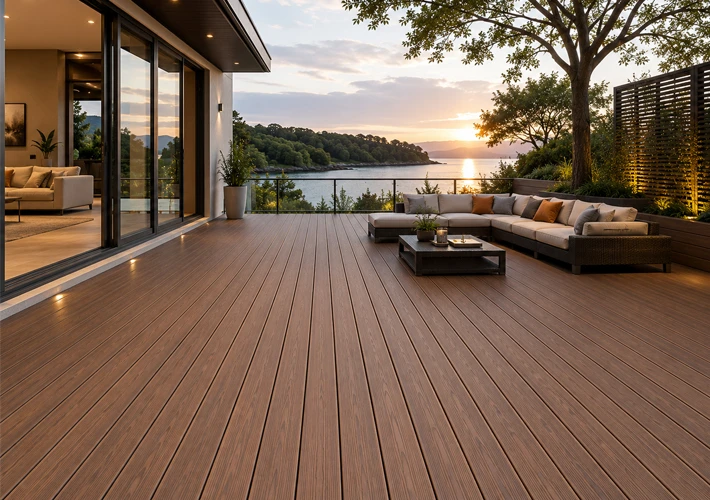
- Luxury villas
- Hotels and resorts
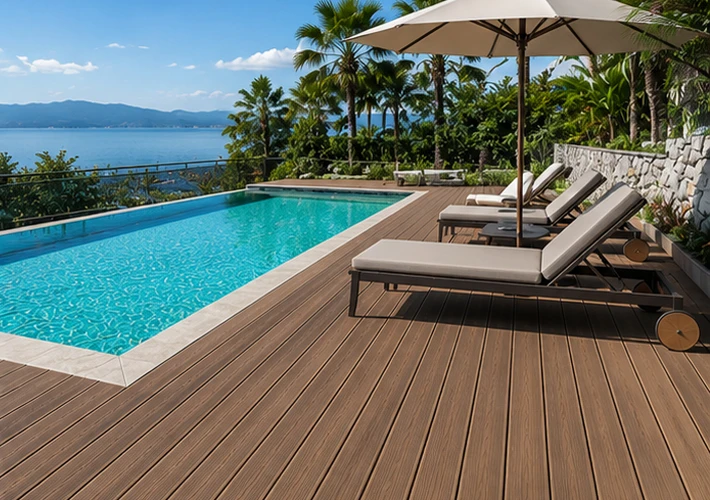
- Seaside projects
- Commercial boardwalks
- High-traffic outdoor spaces
- Premium residential developments
Expected lifespan:
20–30 years or longer.
Differences in Raw Materials and Their Impact on Quality
The quality of composite decking is heavily influenced by raw materials.
Wood Fiber Quality
High-quality wood fibers improve:
- Structural strength
- Surface smoothness
- Dimensional stability
Low-grade wood powder may contain impurities, excessive moisture, or inconsistent particle sizes, reducing board durability.
Professional factories carefully control:
- Fiber moisture content
- Particle uniformity
- Fiber purity
- Drying process
Plastic Polymer Quality
HDPE is commonly considered the best material for composite decking because of its flexibility and water resistance.
Lower-quality manufacturers may use mixed recycled plastics containing impurities, which can lead to:
- Surface defects
- Brittleness
- Cracking
- Poor bonding strength
Premium decking manufacturers use higher-grade polymers with controlled formulations for consistent quality.
Additives and Stabilizers
Additives significantly affect outdoor performance.
High-quality additives improve:
- UV resistance
- Anti-aging performance
- Color stability
- Fire resistance
- Mold resistance
Inferior additives often cause early fading and surface degradation.
Hollow vs Solid Composite Decking Quality Levels
Another major quality distinction is hollow versus solid decking.
Hollow Composite Decking
Advantages:
- Lower weight
- Reduced material cost
- Easier transportation
- Lower project cost
Disadvantages:
- Reduced impact resistance
- Less structural strength
- More thermal expansion
- Potential deformation under heavy loads
Applications:
- Residential projects
- Private gardens
- Light commercial use
Solid Composite Decking
Advantages:
- Higher density
- Better structural strength
- Superior durability
- Improved load-bearing capacity
- Better impact resistance
Disadvantages:
- Higher cost
- Increased weight
- More expensive transportation
Applications:
- Commercial projects
- Public walkways
- Hotels
- Resorts
- Heavy-traffic areas
For premium projects, solid composite decking is generally preferred.
Surface Technology and Quality Differences
Surface treatment directly impacts aesthetics and durability.
Sanded Surface
This is the most basic surface treatment.
Advantages:
- Affordable
- Anti-slip performance
Disadvantages:
- Less realistic appearance
- Easier dirt accumulation
- Faster wear
Embossed Wood Grain Surface
Embossed surfaces imitate natural wood textures.
Benefits include:
- Better visual appeal
- Natural appearance
- Improved decorative effect
High-quality embossing remains visible for many years, while low-grade embossing may disappear due to wear.
3D Embossed Surface
3D embossing technology creates deeper and more realistic wood textures.
Advantages:
- Premium appearance
- Better texture retention
- Luxury visual effect
This technology is commonly used in high-end co-extrusion decking products.
Weather Resistance and Climate Adaptability
Quality levels become especially important in different climate regions.
Tropical Climate Performance
In Southeast Asia, the Middle East, and coastal regions, decking faces:
- High humidity
- Strong UV exposure
- Heavy rainfall
- Mold risks
Premium decking products require:
- Strong anti-UV additives
- Waterproof core structure
- Mold-resistant technology
Lower-grade products often fail quickly in tropical environments.
Cold Climate Performance
In Europe and North America, freeze-thaw cycles create additional stress.
Quality decking must resist:
- Cracking
- Expansion damage
- Water penetration
Premium formulations maintain stability under temperature fluctuations.
Fire Resistance Standards
Different markets require different fire safety standards.
Common fire ratings include:
- B1
- ASTM standards
- EN standards
Premium composite decking products may include fire-retardant additives for commercial projects.
This is especially important for:
- Hotels
- Commercial terraces
- Public facilities
- Rooftop projects
Color Stability and UV Resistance
One of the biggest complaints about low-quality composite decking is fading.
Cheap products often lose color rapidly due to:
- Inferior pigments
- Weak UV stabilizers
- Poor manufacturing control
High-quality decking undergoes accelerated weather testing to ensure long-term color retention.
Typical premium decking fading rate:
Less than 5% after years of outdoor exposure.
Manufacturing Technology and Quality Control
Professional manufacturing technology is critical for stable product quality.
Advanced Extrusion Systems
Modern extrusion lines ensure:
- Consistent density
- Stable dimensions
- Smooth surfaces
- Uniform color distribution
Inferior factories may produce inconsistent boards with dimensional deviations.
Strict Quality Inspection
Reliable manufacturers conduct inspections for:
- Density
- Water absorption
- Load capacity
- UV resistance
- Surface quality
- Impact strength
Quality control systems are essential for large export projects.
How to Identify High-Quality Composite Decking
Buyers should evaluate several key factors before purchasing.
Check Product Density
Higher-density boards usually provide:
- Better strength
- Improved durability
- Reduced deformation
Inspect Surface Uniformity
High-quality boards feature:
- Smooth edges
- Consistent color
- Uniform texture
- Minimal defects
Evaluate Warranty Period
Longer warranties often indicate stronger manufacturer confidence.
Typical warranty ranges:
- Low-grade products: 5 years
- Mid-range products: 10–15 years
- Premium products: 20–30 years
Request Test Reports
Professional suppliers should provide:
- UV testing reports
- Fire resistance certificates
- SGS reports
- Water absorption testing
- Load-bearing data
Review Factory Capabilities
Reliable factories should offer:
- Stable production capacity
- Advanced equipment
- International export experience
- OEM and customization services
- Strict QC systems
Why Many Global Buyers Choose Chinese Composite Decking Manufacturers
China has become one of the world’s largest composite decking manufacturing centers because of:
- Mature supply chains
- Competitive pricing
- Advanced extrusion technology
- Large-scale production capacity
- Strong OEM capabilities
Professional Chinese factories can supply products ranging from economy-grade decking to luxury co-extrusion systems.
For distributors and project buyers, sourcing directly from Chinese manufacturers often provides:
- Better pricing
- Faster customization
- Flexible MOQ
- Stable container supply
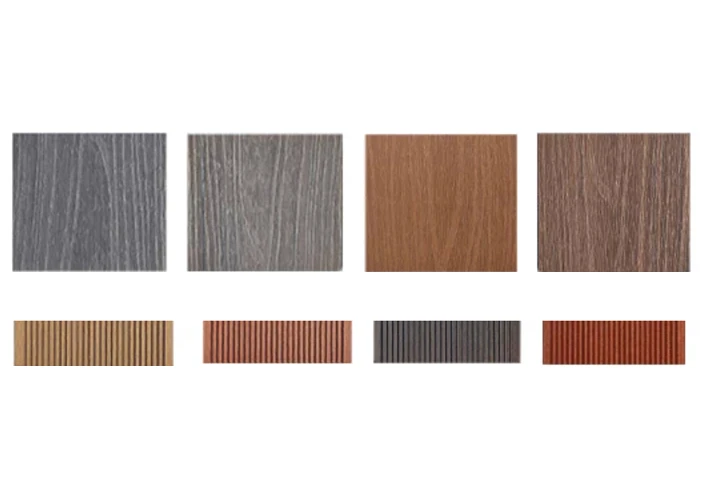
- Diverse color and texture options
How solidexwood Controls Composite Decking Quality
As a professional Chinese composite decking manufacturer, solidexwood focuses on producing high-quality outdoor building materials for international markets.
Our quality control system includes:
Strict Raw Material Selection
We carefully select:
- High-quality wood fibers
- Premium HDPE materials
- UV stabilizers
- Anti-aging additives
This ensures long-term product stability.
Advanced Production Technology
Our automated extrusion lines provide:
- Consistent board dimensions
- Stable density
- Uniform color
- High production efficiency
Multiple Quality Grades for Different Markets
solidexwood supplies:
- Standard hollow decking
- Solid composite decking
- Co-extrusion premium decking
- Customized project solutions
This allows wholesalers and contractors to select products according to their target markets and budgets.
International Export Experience
We support clients worldwide with:
- OEM branding
- Custom colors
- Surface texture customization
- Packaging solutions
- Project recommendations
Our products are widely used in:
- Residential projects
- Hotels
- Commercial outdoor areas
- Resorts
- Public infrastructure projects
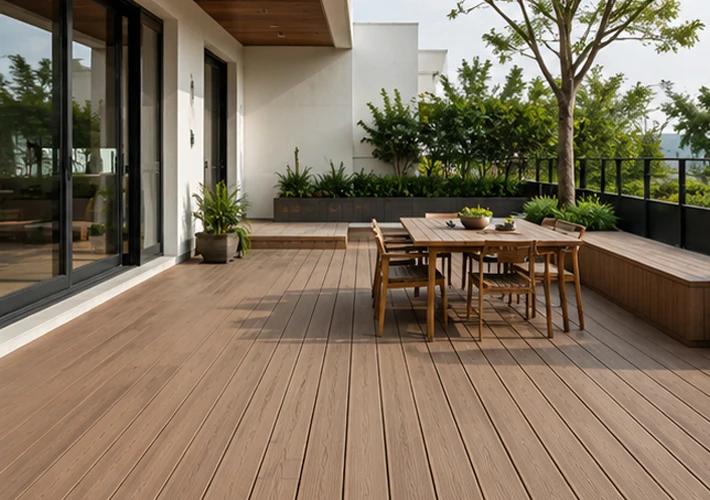
Future Trends in Composite Lumber Decking Quality
The composite decking industry continues evolving toward higher performance and sustainability.
Future trends include:
Improved Eco-Friendly Materials
Manufacturers are increasing the use of:
- Recycled plastics
- Sustainable wood fibers
- Environmentally friendly additives
Better Co-Extrusion Technology
Next-generation capped decking offers:
- Enhanced stain resistance
- More realistic wood textures
- Improved weather protection
Smart Surface Technology
Future products may include:
- Enhanced cooling technology
- Self-cleaning surfaces
- Advanced anti-slip coatings
Greater Customization
Global buyers increasingly demand:
- Custom colors
- Unique textures
- Project-specific dimensions
Chinese factories are becoming more flexible in OEM production.
Conclusion
Composite lumber decking quality levels vary significantly across the global market. While low-cost products may reduce initial investment, they often result in shorter lifespan, increased maintenance, and customer dissatisfaction.
High-quality composite decking provides better:
- Structural stability
- UV resistance
- Waterproof performance
- Surface durability
- Long-term appearance
For distributors, wholesalers, contractors, and developers, understanding the differences between entry-level, mid-range, and premium composite decking is essential for selecting the right products for each market and project.
As an experienced Chinese composite decking manufacturer, solidexwood offers comprehensive outdoor decking solutions with stable quality, competitive pricing, and professional export services. Whether you need economical decking for wholesale distribution or premium co-extrusion products for luxury projects, choosing the right manufacturing partner is the key to long-term success.
If you are looking for reliable composite lumber decking suppliers in China, solidexwood can provide customized solutions tailored to your market requirements and project needs.