In today’s global construction and outdoor design market, choosing the right decking material is no longer just about appearance—it’s about durability, cost efficiency, sustainability, and long-term value. Whether for residential gardens, commercial landscapes, or large-scale hospitality projects, the debate between composite timber decking and natural wood decking continues to shape procurement decisions worldwide.
As a professional Chinese manufacturer, Solidexwood has worked with distributors, contractors, and developers across Europe, North America, Australia, and Southeast Asia. In this comprehensive guide, we break down the key differences between composite decking and natural wood to help B2B buyers make informed, profitable decisions.
What Is Composite Timber Decking?
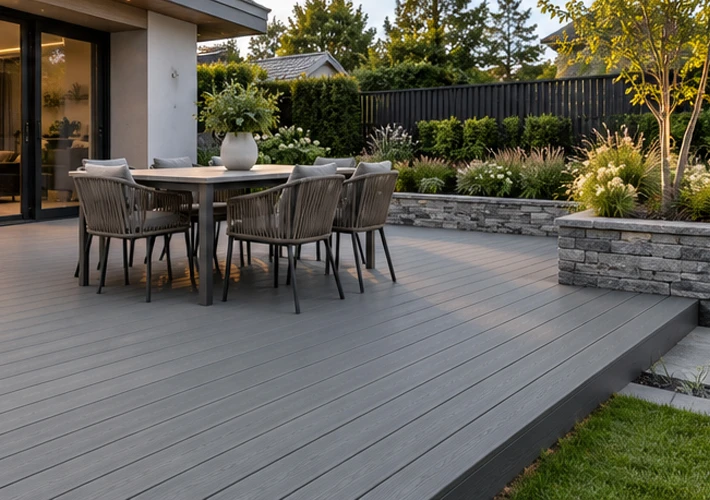
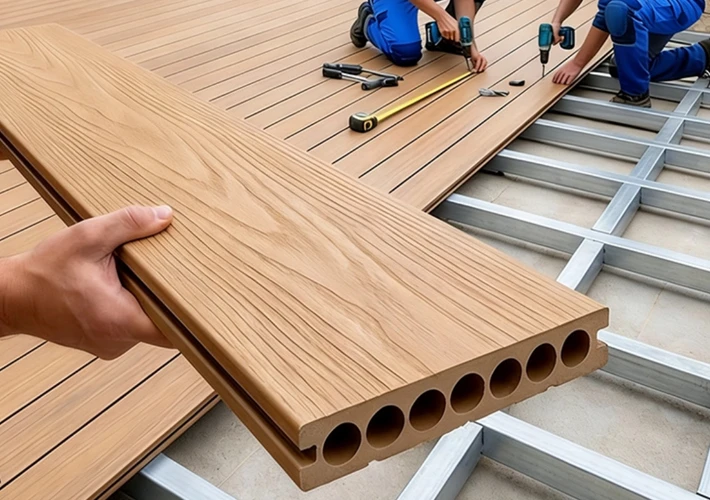
Composite timber decking is an engineered product made from a blend of wood fibers and recycled plastic polymers, combined with additives for enhanced durability and performance. The result is a material that mimics the appearance of natural wood while significantly improving resistance to moisture, insects, and weathering.
Modern composite decking, especially from experienced manufacturers like Solidexwood, typically features:
- Co-extrusion technology (protective outer layer)
- UV-resistant surface coating
- Anti-slip textures
- Color stability with minimal fading
This makes it particularly attractive for projects requiring low maintenance and long lifecycle performance.
What Is Natural Wood Decking?
Natural wood decking is made from solid timber, commonly sourced from species such as:
- Teak
- Cedar
- Redwood
- Pressure-treated pine
- Ipe (Brazilian hardwood)
These materials are valued for their authentic texture, natural grain, and traditional aesthetic appeal. However, being organic, wood is more vulnerable to environmental factors such as moisture, UV exposure, and biological degradation.
Key Differences Between Composite Decking and Natural Wood
1. Durability and Lifespan
Durability is one of the most critical factors for B2B buyers, especially in large-scale or outdoor projects.
Composite Decking:
- Resistant to rot, mold, and insect damage
- Does not crack, warp, or splinter easily
- Lifespan: 20–30 years (or more with proper installation)
Natural Wood:
- Prone to rot, termites, and fungal decay
- Can warp, split, and fade over time
- Lifespan: 10–15 years (depending on maintenance and climate)
Conclusion: Composite decking clearly outperforms natural wood in long-term durability, especially in humid or coastal environments.
2. Maintenance Requirements
Maintenance directly impacts long-term cost and labor.
Composite Decking:
- Requires only occasional cleaning with water
- No need for painting, sealing, or staining
- Retains color and finish over time
Natural Wood:
- Requires regular sealing, staining, or painting
- Needs protection against moisture and UV damage
- Higher maintenance labor and cost over time
Conclusion: Composite decking is significantly more maintenance-friendly, making it ideal for commercial projects such as hotels, resorts, and public spaces.
3. Aesthetic Appeal
Appearance plays a major role in design-driven projects.
Composite Decking:
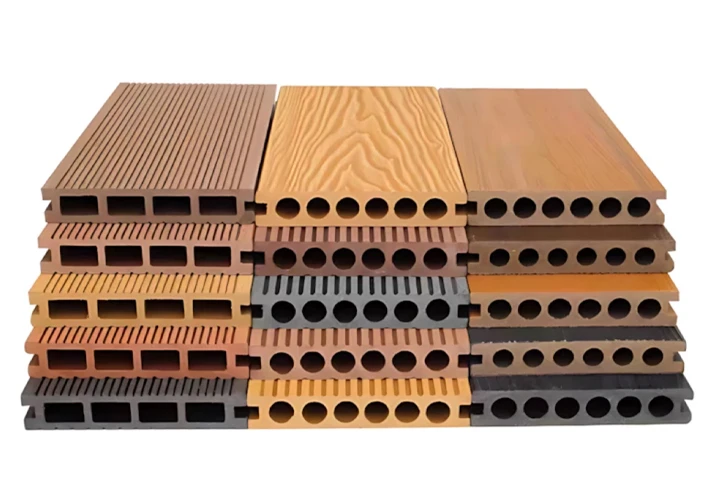
- Available in a wide range of colors and textures
- Advanced embossing replicates natural wood grain
- Consistent look across batches
Natural Wood:
- Unique grain patterns and authentic feel
- Natural aging process creates a rustic look
- Color variation between planks
Conclusion: Natural wood offers unmatched authenticity, but modern composite decking from Solidexwood achieves a highly realistic appearance with better consistency.
4. Environmental Impact
Sustainability is increasingly important for global buyers and developers.
Composite Decking:
- Made from recycled plastics and wood fibers
- Reduces deforestation
- Long lifespan reduces replacement frequency
Natural Wood:
- Requires harvesting of trees
- Sustainable if sourced from certified forests (e.g., FSC)
- Shorter lifespan may increase resource consumption
Conclusion: Composite decking is generally more eco-friendly, especially when produced using recycled materials and energy-efficient processes.
5. Cost Comparison (Short-Term vs Long-Term)
Cost is a decisive factor in procurement.
Initial Cost:
- Composite decking: Higher upfront cost
- Natural wood: Lower initial purchase price
Long-Term Cost:
- Composite decking: Lower maintenance and replacement costs
- Natural wood: Higher lifetime cost due to maintenance and repairs
Example (Per Square Meter Over 10 Years):
| Material | Initial Cost | Maintenance Cost | Total Cost |
|---|---|---|---|
| Composite Decking | Medium-High | Low | Lower |
| Natural Wood | Low | High | Higher |
Conclusion: While composite decking may cost more initially, it delivers better ROI over time.
6. Weather Resistance and Climate Suitability
Global buyers must consider climate adaptability.
Composite Decking:
- Excellent resistance to moisture, UV, and temperature changes
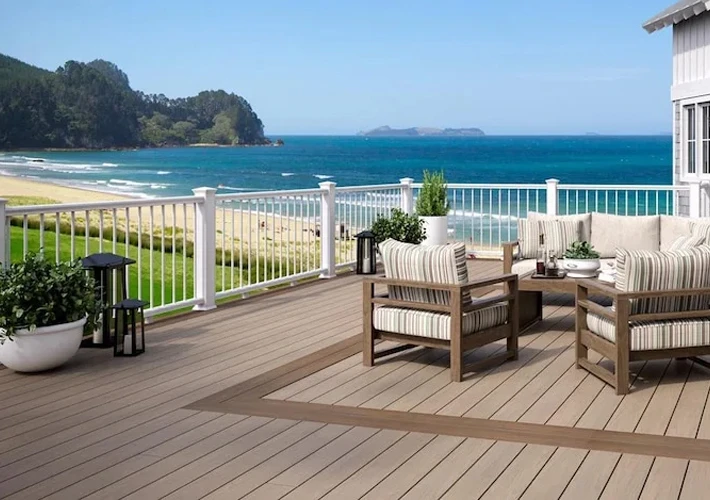
- Suitable for tropical, coastal, and high-humidity regions
Natural Wood:
- Sensitive to moisture and UV exposure
- Requires treatment in extreme climates
Conclusion: Composite decking is the preferred choice for international projects across diverse climates.
7. Installation Efficiency
Installation time affects project timelines and labor costs.
Composite Decking:
- Often uses hidden fastener systems
- Uniform dimensions simplify installation
- Faster and more predictable
Natural Wood:
- Requires pre-drilling and precise alignment
- Variation in plank size can slow installation
Conclusion: Composite decking improves installation efficiency, especially for large-scale developments.
Application Scenarios: Which One Should You Choose?
When to Choose Composite Timber Decking
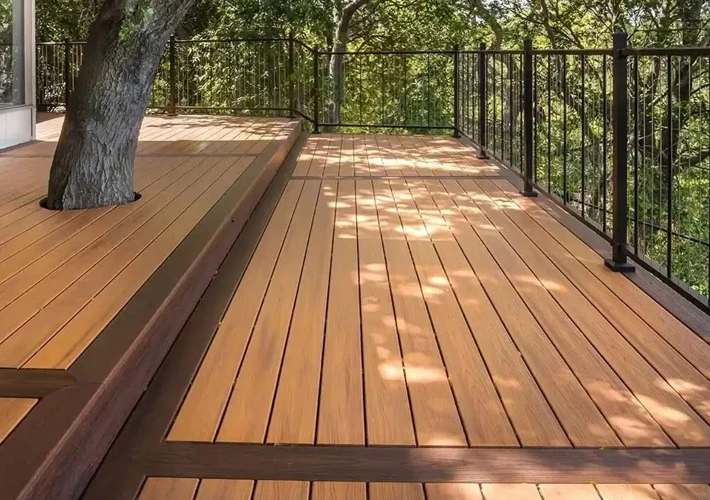
Composite decking is ideal for:
- Hotels and resorts
- Commercial plazas
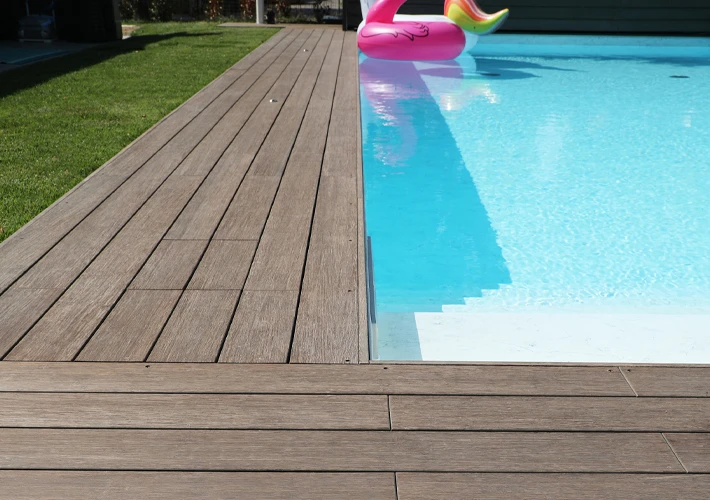
- Swimming pool areas
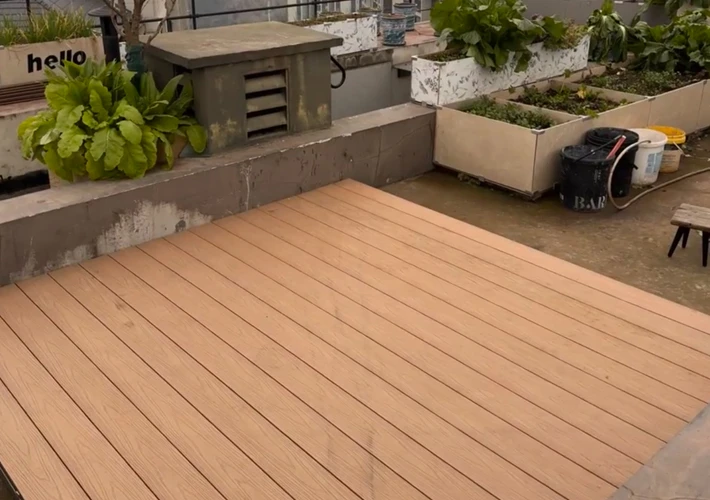
- Rooftop terraces
- Public infrastructure projects
Its low maintenance and high durability make it perfect for projects where long-term performance and cost control are critical.
When to Choose Natural Wood Decking
Natural wood may still be preferred for:
- High-end villas seeking authentic aesthetics
- Heritage or traditional architecture
- Projects with strong emphasis on natural materials
However, these applications usually come with higher maintenance budgets.
Why More Global Buyers Are Switching to Composite Decking
In recent years, the global decking market has seen a clear shift toward composite materials. Key reasons include:
- Rising labor costs for maintenance
- Increasing environmental regulations
- Demand for longer-lasting building materials
- Growth of prefabricated and modular construction
For B2B buyers, this trend translates into higher margins, fewer complaints, and better customer satisfaction.
Why Choose Solidexwood as Your Composite Decking Supplier?
As a leading Chinese manufacturer, Solidexwood offers a strong competitive advantage for international buyers:
1. Advanced Manufacturing Capability
- Automated production lines
- Strict quality control systems
- Consistent product performance
2. OEM & Customization Support
- Custom colors, textures, and sizes
- Private label solutions
- Flexible packaging options
3. Competitive Pricing
- Direct factory supply
- Optimized raw material sourcing
- Cost-effective bulk production
4. Global Export Experience
- Familiar with international standards
- Professional logistics support
- Fast delivery cycles
5. Product Range
- Hollow and solid decking boards
- Co-extrusion premium decking
- Matching accessories (clips, joists, trims)
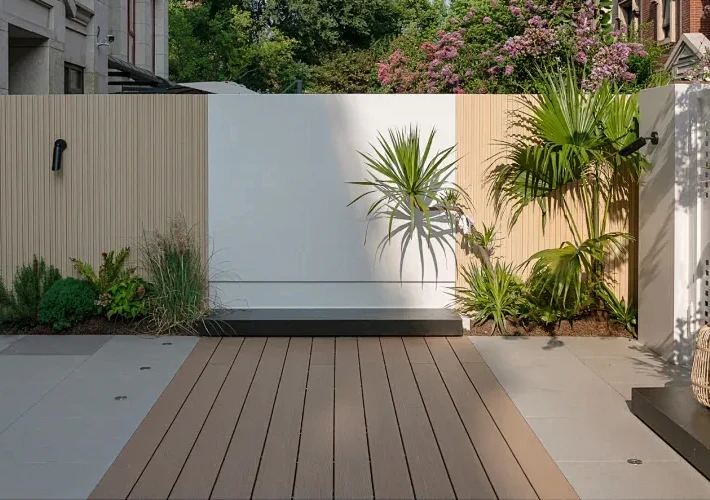
Final Verdict: Which Is Better?
There is no one-size-fits-all answer—but for most modern applications, especially in the B2B sector:
- Choose composite timber decking if you prioritize durability, low maintenance, and long-term cost efficiency.
- Choose natural wood if your project demands a traditional aesthetic and you are prepared for ongoing maintenance.
For global distributors, contractors, and developers, composite decking—especially from reliable manufacturers like Solidexwood—offers a smarter, future-proof investment.
Looking for a reliable composite decking supplier in China?
Solidexwood is ready to support your business with high-quality products, competitive pricing, and professional export services.
👉 Contact us today to get samples, catalogs, and the best quotation for your market.