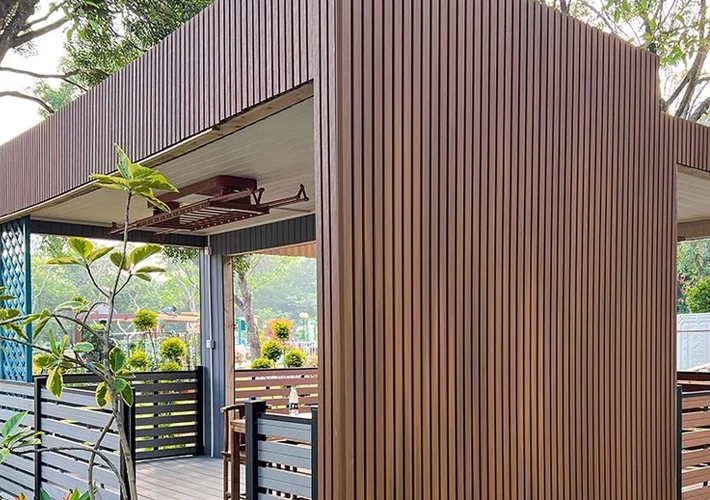
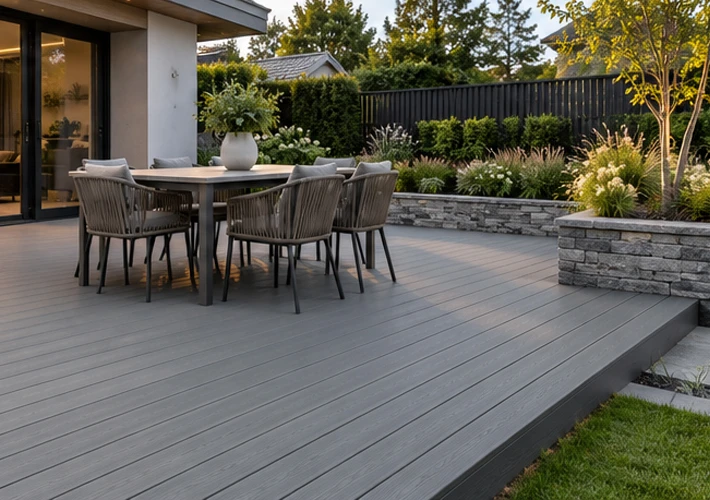
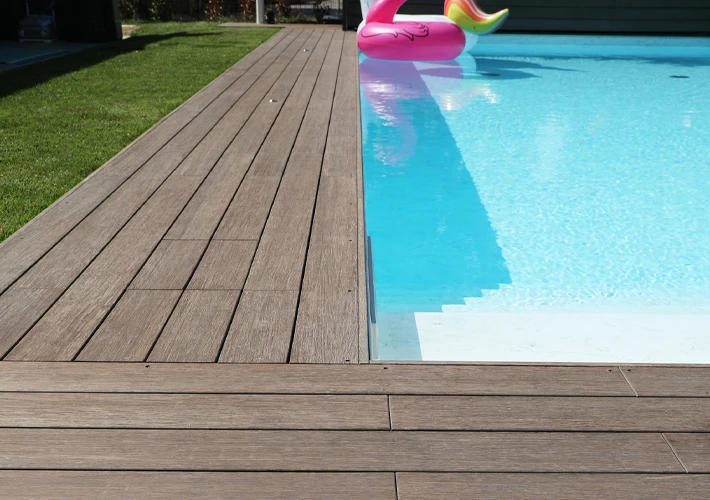
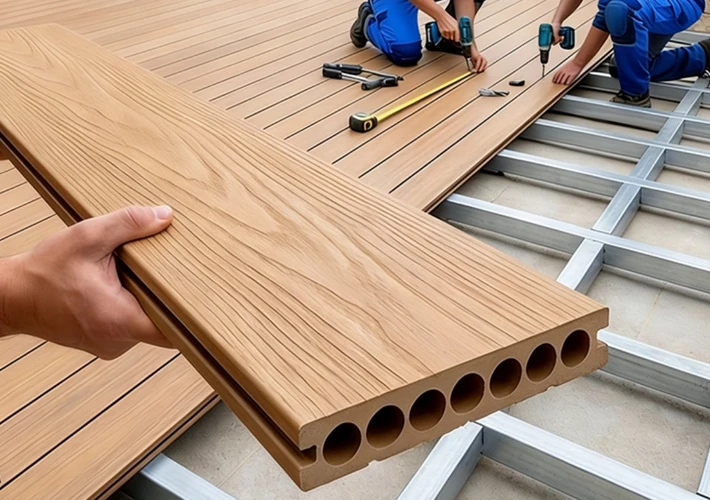
Australia is one of the most demanding markets for exterior building materials. Strong sunlight, high ultraviolet (UV) exposure, seasonal temperature changes, coastal salt air, heavy rainfall, and strict building regulations all influence the performance requirements for exterior wall cladding. For importers, building material wholesalers, distributors, architects, and construction contractors, selecting the right composite cladding is essential to achieving long-term project value.
Composite cladding has become an attractive alternative to traditional timber for many exterior applications because it can combine a natural wood appearance with reduced maintenance requirements and engineered material performance. However, not all composite cladding products are designed for the same climate. In regions with intense sunlight and prolonged UV exposure, buyers need to evaluate the material formulation, surface protection, colour stability, dimensional performance, fixing system, and suitability for the intended building.
Solidexwood is a China-based manufacturer of composite outdoor building materials, supplying composite cladding solutions for international B2B buyers. For Australian importers and project contractors, working directly with a factory can provide opportunities to compare product specifications, select suitable profiles and colours, coordinate container orders, and develop product ranges for different regional markets.
This guide explains how to select composite cladding for Australia and other high-UV areas, what technical factors buyers should evaluate, and how to source exterior cladding from a Chinese manufacturer.
Why Australia and High-UV Regions Need Specialised Composite Cladding
Australia’s climate varies considerably between regions. Northern coastal areas may experience intense sunlight, high humidity, and heavy rainfall, while inland locations can face extreme heat, low humidity, and substantial day-to-night temperature changes. Southern regions may experience cooler winters, and coastal projects can be exposed to wind-driven rain and salt-laden air.
These conditions create different challenges for exterior cladding systems.
UV Radiation and Surface Degradation
Ultraviolet radiation can gradually affect the appearance and properties of exterior building materials. Depending on their formulation, some polymer-based materials may experience colour fading, surface chalking, reduced gloss, or changes in surface integrity after prolonged exposure.
Wood-plastic composite (WPC) cladding typically combines wood fibre or wood flour with thermoplastic polymers and additives. The proportions and quality of these ingredients influence the finished product’s performance. UV stabilisers, pigments, surface coatings, and protective polymer layers may also influence how the product responds to sunlight.
For Australian buyers, the important question is not simply whether a product is described as UV-resistant. Buyers should establish how its resistance has been evaluated and whether the available test evidence represents the actual product being purchased.
When comparing suppliers, request information about:
- UV stabilisers and other weather-resistant additives.
- The polymer type and overall material formulation.
- Surface protection technology, including whether the product is co-extruded or coated.
- Colour stability and weathering test results.
- The test method, exposure conditions, and duration used.
- Any available evidence of performance after artificial or natural weather exposure.
A factory that can explain these details is better positioned to help buyers select a product for a particular application instead of relying on broad marketing claims.
Heat and Temperature Fluctuations
Dark exterior surfaces can become significantly hotter under direct sunlight than the surrounding air. Repeated heating and cooling can cause building materials to expand and contract.
Composite cladding must therefore be evaluated for dimensional stability and installed with an appropriate fixing arrangement. The required expansion gaps, fastener positions, supporting batten spacing, and joint details depend on the specific product design and installation conditions.
A board that performs well in a mild climate may require different installation planning in a location exposed to prolonged direct sunlight.
For Australian projects, importers should obtain the manufacturer’s installation instructions before confirming a product specification. These instructions should identify recommended clearances, maximum support spacing, suitable fasteners, and any restrictions related to temperature or installation conditions.
Rainfall, Humidity, and Coastal Exposure
UV resistance is only one part of exterior performance. Composite cladding must also be suitable for the moisture conditions at the project location.
In humid coastal areas, wall systems need appropriate drainage and ventilation detailing. Standing water, poorly designed joints, or trapped moisture can create problems even when the cladding boards themselves have relatively low water absorption.
For coastal projects, buyers should also consider the corrosion resistance of screws, clips, brackets, and other metal components. Stainless steel or other suitably corrosion-resistant fixings may be appropriate, depending on the exposure conditions and the system specification.
The key principle is straightforward: choose composite cladding as part of a complete exterior wall system, not as an isolated board.
What Makes Composite Cladding Suitable for High-UV Applications?
Composite cladding performance depends on several interacting factors. Material formulation, protective surface technology, pigments, manufacturing consistency, and installation all influence the final result.
Material Formulation and Polymer Selection
WPC cladding generally combines wood-based material with a polymer matrix. Common polymer choices in the wider composite industry include polyethylene (PE), polypropylene (PP), and polyvinyl chloride (PVC), although product structures and formulations vary by manufacturer.
Different formulations offer different combinations of processability, stiffness, impact resistance, moisture response, and weathering behaviour. It is not accurate to assume that every product using the same polymer will perform identically.
For buyers sourcing composite cladding for Australia, the manufacturer should identify the actual product construction and provide relevant technical information. A comparison based solely on board appearance or price per square metre may overlook important differences in material quality and expected service conditions.
Ask whether the product is a conventional composite profile, a capped or co-extruded composite board, or another engineered exterior cladding system. These constructions should not be treated as interchangeable.
Capped and Co-Extruded Composite Cladding
Capped composite cladding generally incorporates a protective outer layer over a composite core. Co-extrusion is one manufacturing method used to create this type of structure.
Depending on the formulation and product design, the outer layer may improve resistance to staining, moisture penetration, surface wear, and weather-related colour changes compared with some uncapped alternatives.
However, capped construction does not automatically guarantee superior performance in every application. The quality of the cap layer, the compatibility between layers, the polymer formulation, and the manufacturing process all matter.
When comparing capped composite cladding for high-UV locations, buyers should ask:
- What material is used for the protective outer layer?
- Is the outer layer applied consistently across the visible surface?
- How is bonding between the outer layer and the core controlled?
- Are UV weathering and colour-retention results available?
- Does the manufacturer provide a written warranty, and what conditions apply?
These questions help procurement teams distinguish between products that merely look similar and products supported by meaningful technical evidence.
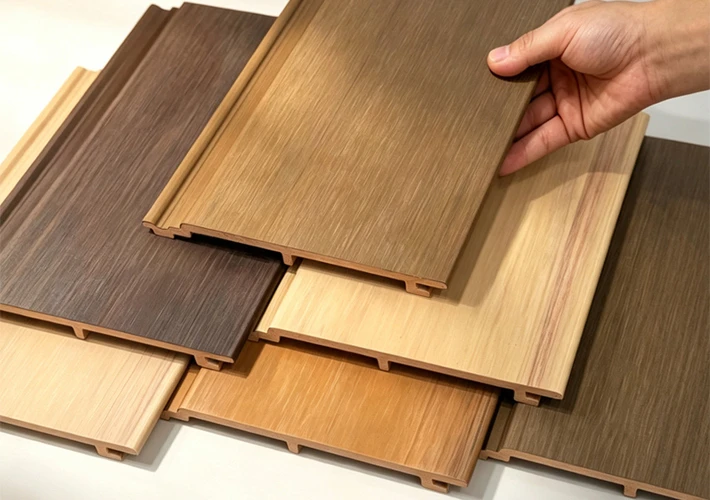
Pigments, Colour Stability, and Surface Finish
Colour selection is an important part of both architectural design and product performance.
Brown, grey, charcoal, teak-style, and other wood-inspired finishes are commonly considered for contemporary Australian façades. However, different pigments and surface treatments may respond differently to prolonged UV exposure.
Dark colours can absorb more solar energy than lighter colours under comparable conditions. This can increase surface temperatures and influence expansion requirements. The actual temperature depends on several factors, including solar exposure, wind, orientation, and the material’s optical properties.
Buyers should therefore evaluate colour stability alongside thermal movement.
For large projects, request production samples in the exact colours under consideration. Confirm whether the sample uses the same formulation, surface treatment, and manufacturing construction as the proposed bulk order.
It is also advisable to agree on acceptable colour variation between production batches, particularly when the project requires multiple containers or phased deliveries.
Weathering Tests and Technical Evidence
A credible UV-resistance claim should be supported by relevant evidence.
Depending on the product and target market, manufacturers may provide accelerated weathering reports, colour-change measurements, visual assessments, or other performance documentation. Buyers should review the test method and determine whether the results are appropriate for the intended application.
Accelerated laboratory exposure can help compare products under controlled conditions, but it does not translate directly into a precise number of years of outdoor service life. Real-world performance depends on climate, installation, maintenance, orientation, and other factors.
For this reason, statements such as “UV-resistant” or “long-lasting” should be evaluated against actual test results and clearly defined warranty conditions.
Solidexwood can work with B2B buyers to identify relevant product specifications and discuss the technical documents available for the selected composite cladding range.
Key Benefits of Composite Cladding for Australian Projects
Composite cladding offers several potential advantages for suitable exterior applications. The value of these advantages depends on the product specification, project requirements, installation quality, and local compliance obligations.
Reduced Routine Maintenance
Natural timber can require periodic staining, painting, sealing, or other surface treatments, depending on the timber species, finish, and exposure conditions.
Many composite cladding products are designed to reduce the need for these recurring treatments. Routine care commonly involves removing dust, dirt, and surface deposits according to the manufacturer’s cleaning instructions.
For commercial buildings, hospitality developments, residential projects, and property portfolios, reduced routine maintenance can help simplify long-term facilities management.
Nevertheless, composite cladding should not be described as completely maintenance-free. Cleaning, periodic inspection, and replacement of damaged components may still be necessary.
Consistent Appearance Across Large Projects
Large construction projects require consistent colours, profiles, and dimensions across substantial façade areas.
Manufactured composite boards can offer more predictable appearance and dimensions than some natural materials, provided the factory maintains suitable process controls.
This can be particularly useful for developers, builders, and distributors who need repeatable specifications across multiple projects.
Before ordering, buyers should confirm the production tolerances, colour references, profile dimensions, and batch-control procedures. They should also request production samples and agree on inspection criteria for bulk orders.
Resistance to Moisture-Related Problems
Many WPC cladding products are designed to reduce moisture uptake compared with untreated timber. Their actual water absorption, swelling behaviour, and dimensional performance vary according to composition and construction.
This can make appropriately specified composite cladding useful for exterior applications exposed to rain and humidity.
However, a moisture-resistant board does not make an incorrectly detailed wall waterproof. The wall assembly still requires suitable weather barriers, flashings, drainage paths, joints, and openings.
Design Flexibility
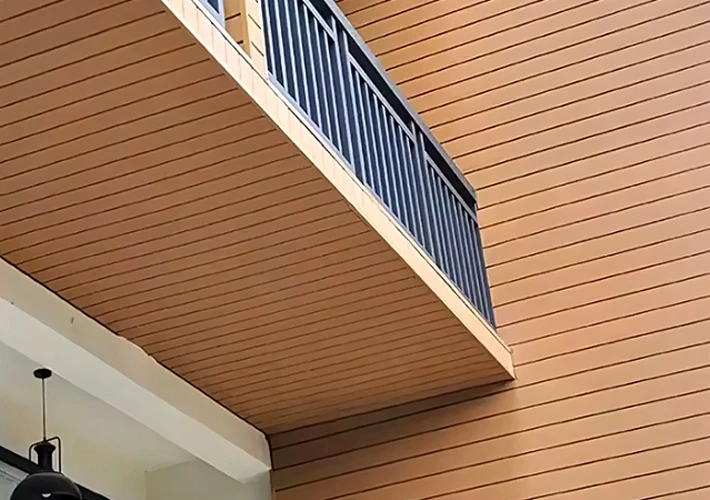
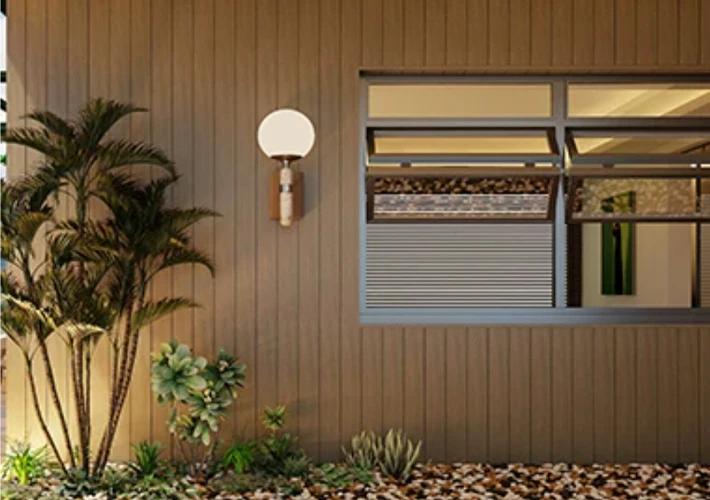
Composite cladding is available in a variety of profiles and finishes, including linear boards, wood-grain textures, modern horizontal or vertical arrangements, and different colour families.
This flexibility allows architects and contractors to coordinate exterior walls with decking, fencing, soffits, landscaping, and other architectural elements.
For wholesalers and distributors, a well-organised selection of standard colours and profiles can help serve different customer segments without requiring an entirely new product design for every order.
Potential Lifecycle Value
The purchase price is only one part of the total cost of exterior cladding.
A more useful comparison includes material cost, freight, import expenses, installation labour, supporting components, cleaning, inspection, replacement, and expected service life.
A product with a higher initial price may offer better value if its documented performance and maintenance requirements suit the project. Conversely, an expensive product is not necessarily the best choice if it provides no meaningful advantage for the intended exposure conditions.
B2B buyers should compare the complete installed system and evaluate the evidence behind each supplier’s performance claims.
How to Choose the Right Composite Cladding for Australia
Selecting the right product requires a structured assessment of the project, rather than choosing solely by colour, appearance, or quoted price.
Step 1: Identify the Project Location and Exposure
Start by identifying where the cladding will be installed.
A building in a tropical coastal region may require careful consideration of UV exposure, humidity, wind-driven rain, and corrosion. An inland project may place greater emphasis on heat, temperature fluctuations, and intense sunlight. A building in a cooler region may have different moisture-management and thermal requirements.
Record the main exposure conditions, including:
- Direct sunlight and façade orientation.
- Expected temperature range.
- Rainfall and humidity.
- Distance from the coast and potential salt exposure.
- Wind exposure and building height.
- Whether the wall is sheltered, partially covered, or fully exposed.
These details help determine which product characteristics deserve the most attention.
Step 2: Confirm the Intended Application
Not every composite board is suitable for every exterior application.
Determine whether the product will be used for a complete external wall façade, a decorative feature wall, a soffit, a sheltered outdoor area, or another purpose.
These applications can have different structural, fire-safety, weatherproofing, and installation requirements.
A product marketed for outdoor decorative use should not automatically be assumed suitable for a regulated building façade. The manufacturer must confirm the intended use, and the project team must verify that the complete system meets applicable requirements.
Step 3: Compare Technical Specifications
Request a technical data sheet for every shortlisted product.
Useful comparison points include:
| Specification | What buyers should verify |
|---|---|
| Material construction | Polymer type, composite core, and protective surface structure |
| Dimensions | Width, thickness, length, and manufacturing tolerances |
| UV performance | Relevant test reports and colour-change data |
| Thermal movement | Expansion requirements and installation clearances |
| Water performance | Applicable absorption, swelling, or weathering data |
| Mechanical performance | Relevant strength, impact, or fixing information |
| Surface finish | Colour options, texture, and batch consistency |
| Warranty | Coverage, exclusions, duration, and maintenance conditions |
| Installation | Fixings, support spacing, ventilation, and joint details |
| Compliance | Product-specific reports and evidence relevant to the project |
Do not compare products based on one specification in isolation. A board with a thicker profile, for example, is not automatically more durable than a thinner board made with a different formulation.
Step 4: Evaluate the Installation System
Composite cladding performance depends on both the board and the way it is installed.
The project team should check the supporting frame, batten spacing, fastening method, ventilation requirements, drainage details, expansion gaps, and treatment of corners and openings.
Window and door interfaces deserve particular attention because poorly detailed junctions can allow water to enter the wall assembly.
For longer boards, thermal movement may be especially important. The installation instructions should specify how boards are fixed and how movement is accommodated at joints and terminations.
Where the project requires engineering input, the cladding manufacturer should provide sufficient product information for the designer or engineer to assess the proposed system.
Step 5: Request Samples Before Bulk Purchasing
Samples are useful for assessing colour, texture, finish quality, and compatibility with other façade materials.
For high-UV projects, sample approval should be combined with a review of the product’s technical evidence. A new sample cannot demonstrate long-term weathering performance by appearance alone.
Before mass production, agree on the approved sample, product reference, dimensions, finish, packaging, and inspection criteria. Retaining a reference sample can help manage colour consistency when repeat orders are placed.
Step 6: Calculate the Complete Procurement Cost
For imported composite cladding, the supplier’s unit price is only the starting point.
A realistic budget should include the boards, trims, clips, screws, supporting materials, packaging, ocean freight, insurance, customs duties, taxes, local delivery, installation, and expected maintenance.
Buyers should also check the quantity of accessories required per square metre and account for cutting waste.
When comparing Chinese factories, request quotations based on the same product specification, quantity, Incoterm, packaging method, and accessory scope. This creates a more meaningful comparison than simply comparing the lowest quoted board price.
Australian Building Regulations, Fire Safety, and Installation Requirements
Compliance is a critical consideration when importing composite cladding into Australia. UV resistance and weathering performance are important, but they do not establish that a product is approved for every building type or façade application.
Understand the National Construction Code
The National Construction Code (NCC) sets building performance requirements in Australia. The relevant provisions depend on the building classification, construction type, application, and applicable state or territory requirements.
For external cladding, project teams may need to assess fire performance, structural adequacy, weatherproofing, durability, and other relevant requirements.
The Australian Government’s YourHome guidance explains that a cladding system includes not only the outer cladding but also supporting framing, building membranes, and insulation layers. The complete wall assembly must be designed and installed appropriately for its climate and application.
Fire Performance Must Be Verified Separately
Composite materials may contain combustible polymers or other organic components. Their suitability for a particular building therefore depends on the applicable building requirements and the evidence available for the proposed system.
Some building classifications and construction types impose stringent requirements on external walls. A product that is suitable for a permitted low-rise residential application may not be suitable for a multi-storey commercial project.
Buyers should not rely on a general statement that a product is “Australian standard compliant.” Instead, request the specific test reports, certificates, assessments, and supporting documentation relevant to the intended use.
The project architect, building surveyor, certifier, or fire engineer should confirm the appropriate compliance pathway before the product is specified or installed.
Installation and Weatherproofing
A compliant cladding system requires suitable design and workmanship.
Important considerations include:
- A compatible and adequately designed supporting structure.
- Fixings appropriate for the substrate and exposure conditions.
- Correct spacing and accommodation of thermal movement.
- Proper flashing around windows, doors, and other openings.
- Drainage and ventilation details appropriate to the wall assembly.
- Suitable protection against corrosion in exposed environments.
- Installation according to the manufacturer’s approved instructions.
These details are particularly important in Australian coastal locations and high-wind areas.
Importers should obtain the installation manual, product data sheet, and relevant system documentation before committing to a project. If any technical detail is unclear, it should be resolved with the manufacturer and the project design team before installation begins.
Important: Purchasing a board from a reputable overseas factory does not automatically establish compliance with Australian building regulations. Product suitability must be assessed for the specific project, including the intended use and the applicable code requirements.
Why Source Composite Cladding Directly from a Chinese Factory?
For Australian importers, wholesalers, and construction suppliers, sourcing directly from a Chinese manufacturer can offer advantages in product selection, manufacturing coordination, and supply-chain management.
However, the value of factory-direct purchasing depends on the manufacturer’s capabilities, quality controls, communication, and ability to supply products that meet the buyer’s specification.
Product Selection and Customisation
A manufacturer can help buyers compare different board profiles, colours, textures, dimensions, and product constructions.
For distributors, this can support the development of a differentiated product range. For contractors, it can help align the cladding specification with the architectural design and project budget.
Customisation may include colour matching, profile selection, product lengths, packaging, and private-label branding, subject to the factory’s capabilities and minimum order requirements.
For high-UV applications, customisation should never come at the expense of the required performance. Any change to pigments, surface layers, polymer formulation, or other key components may affect product behaviour and should be assessed before approval.
Factory Pricing and Container Planning
Direct purchasing can simplify communication between the buyer and the production team and may reduce the number of commercial intermediaries.
It also allows importers to coordinate product quantities, accessories, packaging, and delivery schedules with one supplier.
When requesting a quotation from Solidexwood, buyers should provide the intended application, preferred profile, approximate area, colour requirements, destination port, and expected order quantity.
This information helps the factory prepare a more useful quotation and identify details that need to be confirmed before production.
Quality Control and Batch Consistency
For Australian distributors, consistent product quality is essential to customer satisfaction and repeat business.
A suitable factory quality-control process should cover incoming materials, production parameters, dimensions, surface appearance, packaging, and final inspection.
For products intended for high-UV applications, buyers should also establish whether the manufacturer can provide relevant weathering documentation and whether the tested formulation matches the supplied product.
Before placing a large order, consider agreeing on written acceptance criteria covering dimensions, colour, surface finish, packaging, and defect limits.
For repeat shipments, retain approved samples and product references to help maintain consistency between batches.
OEM and ODM Opportunities
OEM and ODM arrangements can help importers and distributors develop their own composite cladding brands.
Depending on the factory’s capabilities, services may include private-label packaging, selected colour ranges, profile development, customised product lengths, and coordinated accessory packages.
These arrangements are most effective when the buyer defines the target market, intended application, quality requirements, order volume, and documentation expectations at the beginning of the project.
For Australian buyers, the manufacturer should also be informed about the intended building applications so that the product selection and available technical documentation can be reviewed appropriately.
Why Consider Solidexwood?
Solidexwood focuses on composite outdoor building materials and works with international B2B customers seeking products for distribution and construction projects.
For buyers evaluating composite cladding for Australia and other high-UV regions, Solidexwood can discuss product profiles, colours, dimensions, order quantities, and supply arrangements based on the project brief.
The objective is to help buyers identify a suitable product specification, coordinate manufacturing requirements, and plan procurement more efficiently.
When evaluating Solidexwood or any other Chinese supplier, buyers should request current product samples, applicable technical documentation, written warranty terms, and a quotation based on the same specification. This approach supports a transparent purchasing decision and helps ensure that the selected material matches the intended application.
Applications, Maintenance, and Frequently Asked Questions
Where Can Composite Cladding Be Used in Australia?
Depending on the specific product and its approved application, composite cladding may be considered for a range of exterior architectural projects.
Residential façades: Composite cladding can provide a contemporary wood-look finish for suitable residential exterior walls. Vertical and horizontal profiles can be coordinated with windows, doors, roofing, and landscaping.
Commercial buildings: Offices, retail buildings, and other commercial properties may use composite finishes for selected façade areas or architectural features, subject to applicable fire and building requirements.
Hospitality developments: Hotels, resorts, restaurants, and leisure facilities may use suitable exterior composite products to create coordinated architectural designs. Material selection should consider maintenance access, weather exposure, and the specific requirements of the building.
Outdoor architectural features: Depending on the product specification, composite profiles may be considered for soffits, sheltered outdoor walls, entrance features, and other designated applications.
Renovation projects: Composite cladding may be considered when updating an existing building’s appearance. Before installation, contractors should evaluate the existing substrate, moisture conditions, fixing arrangements, and any requirements for upgrading the wall system.
Not every composite product is appropriate for every application. Buyers should confirm the permitted uses of the exact product before specifying it.
How Should Composite Cladding Be Maintained?
Maintenance requirements depend on the product construction and environmental exposure. A practical maintenance plan should follow the manufacturer’s written recommendations.
General good practices include:
- Clean the surface periodically with suitable cleaning products and methods.
- Remove accumulated dirt, leaves, and other debris from joints and drainage areas.
- Inspect accessible fasteners, trims, joints, and termination details.
- Check for accidental damage, unusual movement, or water-related problems.
- Avoid harsh chemicals, abrasive tools, or high-pressure cleaning methods unless explicitly permitted by the manufacturer.
- Record any changes in surface appearance and follow the supplier’s recommendations for further inspection.
Buildings near the coast, exposed to frequent storms, or located in dusty environments may require more frequent inspection than sheltered sites.
Maintenance should also include the supporting system where accessible. Even a durable cladding board cannot compensate for loose fixings, blocked drainage paths, or poorly maintained junctions.
Frequently Asked Questions
1. Is composite cladding suitable for Australia’s high-UV climate?
It can be suitable when the product is designed for the intended exposure and supported by appropriate performance evidence. Buyers should assess the formulation, surface protection, weathering results, installation requirements, and warranty conditions rather than relying on a generic UV-resistance claim.
2. Does composite cladding fade in direct sunlight?
Colour change is possible in exterior materials exposed to prolonged sunlight. The degree of change depends on the material formulation, pigments, protective surface layer, exposure conditions, and maintenance. Ask the manufacturer for relevant weathering test results and any documented colour-stability criteria.
3. Is capped composite cladding better for high-UV areas?
Capped composite cladding may offer improved surface protection compared with some uncapped products, depending on the construction and formulation. However, capped construction alone does not guarantee a particular service life. Compare actual product specifications and test evidence.
4. Does composite cladding require expansion gaps?
Many composite systems require allowances for thermal movement. The correct gap depends on the board’s material, length, temperature conditions, fixing system, and installation instructions. Always follow the technical guidance for the selected product.
5. Is composite cladding waterproof?
Some composite boards have relatively low water absorption, but this does not mean that the complete wall system is waterproof. Appropriate membranes, flashings, joints, drainage, and installation details remain essential to controlling water entry.
6. Can composite cladding be used on multi-storey commercial buildings in Australia?
Potentially, but the exact product and complete external wall system must satisfy the requirements applicable to the building’s classification and construction type. Fire performance and other compliance requirements should be verified by the relevant project professionals before specification.
7. What should Australian importers ask a Chinese composite cladding factory?
Ask about material composition, product dimensions, manufacturing tolerances, UV weathering evidence, installation instructions, fire-related documentation where relevant, warranty terms, minimum order quantity, lead time, packaging, and available customisation. Confirm that the documents relate to the actual product being quoted.
8. Can Solidexwood supply customised composite cladding?
Solidexwood can discuss available profiles, colours, dimensions, and supply arrangements with B2B buyers. Customisation options, minimum order quantities, production schedules, and technical documentation should be confirmed for the specific product and order.
9. How can buyers compare composite cladding quotations fairly?
Use the same product construction, dimensions, colour, accessories, packaging requirements, order quantity, delivery terms, and documentation criteria for every quotation. Then compare the landed cost and expected project requirements, not simply the factory price per board.
10. What is the first step when sourcing composite cladding for Australia?
Prepare a project brief containing the installation location, intended application, estimated quantity, desired colour and profile, exposure conditions, and any known compliance requirements. Send it to shortlisted manufacturers and request product samples, technical information, and a detailed quotation.
Conclusion: Choose Composite Cladding for the Climate, Not Just the Appearance
Composite cladding can be a valuable exterior material option for Australian projects when its performance characteristics match the local climate and building requirements. In high-UV regions, buyers should pay particular attention to weathering evidence, colour stability, material construction, thermal movement, installation details, and the suitability of the complete wall system.
For importers, wholesalers, distributors, and contractors, choosing a reliable manufacturing partner is equally important. A factory should be able to explain its product specifications, provide relevant documentation, maintain consistent production quality, and coordinate supply requirements.
As a China-based composite outdoor materials manufacturer, Solidexwood welcomes enquiries from Australian importers, building material distributors, contractors, and project procurement teams looking for composite cladding solutions.
Contact Solidexwood to discuss product profiles, colours, technical specifications, samples, OEM/ODM possibilities, and factory-direct quotations for your next exterior cladding project.
Choose the right material, verify the evidence, and plan the complete cladding system before ordering. These steps help create a more reliable foundation for long-term exterior performance in Australia and other high-UV markets.