Introduction
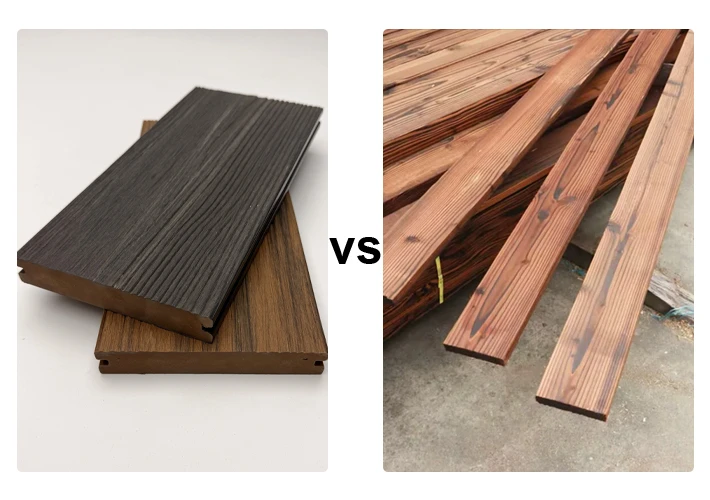
When choosing materials for outdoor decking projects, wood decking has been one of the most traditional and popular options for decades. Its natural appearance, warm texture, and classic outdoor feeling make it widely used in residential gardens, balconies, terraces, commercial landscapes, and hospitality projects.
However, with increasing requirements for durability, low maintenance, and long-term cost efficiency, more architects, contractors, and building material distributors are looking for alternatives that can overcome the limitations of traditional wood. This is where ASA decking has gained significant attention.
ASA decking combines advanced polymer technology with a highly durable ASA surface layer, providing excellent resistance against UV radiation, moisture, temperature changes, and daily wear. Compared with traditional wood decking, ASA decking offers a longer service life, lower maintenance requirements, and more stable performance in challenging outdoor environments.
For wholesalers, distributors, and project developers, choosing between ASA decking and wood decking is not only about appearance but also about long-term investment value, installation costs, maintenance expenses, and customer satisfaction.
This article provides a detailed comparison of ASA decking vs wood decking from three key perspectives: cost, durability, and maintenance, helping buyers make a better decision for residential and commercial outdoor projects.
What Is ASA Decking and How Is It Different from Wood Decking?
Before comparing the two materials, it is important to understand their basic structures and performance characteristics.
What Is ASA Decking?
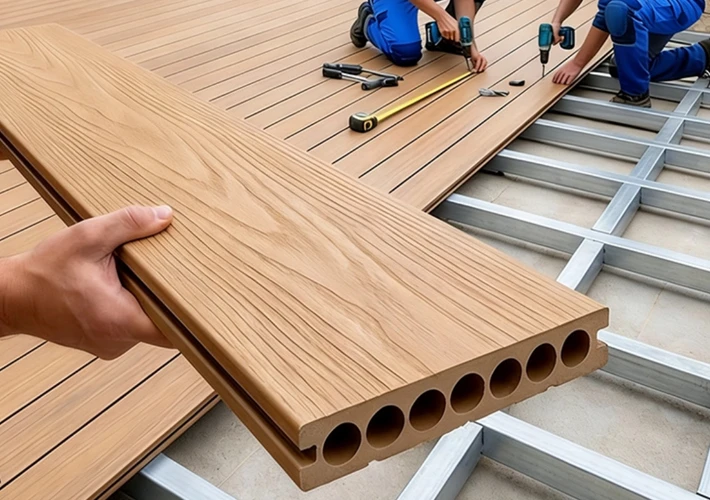
ASA decking is a high-performance composite decking product that uses a polymer core combined with an ASA (Acrylonitrile Styrene Acrylate) protective surface layer.
The ASA layer is a weather-resistant engineering material originally developed for automotive and outdoor applications. It provides outstanding protection against sunlight, rain, humidity, and temperature fluctuations.
Unlike traditional composite decking that mainly uses PE or PVC surface materials, ASA decking offers enhanced color stability and surface durability.
The typical structure of ASA decking includes:
- ASA protective surface layer
- Decorative wood-grain texture
- Composite core material
- Reinforced internal structure
This multi-layer structure allows ASA decking to maintain a natural wood appearance while delivering much stronger outdoor performance.
For manufacturers and suppliers, ASA decking can also support customized production, including:
- Different wood grain patterns
- Various colors
- Customized dimensions
- Surface textures
- Private label production
This makes it suitable for international distributors and large-scale construction projects.
What Is Wood Decking?
Wood decking is made from natural timber, including hardwood species such as:
- Teak
- Ipe
- Cedar
- Redwood
- Pine
Depending on the wood species and treatment process, wood decking can offer different levels of durability.
Natural wood has unique visual characteristics because every board has different grain patterns and textures. This natural beauty is one of the main reasons why wood decking remains popular.
However, because wood is an organic material, it is naturally affected by environmental factors.
Common problems with wood decking include:
- Moisture absorption
- Cracking
- Splitting
- Rotting
- Insect damage
- Color fading
- Warping
To maintain its appearance and performance, wood decking usually requires regular sealing, staining, and maintenance.
ASA Decking vs Wood Decking: Cost Comparison
Cost is one of the most important factors for homeowners, contractors, and commercial project buyers. However, the real cost of decking should not only include the initial purchase price but also installation expenses, maintenance costs, and replacement costs over the product lifecycle.
Initial Material Cost
At first glance, traditional wood decking may appear to be more affordable, especially when choosing common softwood options such as pine.
However, premium hardwood decking, such as teak or ipe, can be significantly more expensive due to limited availability and higher processing costs.
ASA decking generally falls into the mid-to-high price range among decking materials. Although the initial purchase price may be higher than standard wood decking, it provides additional value through:
- Longer lifespan
- Reduced maintenance requirements
- Better weather resistance
- More stable appearance
For buyers focusing on long-term investment, ASA decking often provides a better cost-performance balance.
Long-Term Cost Analysis
The biggest difference between ASA decking and wood decking appears after installation.
Wood decking requires continuous maintenance, including:
- Cleaning
- Sanding
- Painting
- Oil treatment
- Waterproof sealing
- Repairing damaged boards
Depending on climate conditions, wood decking may require maintenance every 1–3 years.
Over a 10–20 year period, these maintenance costs can become significant.
ASA decking requires much less maintenance because the ASA surface layer protects the board from external damage.
Normally, routine maintenance only requires:
- Regular cleaning with water
- Removing surface dirt
- Basic inspection
There is no need for frequent painting, staining, or sealing.
For commercial applications such as hotels, resorts, public spaces, and apartment complexes, reduced maintenance labor can create substantial savings.
Cost Comparison Table
| Factor | ASA Decking | Wood Decking |
|---|---|---|
| Initial Cost | Medium | Low to High depending on wood type |
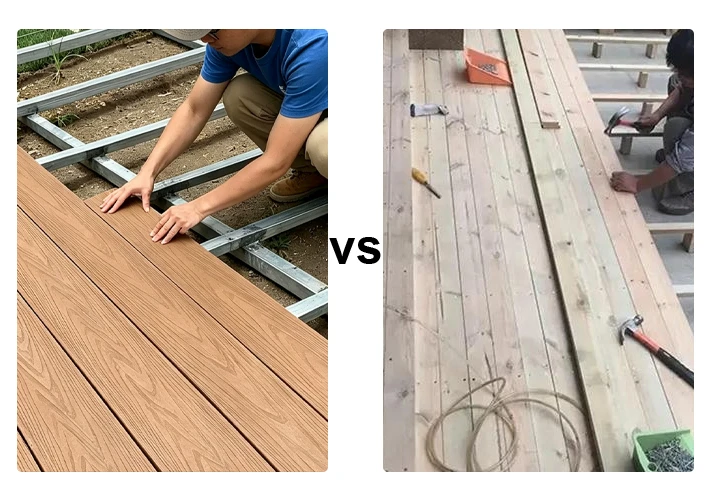
| Installation Cost | Similar | Similar |
| Maintenance Cost | Very Low | Medium to High |
| Replacement Frequency | Low | Higher |
| Long-Term Value | Excellent | Depends on wood species |
From a lifecycle cost perspective, ASA decking is often more economical than wood decking, especially for large projects where maintenance expenses can significantly impact total ownership costs.
Durability Comparison: Which Decking Material Lasts Longer?
Durability is one of the biggest advantages of ASA decking compared with traditional wood.
Outdoor decking is constantly exposed to:
- UV sunlight
- Rain
- Snow
- Humidity
- Temperature changes
- Foot traffic
- Outdoor pollutants
A decking material must maintain its structural stability and appearance under these conditions.
UV Resistance
One of the biggest challenges for outdoor materials is long-term exposure to sunlight.
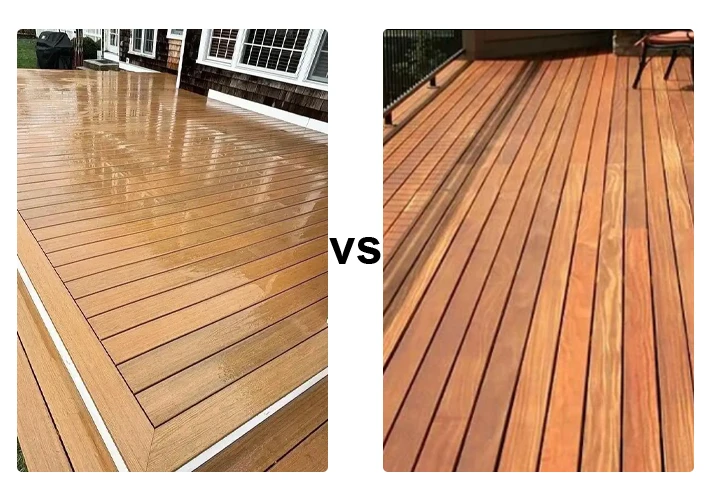
Natural wood gradually loses its original color because UV rays break down the natural pigments inside the wood fibers.
Without proper maintenance, wood decking may turn gray, fade unevenly, or develop surface cracks.
ASA decking uses an ASA protective layer designed for outdoor environments.
Advantages include:
- Excellent UV resistance
- Reduced color fading
- Better long-term appearance retention
- Stable surface performance
This makes ASA decking especially suitable for regions with strong sunlight, such as:
- Australia
- Middle East countries
- Southern United States
- Tropical regions
Moisture and Water Resistance
Wood naturally absorbs water because it contains organic fibers.
Repeated exposure to moisture can cause:
- Expansion and contraction
- Mold growth
- Rot
- Structural weakening
Even treated wood requires regular waterproof protection.
ASA decking has a low water absorption rate and does not provide an environment suitable for mold and insects.
It performs well in:
- Rainy climates
- Coastal areas
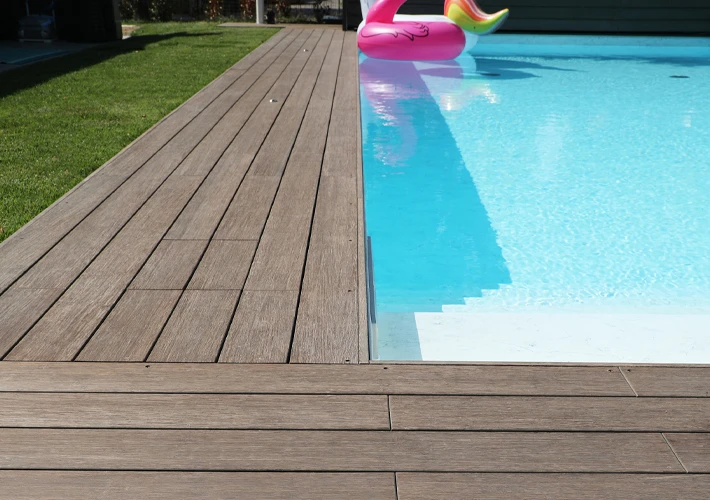
- Poolside applications
- Outdoor commercial spaces
Resistance Against Cracking and Warping
Temperature changes cause materials to expand and contract.
Wood decking is especially vulnerable because natural fibers react differently depending on moisture levels.
Common wood problems include:
- Cracked surfaces
- Warped boards
- Splitting edges
- Uneven surfaces
ASA decking offers better dimensional stability.
Its composite structure reduces movement caused by environmental changes, helping maintain:
- Flat surfaces
- Consistent dimensions
- Longer service life
Maintenance Requirements: ASA Decking Saves More Time and Labor
Maintenance is one of the most important factors when selecting outdoor decking materials. While the initial appearance of wood decking is attractive, maintaining its beauty and performance requires continuous effort. ASA decking, on the other hand, is designed for people who want a beautiful outdoor space without complicated maintenance routines.
For homeowners, property developers, contractors, and commercial project owners, lower maintenance requirements mean reduced labor costs and fewer long-term expenses.
Wood Decking Maintenance Requirements
Although natural wood creates a premium outdoor atmosphere, it requires regular care because wood is a natural material that reacts with the environment.
Typical wood decking maintenance includes:
1. Regular Cleaning
Wood surfaces can accumulate:
- Dirt
- Leaves
- Dust
- Organic materials
- Mold stains
Regular cleaning is necessary to prevent surface deterioration.
2. Sealing and Waterproof Treatment
Wood absorbs moisture easily. To prevent water damage, wood decking usually needs protective coatings.
Common treatments include:
- Waterproof sealers
- Wood oils
- Protective coatings
- Exterior stains
Depending on weather conditions, these treatments may need to be repeated every one to three years.
3. Sanding and Refinishing
Over time, wood decking may develop:
- Scratches
- Faded areas
- Rough surfaces
- Cracks
Restoring the surface often requires sanding and refinishing, which increases labor costs.
4. Repair and Replacement
Because wood is vulnerable to moisture and insects, damaged boards may need replacement.
For large commercial projects, replacing damaged decking sections can create additional:
- Material costs
- Labor costs
- Project downtime
ASA Decking Maintenance Advantages
ASA decking is designed to reduce these maintenance challenges.
The protective ASA surface layer provides strong resistance against:
- UV radiation
- Rain
- Humidity
- Stains
- Surface wear
Routine maintenance usually only requires:
- Sweeping away dust
- Cleaning with water
- Removing stains when necessary
There is no need for:
- Painting
- Staining
- Waterproof coating
- Frequent refinishing
This makes ASA decking especially valuable for:
- Hotels
- Resorts
- Public parks
- Commercial terraces
- Apartment communities
- Large landscaping projects
For businesses managing multiple properties, reducing maintenance frequency can significantly improve operational efficiency.
Weather Resistance and Environmental Performance Comparison
Outdoor decking materials must withstand different climates. A product that performs well in one region may not perform equally in another.
ASA decking has been developed specifically to address the environmental limitations of traditional wood.
Performance in Extreme Weather Conditions
Hot and Sunny Climates
In areas with strong sunlight, traditional wood can experience:
- Color fading
- Drying and cracking
- Surface aging
ASA decking provides stronger UV protection, helping maintain its original appearance for a longer period.
Humid and Rainy Environments
High humidity creates challenges for wood decking.
Common issues include:
- Water absorption
- Mold growth
- Rotting
- Reduced structural strength
ASA decking has excellent moisture resistance, making it suitable for:
- Coastal properties
- Pool decks
- Outdoor restaurants
- Tropical regions
Cold Climate Applications
Freeze-thaw cycles can damage wood because absorbed water expands when frozen.
This may cause:
- Cracking
- Splitting
- Surface damage
ASA decking has better dimensional stability and can handle temperature fluctuations more effectively.
Environmental Benefits of ASA Decking
Sustainability has become an increasingly important consideration for global construction projects.
Traditional wood decking depends on natural timber resources. Although responsibly sourced wood can be environmentally friendly, production depends on forest resources and requires ongoing maintenance treatments.
ASA decking provides several environmental advantages:
Longer Service Life
A longer lifespan means fewer replacements and less material waste.
Reduced Maintenance Chemicals
Because ASA decking does not require frequent painting, staining, or sealing, it reduces the use of maintenance chemicals.
Efficient Resource Usage
Composite decking uses engineered materials to achieve consistent performance without relying entirely on natural timber.
For distributors and project developers, offering durable and low-maintenance decking solutions can also support green building goals.
Appearance and Design Flexibility: Natural Wood Look Without the Limitations
One of the main reasons people choose wood decking is its natural appearance.
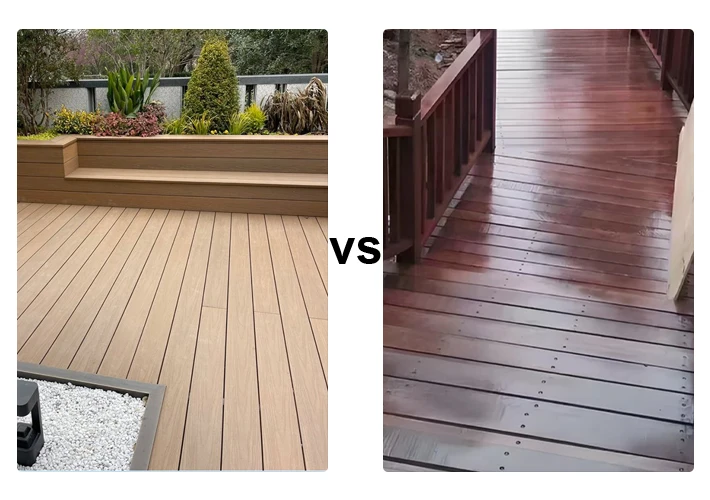
However, modern ASA decking has significantly improved in appearance and can provide a realistic wood-like finish while offering better performance.
Natural Wood Appearance
Advanced ASA surface technology allows manufacturers to create:
- Realistic wood grain patterns
- Natural color variations
- Textured surfaces
- Premium outdoor aesthetics
Compared with traditional plastic-looking decking products, ASA decking provides a more authentic wood appearance.
This makes it suitable for projects requiring both beauty and durability.
Examples include:
- Luxury villas
- Hotel gardens
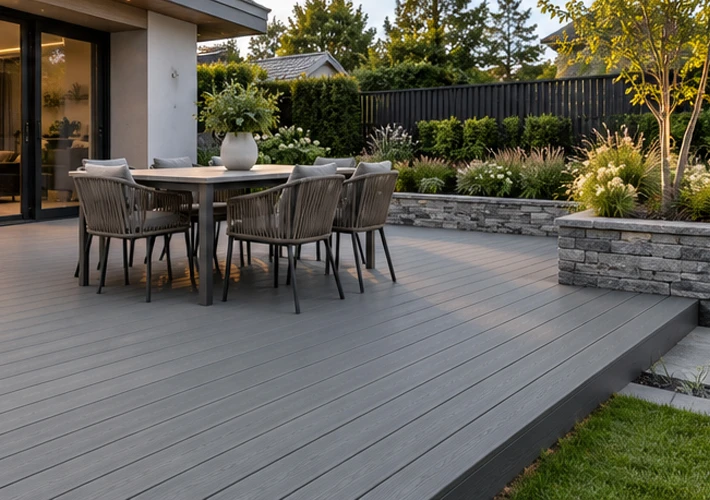
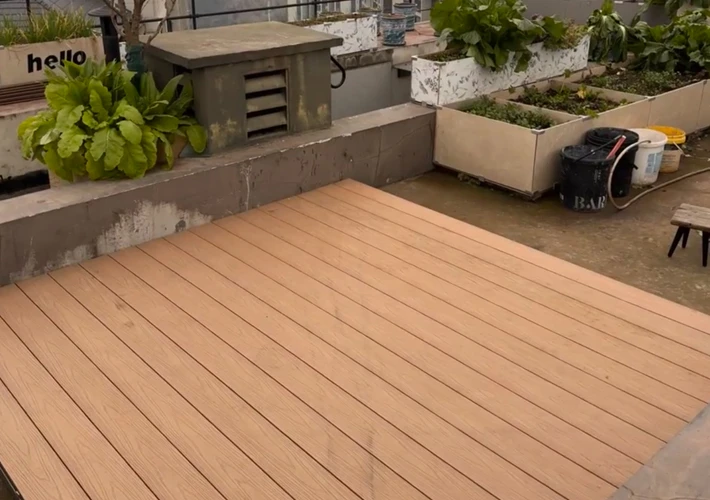
- Rooftop terraces
- Private balconies
- Outdoor entertainment areas
More Color Options
Natural wood has limited color choices.
ASA decking can offer more design flexibility, including:
- Walnut tones
- Teak colors
- Oak styles
- Modern gray finishes
- Customized colors
Manufacturers can also develop customized surface patterns according to market requirements.
For international distributors, this provides more opportunities to create differentiated product lines.
Which Decking Material Is Better for Commercial and Residential Projects?
The best decking material depends on the application, budget, and long-term expectations.
However, for many modern construction projects, ASA decking provides advantages that traditional wood cannot easily achieve.
Residential Applications
For homeowners, ASA decking is ideal for:
- Backyard decks
- Garden pathways
- Balcony flooring
- Pool areas
- Outdoor living spaces
Benefits include:
- Less maintenance work
- Long-lasting appearance
- Better weather resistance
- Safe and comfortable outdoor use
Homeowners can enjoy the appearance of wood without spending significant time maintaining it.
Commercial Applications
Commercial projects have higher requirements because durability and operating costs directly affect profitability.
ASA decking is widely suitable for:
- Hotels
- Resorts
- Restaurants
- Public landscaping
- Shopping centers
- Residential developments
Advantages for commercial buyers include:
Lower Maintenance Costs
Large outdoor areas require frequent maintenance when using natural wood. ASA decking reduces cleaning and repair requirements.
Stable Product Performance
Project owners can expect consistent quality across large installations.
Better Customer Experience
A well-maintained outdoor area improves the overall appearance of commercial properties.
Why Choose ASA Decking from a Professional China Factory?
For global buyers, selecting the right supplier is just as important as choosing the right material.
A professional ASA decking manufacturer can provide advantages including:
Factory Direct Pricing
Buying directly from a China factory helps distributors and contractors reduce supply chain costs.
Benefits include:
- Competitive wholesale prices
- Stable production capacity
- Direct technical support
Customized Product Solutions
Professional manufacturers can support:
- Custom colors
- Customized surface designs
- Different dimensions
- OEM and private label services
This allows importers to create products suitable for their local markets.
Quality Control and Production Experience
Reliable factories focus on:
- Raw material selection
- Production consistency
- Surface quality inspection
- Packaging protection
For overseas buyers, stable quality is essential for building long-term customer relationships.
Faster New Product Development
Leading ASA decking manufacturers can support new product development according to market demand.
Customized samples and new designs can often be developed within a short production cycle, helping distributors respond quickly to changing market trends.
Conclusion: Why ASA Decking Is Becoming a Preferred Alternative to Wood Decking
When comparing ASA decking vs wood decking, both materials have their own advantages.
Wood decking offers:
- Natural beauty
- Traditional appeal
- Unique textures
However, it also comes with challenges:
- Higher maintenance requirements
- Moisture sensitivity
- Shorter lifespan in harsh environments
- Additional long-term costs
ASA decking provides a more advanced solution by combining:
- Natural wood appearance
- Superior UV resistance
- Excellent moisture protection
- Lower maintenance requirements
- Longer service life
- Better cost performance
For homeowners, ASA decking creates a beautiful outdoor space with less maintenance. For contractors, architects, and distributors, it provides a reliable decking solution with strong market potential.
As global construction projects increasingly focus on durability, sustainability, and lifecycle value, ASA decking is becoming an ideal alternative to traditional wood decking.
For buyers looking for high-quality ASA decking from a reliable manufacturer, working directly with an experienced China factory can provide competitive pricing, customized solutions, and professional support for residential and commercial projects.
Contact our team today to get ASA decking samples, factory pricing, and customized solutions for your market.