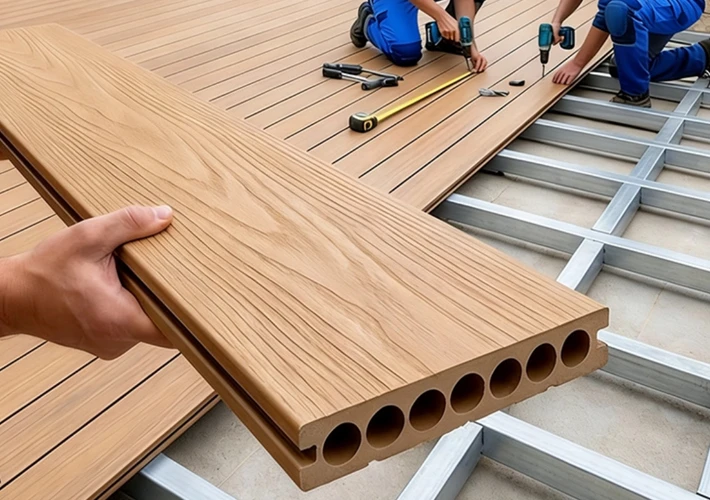
ASA composite decking is a high-performance outdoor decking material designed to combine structural stability, weather resistance, and a wood-like appearance. Unlike traditional wood decking or standard WPC decking, ASA composite decking uses a specially engineered composite core together with an ASA protective surface layer.
But what exactly is ASA composite decking made of?
In simple terms, ASA composite decking consists of a structural core and an ASA co-extruded outer layer. The core provides strength, rigidity, dimensional stability, and the basic structure of the decking board, while the ASA surface layer provides enhanced resistance to UV radiation, weathering, moisture, staining, and surface aging.
For buyers, importers, distributors, contractors, architects, and outdoor project developers, understanding the material composition of ASA decking is important because the formulation directly influences durability, appearance, maintenance requirements, weight, and service performance.
Solidexwood is a professional China manufacturer and supplier of ASA composite decking, providing third-generation outdoor decking solutions for residential, commercial, hospitality, landscaping, and large-scale construction projects.
What Is ASA Composite Decking?
ASA composite decking is a type of advanced composite outdoor decking that uses ASA, or Acrylonitrile Styrene Acrylate, as its protective surface material.
ASA is an engineering thermoplastic recognized for its excellent outdoor weatherability, UV resistance, color stability, and resistance to environmental aging. Unlike ordinary plastics that can become brittle, faded, or degraded after prolonged exposure to sunlight and weather, ASA is specifically valued for outdoor applications.
A typical ASA composite decking board can be understood as:
ASA weather-resistant surface layer + composite structural core
The exact formulation can vary between manufacturers. Some products use a WPC-type core containing wood fibers and polymer materials, while other advanced products use a PVC-based composite or foamed PVC core. Therefore, buyers should always check the technical specification of the specific product instead of assuming that every ASA decking board has exactly the same composition.
For example, Solidexwood’s ASA composite decking uses a PVC micro-foamed core combined with an ASA co-extruded surface layer. According to Solidexwood’s product information, this structure is designed to reduce product weight while improving weather resistance, long-term performance, and color stability compared with earlier-generation PE co-extruded decking.
This is one reason ASA decking is often considered a third-generation outdoor composite decking solution.
The main components can generally be divided into the following categories:
- Structural core material
- Polymer material
- Reinforcing or filler materials
- Processing additives and stabilizers
- Color and surface formulation
- ASA protective outer layer
The proportions and exact ingredients depend on the manufacturer’s formulation, product design, extrusion technology, and target application.
For B2B buyers, the most important point is that ASA decking is not simply “plastic decking.” It is an engineered multi-material outdoor product in which the core and surface layer work together to provide long-term performance.
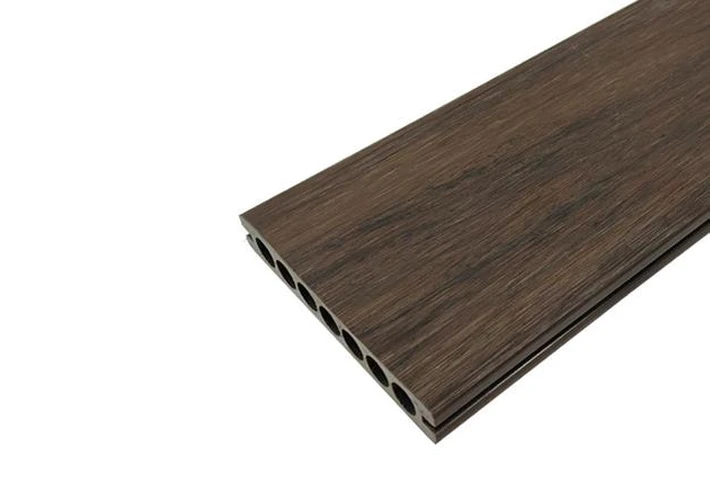
What Materials Are Used in the Core of ASA Decking?
The core is the structural part of the decking board. It determines many of the product’s mechanical and physical characteristics, including strength, stiffness, weight, dimensional stability, and installation performance.
There is no single universal ASA decking formula. Different manufacturers may use different core technologies. Common core systems include WPC-based materials and PVC-based composite structures.
PVC-Based Core
Solidexwood’s ASA composite decking uses a PVC micro-foamed core. This construction is different from conventional wood-plastic composite decking that relies primarily on wood fiber and PE or PP polymer.
PVC, or polyvinyl chloride, is a widely used thermoplastic material in construction products because of its durability, moisture resistance, chemical resistance, and relatively stable dimensional characteristics.
In a micro-foamed decking core, a controlled cellular structure is created during manufacturing. This can reduce the overall density and weight of the board while maintaining the required structural performance.
For distributors and project buyers, a lighter decking board can provide several practical advantages:
- Easier transportation
- Easier handling during installation
- Lower labor requirements
- Reduced structural load
- More efficient container loading
- Easier warehouse handling
Solidexwood’s product information states that its ASA decking is approximately 40% lighter than its second-generation PE co-extrusion decking, while providing improved weather resistance and color stability.
Polymer Materials
Polymer materials form an important part of the decking core because they bind the other components together and provide water resistance, strength, and processability.
Depending on the formulation, polymer systems may include PVC, PE, PP, or other compatible thermoplastic materials.
In PVC-based ASA decking, PVC serves as the primary structural polymer in the core.
The polymer needs to be carefully formulated because the decking board must withstand outdoor temperature changes, moisture, mechanical loading, and long-term environmental exposure.
Fillers and Reinforcing Materials
Composite decking formulations can also contain mineral fillers or reinforcing materials.
These materials may be used to improve:
- Dimensional stability
- Rigidity
- Surface quality
- Mechanical strength
- Processing performance
- Cost efficiency
For some composite decking systems, calcium carbonate and other mineral components are used as fillers. Other formulations may use wood fibers, glass fiber, or other reinforcement materials.
The exact composition is manufacturer-specific.
This is important for B2B buyers because two products that are both marketed as “ASA composite decking” can have very different internal structures.
Therefore, when comparing suppliers, buyers should not only compare the ASA surface. They should also ask for the core material specification, density, board structure, dimensions, mechanical properties, and test data.
Additives and Stabilizers
Small amounts of additives can have a significant impact on the performance of composite decking.
Depending on the formulation, additives can help improve:
- Processing stability
- UV resistance
- Thermal stability
- Color stability
- Impact performance
- Moisture resistance
- Surface quality
High-quality manufacturing requires careful control of these components because inconsistent formulation can lead to differences in color, density, strength, surface quality, and long-term performance.
This is why the manufacturing process is just as important as the raw materials.
What Is the ASA Surface Layer Made Of?
The most distinctive material in ASA composite decking is the ASA protective cap layer.
ASA stands for Acrylonitrile Styrene Acrylate. It is an engineering thermoplastic with a molecular structure designed to provide strong resistance to outdoor weathering.
The three components represented in the name contribute to the material’s overall properties. In particular, the acrylate rubber component helps improve resistance to UV radiation and outdoor aging compared with conventional ABS-type materials. ASA is widely recognized for retaining color, gloss, and mechanical properties under outdoor exposure.
For decking applications, the ASA layer functions as an external protective shield.
Instead of exposing the structural core directly to sunlight, rain, humidity, stains, and everyday wear, the ASA layer takes much of the environmental exposure.
This provides several important benefits.
UV Resistance
UV radiation is one of the biggest challenges for outdoor building materials.
Long-term exposure to sunlight can cause conventional materials to:
- Fade
- Chalk
- Become brittle
- Lose gloss
- Develop surface degradation
ASA is specifically valued for outdoor weatherability and UV stability. This makes it particularly suitable for decking installed in high-sunlight environments.
For projects in Australia, Southeast Asia, the Middle East, Africa, South America, and other regions with strong solar exposure, UV performance can be an important material selection criterion.
Color Stability
Color stability is closely related to UV resistance.
A decking board may remain structurally usable while its appearance deteriorates significantly. For premium residential projects, hotels, resorts, pool decks, and commercial landscaping, this can be a major concern.
An ASA protective layer helps improve color retention and reduce the visual effects of long-term weather exposure.
Solidexwood states that its ASA decking is designed for improved color stability, with its product information indicating a fading rate of no more than 5% over 15 years under specified conditions. Buyers should request the relevant test method and conditions when evaluating such performance claims.
Weather Resistance
Outdoor decking must deal with much more than sunlight.
It can be exposed to:
- Rain
- Humidity
- Snow
- Temperature fluctuations
- Salt spray
- Dust
- Dirt
- Organic stains
- Repeated wet-and-dry cycles
ASA is engineered for outdoor exposure and can provide a more durable surface than many conventional polymers.
This makes ASA composite decking especially attractive for demanding applications such as poolside areas, coastal properties, resorts, balconies, terraces, and commercial outdoor spaces.
Surface Durability
The surface of a deck receives continuous foot traffic.
Furniture may also be moved across the surface, while outdoor activities can expose the board to scratches, stains, and abrasion.
The ASA cap provides an additional protective layer between the environment and the structural core.
However, buyers should remember that ASA does not mean completely scratch-proof or damage-proof. Actual performance depends on the resin formulation, cap thickness, manufacturing process, surface texture, and usage conditions.
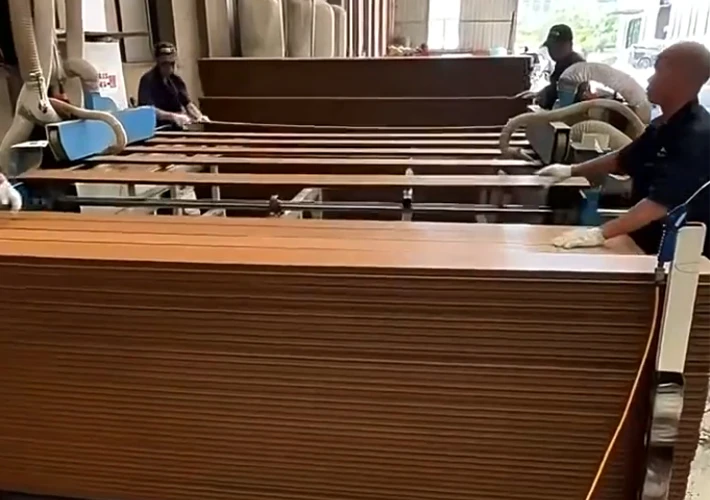
How Is ASA Composite Decking Manufactured?
The composition of ASA decking is closely related to its manufacturing process.
A typical production process begins with raw material preparation, followed by core extrusion and ASA co-extrusion.
Step 1: Raw Material Preparation
The manufacturer prepares and measures the materials according to the product formulation.
For a PVC-based ASA decking product, this may include PVC resin, processing additives, stabilizers, fillers, pigments, and other formulation components.
The materials must be properly mixed to ensure consistency.
For a manufacturer producing decking for international markets, raw material consistency is particularly important because customers expect the same color, dimensions, density, and performance across different production batches.
Step 2: Core Extrusion
The prepared core material is heated and processed through an extrusion system.
The material is shaped into the required decking profile.
Depending on the product, the board can be designed with different internal structures, including:
- Solid profiles
- Hollow profiles
- Round-hole profiles
- Rectangular-hole profiles
- Lightweight structures
- Heavy-duty profiles
For micro-foamed PVC decking, the extrusion process is carefully controlled to create a consistent internal cellular structure.
Step 3: ASA Co-Extrusion
The ASA material is simultaneously applied to the outer surface during co-extrusion.
This creates an integrated protective layer over the composite core.
The bonding between the core and the ASA cap is critical. A high-quality product requires good adhesion and consistent surface coverage.
The purpose is not simply to attach a decorative plastic film to the board. Instead, co-extrusion integrates the ASA surface with the core during manufacturing.
This is one of the major differences between a genuine ASA co-extruded decking system and a product that only uses a decorative surface treatment.
Step 4: Surface Embossing and Finishing
After extrusion, the board can receive a wood-grain or other textured surface.
Common finishes include:
- Natural wood grain
- Brushed wood texture
- Embossed texture
- Deep wood grain
- Anti-slip surface patterns
Surface design is important because customers want composite decking to reproduce the visual character of natural timber without requiring the same level of maintenance.
Step 5: Cooling, Cutting, and Quality Inspection
The extruded decking is cooled and cut to the required length.
The manufacturer then checks important parameters such as:
- Board dimensions
- Surface appearance
- Color consistency
- Profile accuracy
- Weight
- Surface bonding
- Mechanical properties
- Packaging quality
For export products, packaging must also be designed to protect the boards during container loading, ocean transportation, unloading, and warehouse storage.
Why Does the Material Composition Matter for Outdoor Performance?
The material composition of ASA composite decking directly affects how the board behaves outdoors.
A good decking system needs to balance several properties rather than maximizing only one.
Moisture Resistance
Natural timber can absorb water and may experience swelling, cracking, rotting, or biological degradation if it is not properly maintained.
Composite materials reduce many of these concerns.
The polymer-based core and protective ASA surface provide strong resistance to moisture, making ASA decking suitable for wet outdoor environments.
However, proper installation and drainage remain important.
Resistance to Insects and Rot
Natural wood can be vulnerable to termites, insects, fungal decay, and biological deterioration.
Composite decking does not provide the same food source as untreated timber, which helps reduce these common wood-related problems.
For commercial landscaping and residential projects, this can lower long-term maintenance requirements.
Better Dimensional Stability
Outdoor materials experience repeated heating and cooling.
A properly engineered composite core can provide more consistent dimensional behavior than natural wood.
However, composite decking still experiences thermal expansion and contraction. Professional installation should therefore follow the manufacturer’s recommended joist spacing, fastener system, expansion gaps, and installation temperature requirements.
Lower Maintenance
One of the main reasons buyers choose composite decking is to reduce maintenance.
Natural timber may require:
- Sanding
- Staining
- Painting
- Sealing
- Regular inspection
ASA composite decking generally requires much less routine maintenance.
Regular cleaning with appropriate methods can help maintain the appearance of the deck.
This makes it attractive for hotels, resorts, commercial buildings, apartment developments, and public landscaping projects where maintenance costs can accumulate over time.
ASA Composite Decking vs Traditional WPC Decking: What Is the Difference?
Traditional WPC decking is generally made by combining wood-based materials with thermoplastic polymers and additives.
It became popular because it offers a balance between the appearance of wood and improved resistance to moisture and insects.
However, the surface technology has evolved.
Traditional uncapped WPC decking exposes the composite core directly to the environment.
Later, co-extruded products introduced a protective polymer cap.
ASA composite decking represents another step in this development by using ASA as the weather-resistant surface material.
A simplified comparison looks like this:
| Feature | Traditional WPC | PE/PP Capped Decking | ASA Composite Decking |
|---|---|---|---|
| Composite Core | Usually wood + polymer | Usually wood + polymer | PVC or other engineered composite core |
| Protective Layer | None or limited | PE/PP cap | ASA cap |
| UV Resistance | Moderate | Improved | High |
| Color Stability | Moderate | Good | Excellent potential |
| Weatherability | Good | Better | Excellent |
| Surface Protection | Basic | Improved | Advanced |
| Outdoor Durability | Good | High | High to premium |
| Maintenance | Low | Low | Low |
| Typical Positioning | Value/mid-range | Mid/high-range | Premium |
The important point is that ASA decking is not necessarily better for every project simply because it uses ASA.
For a low-budget residential project with limited sunlight exposure, traditional WPC may be sufficient.
For a luxury resort, poolside deck, coastal development, commercial terrace, or high-UV environment, the additional weatherability and color stability of ASA can justify the higher material cost.
The correct choice depends on the project’s climate, expected service life, appearance requirements, budget, and maintenance strategy.
How to Choose a Reliable ASA Composite Decking Manufacturer?
For importers and distributors, choosing the right manufacturer is often more important than simply choosing the right material name.
The term “ASA decking” alone does not guarantee a particular formulation or quality level.
Before placing a bulk order, buyers should evaluate several factors.
1. Ask About the Core Material
Do not only ask whether the product has an ASA cap.
Ask:
- Is the core PVC-based or WPC-based?
- Is it solid or micro-foamed?
- What is the density?
- What is the board weight?
- What is the internal structure?
- What additives or reinforcing materials are used?
This helps buyers understand what they are actually purchasing.
2. Verify the ASA Layer
The ASA layer is one of the most important components.
Ask the manufacturer about:
- ASA resin type
- Cap thickness
- Co-extrusion technology
- Bonding performance
- UV resistance
- Color stability
- Weathering test results
A reliable supplier should be able to provide technical information rather than simply making general claims.
3. Request Samples
Before ordering a container, distributors should request physical samples.
Evaluate:
- Surface texture
- Color consistency
- Board rigidity
- Weight
- Edge quality
- ASA surface bonding
- Appearance under natural sunlight
Samples are particularly important for customers who intend to sell the decking under their own brand.
4. Check Factory Capability
A professional ASA decking manufacturer should have appropriate extrusion equipment, co-extrusion technology, quality-control procedures, and export packaging capabilities.
For international buyers, supplier experience also matters.
A factory that understands container loading, international packaging, documentation, customization, and OEM/ODM requirements can reduce many sourcing problems.
Why Choose Solidexwood for ASA Composite Decking?
Solidexwood is a China-based manufacturer and supplier specializing in advanced outdoor composite products.
Its ASA composite decking is designed around a PVC micro-foamed core and ASA co-extrusion surface, providing a lightweight structure together with enhanced outdoor weather resistance and color stability.
For international B2B customers, Solidexwood can support applications including:
- Residential decking
- Villas
- Gardens
- Poolside areas
- Hotels
- Resorts
- Balconies
- Rooftop terraces
- Commercial landscaping
- Public outdoor spaces
- Coastal projects
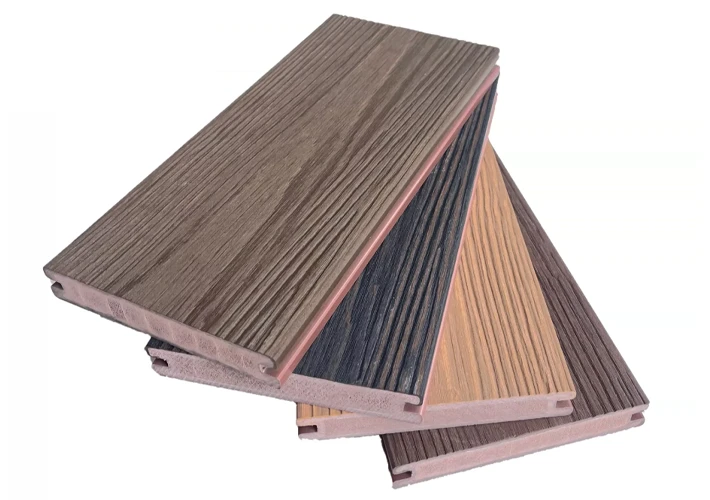
Solidexwood also provides multiple surface colors and wood-grain finishes for different architectural styles. Its published ASA decking specifications include products such as 140 × 22 mm boards in 2900 mm lengths, with multiple color options available.
For distributors and wholesalers, working directly with a manufacturer can provide advantages in product customization, color development, packaging, technical support, and bulk purchasing.
Frequently Asked Questions About ASA Composite Decking
Is ASA composite decking made from wood?
Not necessarily.
ASA decking is a composite material, and the core formulation varies by manufacturer. Some products use wood-plastic composite cores, while other products use PVC-based or other engineered composite cores.
Solidexwood ASA decking uses a PVC micro-foamed core with an ASA co-extruded surface.
What does ASA stand for in decking?
ASA stands for Acrylonitrile Styrene Acrylate.
It is an engineering thermoplastic known for strong outdoor weatherability, UV resistance, and color stability.
Is ASA decking better than WPC decking?
ASA decking can provide better surface weatherability, UV resistance, and color stability than many conventional WPC products.
However, performance depends on the entire product structure, formulation, manufacturing quality, and installation. Buyers should compare actual technical specifications rather than relying only on product names.
Is ASA decking waterproof?
ASA composite decking is designed to provide strong resistance to moisture and outdoor exposure.
However, “water-resistant” should not be interpreted as meaning that every installation condition is completely waterproof. Proper drainage, substructure design, expansion gaps, and installation are still essential.
Does ASA decking fade?
ASA decking is designed to provide high UV resistance and improved color retention.
Some gradual color change can still occur after long-term outdoor exposure because no outdoor material remains completely unchanged indefinitely. The actual fading performance depends on ASA formulation, pigments, exposure conditions, and testing standards.
Is ASA decking suitable for poolside applications?
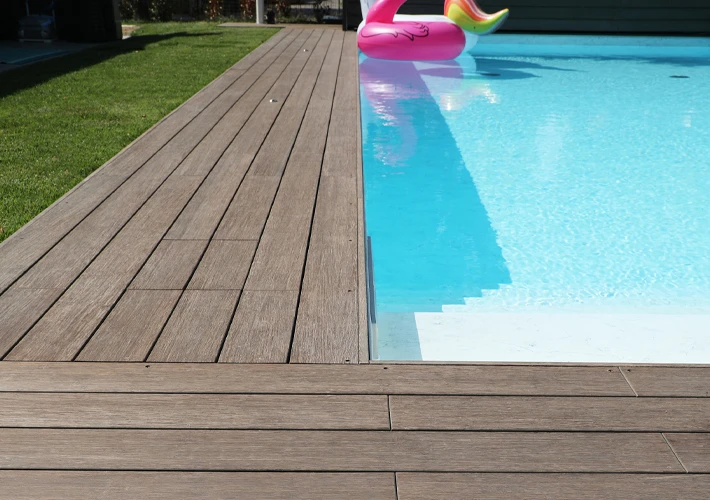
Yes. ASA composite decking is particularly attractive for poolside environments because of its moisture resistance, outdoor durability, and weather-resistant surface.
However, buyers should check the specific product’s slip-resistance performance and follow appropriate installation requirements for wet areas.
How long can ASA composite decking last?
Service life depends on material quality, climate, installation, maintenance, and usage.
High-quality ASA decking is designed for long-term outdoor use. Rather than relying only on a general lifespan claim, project buyers should request manufacturer test reports, warranty terms, and installation specifications.
Is ASA composite decking environmentally friendly?
The environmental profile of a decking product depends on its complete formulation, manufacturing process, recycled content, service life, and end-of-life treatment.
A longer-lasting decking product can reduce replacement frequency, while manufacturers may also incorporate recycled materials into certain formulations.
Buyers looking for environmental certifications should request specific documentation from the supplier.
Conclusion: What Is ASA Composite Decking Made Of?
So, what is ASA composite decking made of?
The simplest answer is that ASA composite decking combines an engineered structural core with a weather-resistant ASA co-extruded surface layer.
The core can vary according to the manufacturer. It may contain polymer materials, fillers, reinforcing components, additives, and in some products wood-based materials. Solidexwood uses a PVC micro-foamed core, while the outer layer is made with ASA through co-extrusion.
The ASA layer is the key feature that differentiates this type of decking from many traditional composite products. ASA is selected for its strong resistance to UV exposure, weathering, color fading, and outdoor aging.
For B2B buyers, the most important lesson is that the quality of ASA composite decking depends on much more than the word “ASA.” The core formulation, ASA resin quality, cap thickness, co-extrusion technology, surface treatment, production control, and installation system all influence the final product.
For importers, wholesalers, distributors, contractors, architects, and project developers looking for a premium outdoor decking solution, ASA composite decking can provide an attractive combination of wood-look aesthetics, low maintenance, moisture resistance, UV stability, weather resistance, and long-term outdoor performance.
As a professional China ASA composite decking manufacturer, Solidexwood provides factory-direct solutions for international B2B customers, including product specifications, samples, color options, OEM/ODM services, and bulk orders.
If you are sourcing ASA composite decking for your market or project, contact Solidexwood to request ASA decking samples, technical specifications, colors, wholesale pricing, and customized solutions.