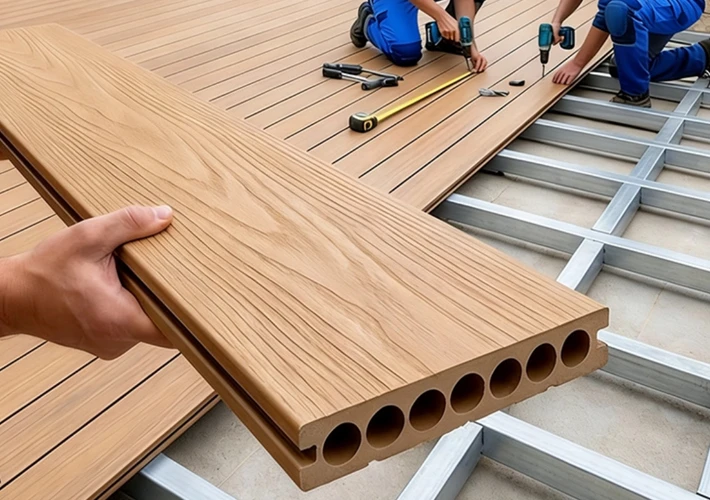
Hot climates create some of the toughest conditions for exterior building materials. Strong sunlight, high UV radiation, elevated temperatures, humidity, heavy rainfall, and large daily temperature changes can gradually damage conventional wall cladding. Fading, cracking, warping, moisture damage, and surface deterioration are common concerns for architects, contractors, developers, and building-material distributors working in tropical, subtropical, desert, and coastal regions.
So, is ASA cladding suitable for hot climates?
Yes. High-quality ASA cladding is generally well suited to hot and sunny climates because ASA, or Acrylonitrile Styrene Acrylate, provides excellent UV resistance, weatherability, color stability, and resistance to outdoor aging. When ASA is used as a protective surface layer over a composite core, the resulting cladding system can provide a durable and attractive solution for exterior walls, façades, villas, hotels, resorts, commercial buildings, and modular structures.
However, suitability for a hot climate depends on more than the ASA material itself. Product formulation, ASA layer quality, core structure, thermal expansion, installation method, ventilation, fixing system, and manufacturing quality all influence long-term performance.
For importers and project buyers, choosing an experienced ASA cladding manufacturer is therefore essential.
As a professional Chinese manufacturer, Solidexwood supplies ASA composite cladding designed for demanding outdoor environments and international B2B projects.
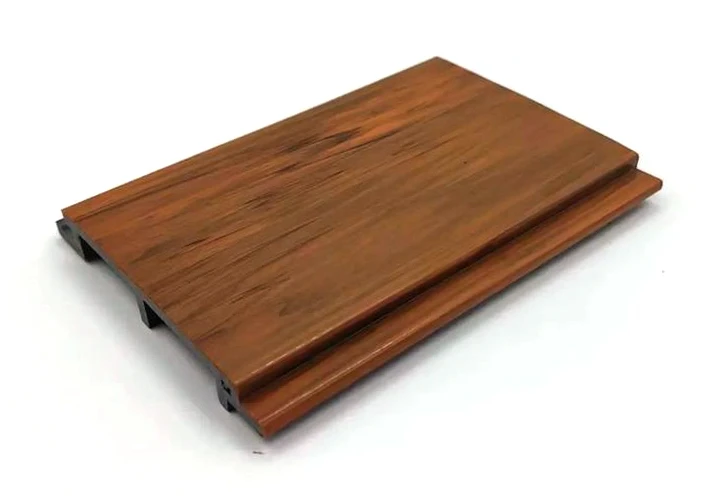
Why Is ASA Cladding Suitable for Hot Climates?
The biggest challenge for exterior cladding in hot regions is not simply high temperature. The combination of UV radiation, heat, moisture, temperature fluctuations, and weather exposure creates a much more demanding environment.
ASA cladding is specifically developed for outdoor applications. ASA resin has significantly better weatherability than many conventional plastics, making it suitable for long-term exposure to sunlight, humidity, and changing outdoor conditions. Independent material information also identifies ASA as a weather-resistant polymer with strong outdoor color stability and heat resistance.
1. Excellent UV Resistance
UV radiation is one of the primary causes of exterior material degradation.
Continuous sunlight can cause some materials to:
- Fade
- Chalk
- Become brittle
- Lose surface gloss
- Crack
- Experience accelerated aging
The ASA surface is designed to resist ultraviolet exposure, helping maintain the appearance and integrity of the cladding for longer.
This is particularly important in regions such as:
- Southeast Asia
- Australia
- The Middle East
- South America
- Mexico
- Southern Europe
- Africa
- Tropical coastal areas
For example, a building in Australia or the Middle East may receive intense sunlight throughout much of the year. A conventional exterior panel with inadequate UV protection may gradually lose its original color, while a properly formulated ASA surface provides much stronger resistance to UV-related deterioration.
This UV stability is one of the primary reasons ASA technology is increasingly used in outdoor architectural products.
2. Better Color Stability
For commercial buildings, hotels, resorts, and residential developments, exterior appearance is extremely important.
A façade is often expected to maintain its original appearance for many years. If the surface fades unevenly, the entire building can look older and less attractive.
ASA is known for its excellent color stability and weatherability. Compared with conventional outdoor plastics, a properly manufactured ASA surface can significantly reduce problems related to fading and surface degradation.
For architects, this means more freedom when selecting:
- Wood-look finishes
- Dark colors
- Warm brown tones
- Gray finishes
- Modern architectural colors
- Natural timber effects
For developers, better color retention can also reduce the frequency of repainting or exterior refurbishment.
Solidexwood’s ASA cladding solutions are developed for outdoor environments where long-term appearance and weather resistance are important considerations.
3. Resistance to Heat and Outdoor Weathering
Hot climates can expose exterior wall materials to high surface temperatures during the day.
ASA is valued for its weatherability and heat resistance compared with many conventional plastics. Material data from LG Chem, for example, identifies ASA as offering excellent weather resistance and heat resistance.
This does not mean that ASA cladding cannot become hot under direct sunlight. Like virtually all dark-colored exterior materials, its surface temperature can rise significantly when exposed to strong solar radiation.
Instead, the important advantage is that a properly designed ASA material is better equipped to maintain its physical and visual performance under outdoor exposure.
For this reason, ASA cladding can be considered for:
- Tropical villas
- Resort façades
- Commercial buildings
- Outdoor restaurants
- Hotels
- Modular buildings
- Residential façades
- Garden structures
- Coastal properties
4. Good Moisture Resistance
Many hot-climate regions are also humid or rainy.
Southeast Asia, for example, combines:
- Strong sunlight
- High humidity
- Heavy rainfall
- High temperatures
This combination can be particularly challenging for natural wood and some conventional exterior materials.
ASA composite cladding provides a highly moisture-resistant exterior solution. Unlike natural timber, composite cladding does not rot or absorb moisture in the same way.
This makes it attractive for:
- Tropical climates
- Coastal areas
- Rainy regions
- Resort buildings
- Poolside structures
- Outdoor commercial spaces
However, the cladding itself is only one part of the building envelope. Correct joints, flashing, drainage, ventilation, and installation details are still necessary to prevent water from entering behind the façade.
How Does ASA Cladding Perform Under Direct Sunlight?
One of the most common questions from buyers in hot countries is whether ASA cladding can be installed on walls exposed directly to the sun.
Yes, high-quality ASA cladding can be used in direct sunlight. In fact, resistance to sunlight and outdoor weathering is one of the main reasons ASA is selected for exterior applications.
The ASA protective layer acts as the first line of defense against:
- UV radiation
- Rain
- Humidity
- Outdoor pollutants
- Temperature changes
- General weathering
The quality of this protection depends on the formulation and manufacturing process.
A high-quality co-extruded ASA cladding product typically combines a weather-resistant ASA surface with a composite structural core. The ASA layer protects the exterior while the core provides structural stability and dimensional performance.
Solidexwood’s existing technical content describes ASA composite cladding as a combination of a composite core and ASA protective surface layer, with the co-extrusion process creating a strong bond between the two layers.
ASA Cladding vs Ordinary PVC in Hot Areas
Not all plastic cladding products are designed for the same environment.
Standard PVC panels are often used for interior walls, ceilings, bathrooms, and other applications where direct long-term sunlight is limited.
ASA cladding is specifically designed for demanding outdoor environments.
A simplified comparison is:
| Feature | ASA Cladding | Standard PVC Panel |
|---|---|---|
| Outdoor use | Excellent | Product dependent |
| UV resistance | Excellent | Moderate to good depending on formulation |
| Color stability | Excellent | Varies |
| Weather resistance | Excellent | Varies |
| Moisture resistance | Excellent | Good |
| Wood-look finishes | Available | Available |
| Hot-climate suitability | Excellent | Depends on specification |
This does not mean that every ASA product will automatically outperform every PVC product. Product formulation and manufacturing quality matter.
For B2B buyers, the correct approach is to compare actual technical specifications rather than relying only on material names.
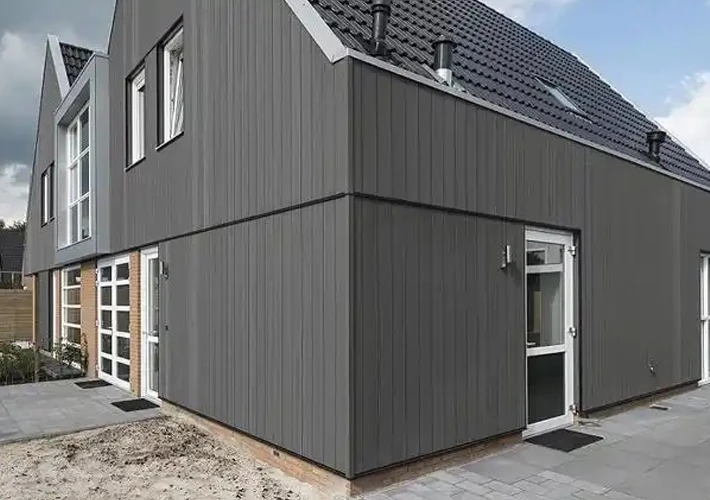
Does Heat Cause ASA Cladding to Expand or Warp?
Thermal expansion is an important consideration for all composite exterior cladding materials, including ASA cladding.
When temperatures increase, polymer-based materials can expand. When temperatures decrease, they contract.
In hot climates, this effect can become more noticeable because exterior walls may experience substantial temperature changes between daytime and nighttime.
For this reason, proper installation is critical.
Allow for Thermal Movement
Installers should follow the manufacturer’s recommended:
- Expansion gaps
- Fastener spacing
- Joint design
- Edge clearance
- Supporting structure
- Installation temperature range
The exact requirements depend on the product structure and dimensions.
Longer profiles generally require greater attention to thermal movement. Darker colors can also absorb more solar energy than lighter colors, increasing surface temperatures.
Use the Correct Fixing System
A good cladding system should allow controlled movement without restricting the panel excessively.
Over-tightening fasteners can potentially create stress in the panel.
Professional installation should therefore follow the manufacturer’s technical guidelines rather than treating ASA cladding like ordinary interior wall panels.
Provide Proper Ventilation
A ventilated façade system can help manage heat and moisture behind the cladding.
An appropriate cavity can:
- Improve airflow
- Help remove accumulated heat
- Reduce moisture buildup
- Improve overall façade durability
The exact façade construction should be determined according to the building design, local regulations, and manufacturer’s installation recommendations.
What Are the Best Applications for ASA Cladding in Hot Climates?
ASA cladding is particularly useful where a project needs a combination of appearance, weather resistance, low maintenance, and outdoor durability.
Tropical Villas
Villas in tropical areas are exposed to intense sunlight, humidity, rain, and sometimes salt air.
ASA cladding can provide a wood-look exterior without the regular painting, staining, and sealing associated with traditional timber.
It can be used for:
- Main façades
- Balcony walls
- Entrance features
- Outdoor privacy walls
- Garden structures
- Decorative exterior sections
Hotels and Resorts
Hotels and resorts are particularly suitable applications because exterior appearance directly affects the guest experience.
ASA cladding can be used for:
- Hotel façades
- Resort villas
- Outdoor corridors
- Restaurant exteriors
- Poolside buildings
- Reception areas
- Decorative façade features
For hospitality projects, the combination of UV resistance and low maintenance can be especially valuable.
Solidexwood’s ASA cladding is positioned for applications including hotels, resorts, villas, commercial buildings, and outdoor architectural projects.
Commercial Buildings
Retail stores, restaurants, office buildings, and commercial developments often require distinctive exterior designs.
ASA cladding can provide a modern alternative to:
- Natural wood
- Painted timber
- Conventional PVC siding
- Some metal façade finishes
- Traditional WPC cladding
Wood-grain ASA cladding is particularly useful for projects that want a natural appearance without relying entirely on real timber.
Modular and Prefabricated Buildings
Hot climates are also important markets for modular construction.
Container houses, prefabricated homes, portable buildings, and resort cabins often need lightweight exterior materials that can be installed efficiently.
ASA composite cladding can provide a practical combination of:
- Lightweight construction
- Outdoor durability
- Decorative appearance
- Moisture resistance
- Low maintenance
- Easy installation
This makes it an attractive option for modular building manufacturers and developers.
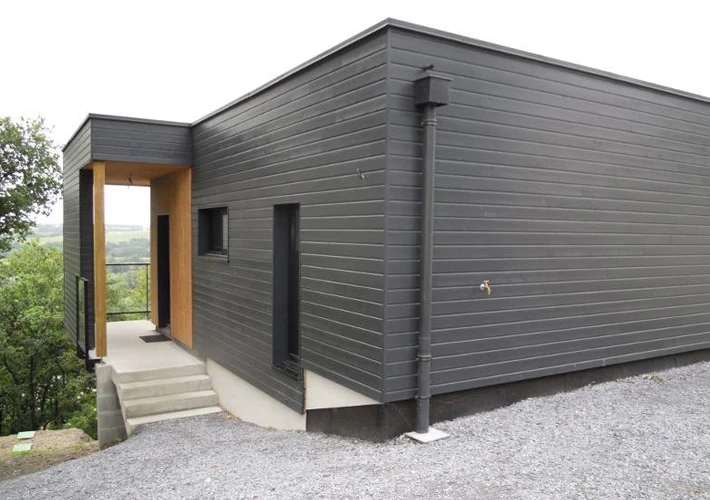
How to Choose ASA Cladding for a Hot Climate?
Not all ASA cladding products are identical.
For B2B buyers, distributors, contractors, and project developers, several technical factors should be checked before placing a large order.
1. Check the ASA Surface Layer
The ASA layer is one of the most important components of the product.
Ask the manufacturer:
- What is the ASA layer thickness?
- What ASA resin is used?
- Is the product co-extruded?
- What UV testing has been performed?
- What color-retention data is available?
- What weathering standards are used?
A reliable manufacturer should be able to provide technical information rather than simply stating that the product is “UV resistant.”
2. Check UV and Weathering Test Data
If the product will be installed in a high-UV market, testing information is especially important.
Buyers can request:
- UV aging test reports
- Color difference data
- Weathering test results
- Heat resistance data
- Water resistance information
- Product warranty
For markets such as Australia, Brazil, Mexico, Saudi Arabia, UAE, and Southeast Asia, UV performance should be treated as a key purchasing criterion.
3. Check Thermal Expansion Information
Ask the supplier about:
- Linear thermal expansion
- Recommended installation gaps
- Fastener spacing
- Maximum panel length
- Recommended installation temperature
- Joint design
This information is important because poor installation can reduce the performance of even a high-quality material.
4. Check the Core Structure
The ASA surface is important, but the core is equally relevant to the overall product.
A quality composite cladding system should provide good:
- Dimensional stability
- Mechanical strength
- Moisture resistance
- Installation stability
- Surface adhesion
The ASA layer and composite core should work together as one engineered system.
5. Choose an Experienced Manufacturer
For importers and distributors, supplier selection can have a major impact on product consistency.
A professional manufacturer should be able to provide:
- Stable production capacity
- Consistent dimensions
- Color consistency
- OEM/ODM support
- Packaging solutions
- Technical documentation
- Installation guidance
- Quality inspection
- Export experience
This is particularly important when purchasing container quantities for international projects.
Is ASA Cladding Better Than Traditional WPC in Hot Climates?
ASA cladding and traditional WPC cladding are both used outdoors, but their surface technologies can be different.
Traditional WPC generally combines wood fiber and polymer materials to create an outdoor composite product. ASA composite cladding adds a weather-resistant ASA surface layer designed to improve UV and weather performance.
A general comparison is:
| Feature | ASA Composite Cladding | Traditional WPC Cladding |
|---|---|---|
| UV resistance | Excellent | Depends on formulation |
| Color stability | Excellent | Good to moderate depending on product |
| Weather resistance | Excellent | Good |
| Moisture resistance | Excellent | Good |
| Maintenance | Low | Low |
| Wood appearance | Excellent | Excellent |
| Hot-climate application | Very suitable | Suitable depending on specification |
| Premium exterior projects | Highly suitable | Suitable |
ASA does not necessarily make sense for every project. If the application is low-cost or partially protected from the sun, standard WPC may be sufficient.
However, for premium exterior applications where UV resistance, color retention, appearance, and long-term weatherability are priorities, ASA composite cladding can offer significant advantages.
Why Choose Solidexwood ASA Cladding for Hot-Climate Projects?
For international buyers, selecting the right factory is as important as selecting the right material.
Solidexwood is a Chinese manufacturer specializing in composite outdoor building materials and ASA cladding solutions for international B2B customers.
Our ASA cladding solutions are developed for demanding exterior environments, including regions with strong sunlight, high humidity, temperature fluctuations, and long-term outdoor exposure.
Solidexwood Factory Advantages
Advanced Co-Extrusion Technology
The ASA surface and composite core are produced as an integrated structure, helping provide stable bonding and consistent product performance.
Strong UV and Weather Resistance
ASA technology provides enhanced protection against UV exposure, color fading, moisture, and outdoor weathering.
Multiple Colors and Textures
We can provide wood-grain and contemporary finishes for different architectural requirements.
OEM & ODM Support
Distributors, wholesalers, contractors, and project developers can discuss customized colors, profiles, dimensions, packaging, and other requirements.
Stable Factory Production
As a China-based manufacturer, Solidexwood provides factory-direct supply for international B2B customers.
Global Project Applications
ASA composite products can be considered for residential, hospitality, commercial, modular, and outdoor architectural projects.
For buyers comparing ASA cladding manufacturers in China, the most important factors are not only price but also ASA formulation, co-extrusion quality, testing, dimensional stability, production consistency, packaging, and after-sales technical support.
Frequently Asked Questions About ASA Cladding in Hot Climates
Can ASA cladding be used in tropical climates?
Yes. High-quality ASA cladding is well suited to tropical climates because it provides strong resistance to UV exposure, humidity, rain, and outdoor weathering. Proper installation is still essential.
Does ASA cladding fade in strong sunlight?
High-quality ASA cladding has excellent UV and color stability, which helps minimize fading under long-term sunlight exposure. Actual color performance depends on the ASA formulation, pigments, manufacturing quality, exposure conditions, and maintenance.
Can ASA cladding be used in the Middle East?
Yes. ASA cladding can be suitable for Middle Eastern markets where buildings experience strong sunlight and high outdoor temperatures. Buyers should specifically request UV, weathering, heat-performance, and thermal-expansion data before purchasing.
Is ASA cladding suitable for Australia?
Yes. ASA cladding can be considered for Australian exterior projects, especially where high UV exposure is a major concern. Product selection should take local building regulations, climate conditions, fire requirements, and installation standards into account.
Does ASA cladding warp in hot weather?
ASA cladding is designed for outdoor use, but like other polymer-based composite products, it can experience thermal movement. Correct expansion gaps, fastener spacing, support structure, and installation procedures are essential for minimizing deformation risks.
Does ASA cladding require painting?
Generally, no. The decorative ASA surface is manufactured as part of the product, so regular painting is normally unnecessary. Routine cleaning and inspection may still be recommended depending on the environment.
Is ASA cladding waterproof?
ASA composite cladding has strong water and moisture resistance. However, the overall façade system still requires proper joints, flashing, drainage, ventilation, and installation to prevent water penetration.
How long can ASA cladding last in hot climates?
Service life depends on product quality, ASA formulation, UV exposure, installation, maintenance, and local environmental conditions. Buyers should rely on the manufacturer’s test data and warranty rather than assuming a fixed lifespan for all ASA cladding products.
Conclusion: Is ASA Cladding a Good Choice for Hot Climates?
Yes, ASA cladding is one of the suitable exterior cladding options for hot and high-UV climates.
Its major advantages include:
- Excellent UV resistance
- Strong weatherability
- Good color stability
- Heat resistance
- Moisture resistance
- Low maintenance
- Attractive wood-look designs
- Good outdoor durability
- Suitability for tropical and coastal environments
However, the best results depend on selecting a properly engineered product and installing it correctly. Thermal expansion, ventilation, fixing systems, expansion gaps, drainage, and local building requirements should all be considered during project planning.
For B2B buyers, importers, distributors, architects, contractors, and developers, the most important question should not simply be “Is ASA cladding suitable for hot climates?” Instead, ask:
“Is this specific ASA cladding product engineered, tested, and manufactured for my climate and application?”
That distinction matters.
If you are sourcing ASA cladding for projects in Australia, Southeast Asia, the Middle East, South America, Africa, or other hot-climate markets, Solidexwood can provide factory-direct ASA composite cladding solutions, OEM/ODM services, customized colors and profiles, and technical support for international projects.
Contact Solidexwood for ASA cladding samples, specifications, colors, OEM/ODM options, and factory pricing for your next project.