
Introduction
In modern large-scale construction projects, façade material selection has become a strategic decision rather than just an architectural choice. Developers, contractors, and project owners now focus heavily on lifecycle cost, durability, sustainability, and compliance with global building standards. Wood Plastic Composite (WPC) exterior wall cladding systems have emerged as one of the most promising façade solutions for commercial complexes, infrastructure projects, hotels, public buildings, and high-end residential developments.
As a next-generation composite material combining wood fibers and polymers such as HDPE or PVC, WPC offers a unique balance between natural aesthetics and industrial-grade performance. With global urbanization accelerating and sustainability standards tightening, WPC exterior cladding is increasingly adopted in large construction projects worldwide.
According to market research data, the global WPC exterior cladding market has been growing rapidly, with an estimated CAGR of about 11% between 2021 and 2026 and an expected market size reaching approximately $6.5 billion by 2026.
This article explores why WPC exterior wall cladding systems are becoming the preferred solution for large construction projects, analyzing technical performance, economic value, engineering compatibility, and long-term sustainability.
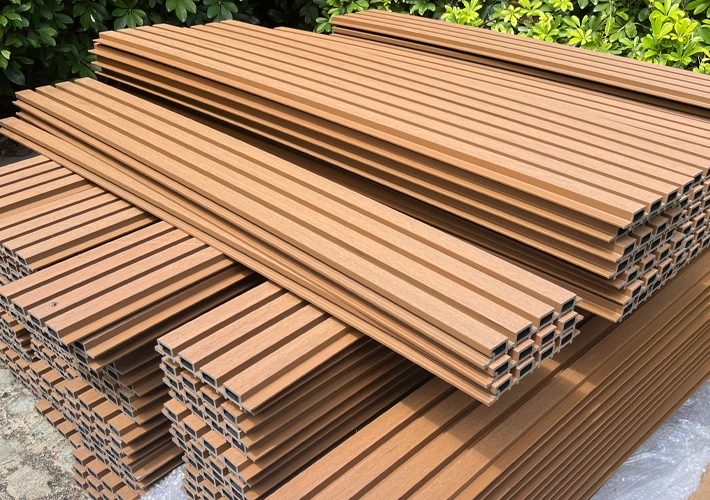
What Is WPC Exterior Wall Cladding?
WPC (Wood Plastic Composite) is a hybrid material manufactured by blending wood fibers with thermoplastics and performance additives such as UV stabilizers, fire retardants, and anti-fungal agents.
The resulting material offers:
- The natural appearance of wood
- The durability of polymer materials
- Superior dimensional stability
- Long-term weather resistance
Modern WPC cladding panels are engineered to meet strict building requirements, including fire safety, weather exposure, and structural performance standards such as EN 15534, ASTM weathering tests, and EN 13501 fire classification systems.
Why Large Construction Projects Are Shifting to WPC Cladding Systems
1.Lifecycle Cost Optimization
For large construction projects, material selection is heavily influenced by Total Cost of Ownership (TCO). While WPC cladding may have a slightly higher upfront cost than low-grade wood or PVC, it significantly reduces maintenance and replacement costs over time.
WPC panels typically require only occasional cleaning and do not need repainting, sealing, or staining, which dramatically lowers long-term maintenance expenses.
2.Long Service Life
High-quality WPC exterior cladding systems usually provide:
- 15–25 years service life in exterior exposure
- Up to 30+ years in optimized installation conditions
This makes WPC particularly attractive for infrastructure, public buildings, and commercial complexes where façade replacement is extremely costly.
Core Technical Advantages for Large Construction Applications
Weather Resistance
WPC cladding resists:
- UV radiation
- Heavy rainfall
- Freeze-thaw cycles
- Coastal humidity
Unlike natural wood, WPC does not rot, crack, or warp under moisture exposure.
Mechanical Strength and Impact Resistance
The composite structure provides strong load-bearing capacity and impact resistance, which is essential for public buildings, transportation hubs, and commercial façades.
Fire Performance
Advanced WPC cladding can achieve fire ratings such as EN 13501 Class B or ASTM E84 tested performance, meeting many commercial building code requirements.
Low Water Absorption
Premium WPC panels typically have water absorption rates below 1.2%, far lower than many wood materials, ensuring dimensional stability.
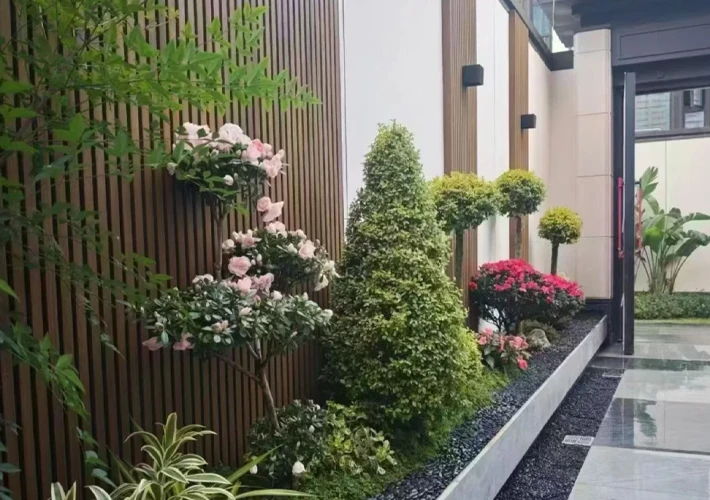
Sustainability and ESG Value for Mega Projects
Large developers increasingly prioritize ESG compliance and carbon reduction.
WPC supports sustainability through:
- Use of recycled plastics and wood waste
- Reduced deforestation impact
- Lower lifecycle carbon emissions compared to aluminum or fiber cement (up to 60% reduction in some studies)
This makes WPC cladding ideal for green building certifications such as LEED and BREEAM.
Design Flexibility for Modern Architecture
Large construction projects often require consistent visual appearance across massive façade surfaces.
WPC cladding offers:
- Uniform color consistency across large batches
- Wood grain, matte, embossed, and 3D surface options
- Custom color matching for brand architecture
This flexibility allows architects to maintain design continuity across multi-building developments.
Comparison: WPC vs Traditional Exterior Cladding Materials
| Property | WPC Cladding | Natural Wood | Aluminum Panel | Fiber Cement |
|---|---|---|---|---|
| Lifespan | 20–30 years | 10–15 years | 30+ years | 20–30 years |
| Maintenance | Very Low | High | Medium | Medium |
| Water Resistance | Excellent | Poor | Excellent | Medium |
| Eco Impact | High Sustainability | Medium | Medium | Low |
| Design Flexibility | High | Medium | Medium | Low |
Data shows WPC provides a strong balance between performance, cost, and sustainability.
Application Scenarios in Large Construction Projects
Commercial Complexes
WPC cladding is widely used in shopping malls, office buildings, and mixed-use developments due to durability and visual consistency.
Infrastructure Projects
Transportation hubs, stations, and public facilities benefit from WPC’s impact resistance and long lifespan.
Hospitality Projects
Hotels increasingly use WPC for exterior facades due to low maintenance and premium appearance.
Industrial Buildings
WPC’s corrosion resistance makes it suitable for chemical plants and water treatment facilities.
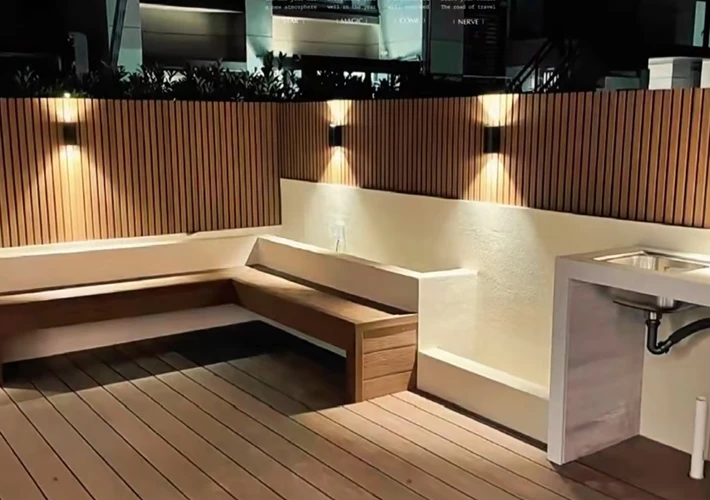
Engineering Considerations for Large-Scale Installation
Key factors include:
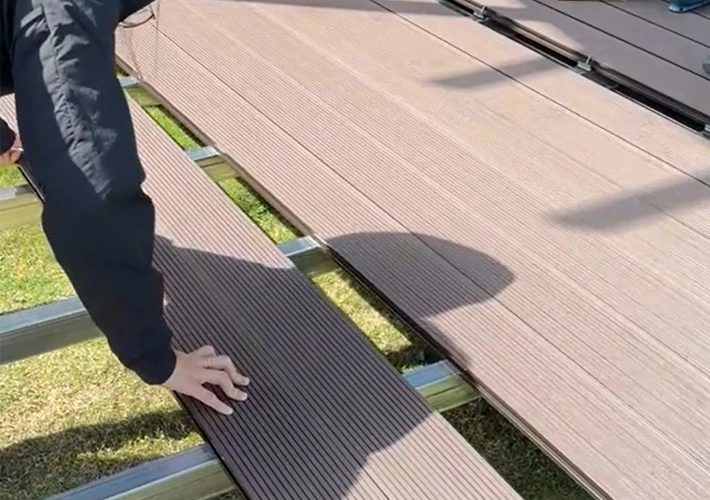
Substructure Design
Proper ventilation and subframe spacing ensure long-term performance.
Thermal Expansion Management
WPC expands slightly with temperature changes and requires proper joint spacing.
Fire Compliance Design
Projects must verify local fire certification requirements.
Quality Control
Raw material quality and manufacturing technology significantly affect performance lifespan.
Global Market Trends and Future Outlook
Key industry drivers include:
- Urbanization growth
- Renovation market expansion
- Sustainability regulations
- Labor cost increases (favoring low-maintenance materials)
European installations have increased significantly since 2020, showing strong adoption trends.
Future innovation trends include:
- Co-extrusion protective surface layers
- Higher fire-rating formulations
- Smart façade integration
- Lightweight high-strength composites
Why Choosing the Right Manufacturer Matters for Large Projects
For large construction projects, supplier selection is critical. Buyers should evaluate:
- Production capacity and automation level
- Raw material traceability
- Fire and weather certification reports
- Large project supply experience
- Custom engineering support
High-quality manufacturing directly determines service life, stability, and warranty performance.
Conclusion
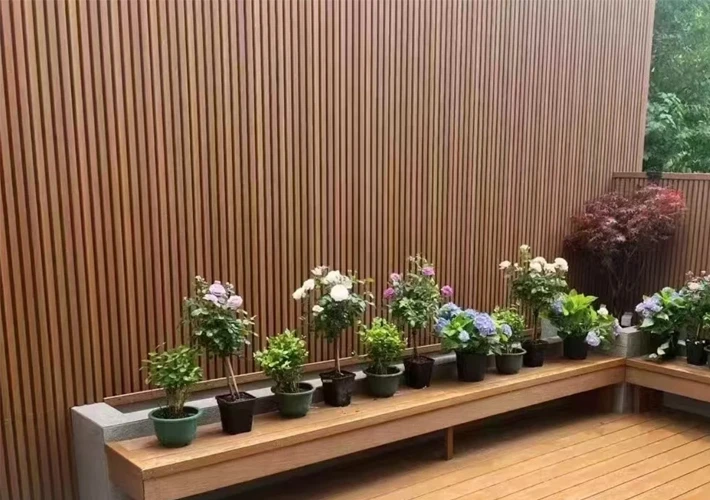
combining durability, sustainability, cost efficiency, and architectural flexibility, WPC provides a strong solution for modern large-scale construction projects.
As global construction continues to shift toward sustainable, low-maintenance, and high-performance materials, WPC cladding is expected to become a standard façade solution across commercial, infrastructure, and public sector projects.
For developers and contractors focused on long-term asset value, WPC exterior cladding is no longer an alternative option—it is becoming a primary specification choice.