
Composite decking has grown rapidly in popularity over the past two decades, especially in residential landscaping and commercial outdoor projects. Made from a mixture of recycled plastic and wood fibers, composite decking is often marketed as a low-maintenance, long-lasting alternative to natural wood. While it offers clear advantages such as durability, insect resistance, and reduced maintenance needs, it is not without drawbacks.
For builders, distributors, architects, and project owners, understanding the downsides of composite decking is critical for making informed purchasing decisions and managing client expectations. In this article, we will provide a comprehensive SEO-optimized analysis of composite decking disadvantages, covering cost, performance, installation, environmental factors, aesthetics, and long-term ownership considerations.
Disadvantages of composite decking
Higher Initial Cost
One of the most widely recognized disadvantages of composite decking is its higher upfront cost compared with traditional wood decking materials.
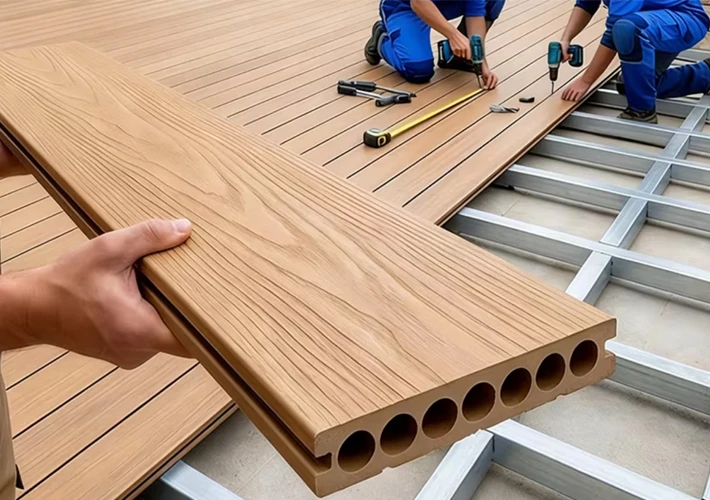
Composite decking can cost significantly more per square foot than pressure-treated lumber. Some industry comparisons suggest composite decking may reach around $13 per square foot, while treated wood may cost closer to $5 per square foot depending on region and quality grade.
The higher price is mainly due to:
- Complex manufacturing process
- Raw material blending (wood fiber + plastic + additives)
- UV stabilizers and protective caps
- Branding and warranty coverage costs
In some cases, composite decking may cost 4–6 times more than treated pine depending on product tier and brand positioning.
Why This Matters in Real Projects
For large projects such as:
- Commercial terraces
- Hospitality outdoor spaces
- Residential large decks
The initial investment can be significantly higher. While long-term maintenance savings may offset this, many customers still prioritize upfront budget.
Heat Retention in Direct Sunlight
Composite decking is known to retain more heat than natural wood because of its plastic content.
On hot days, composite surfaces can become extremely warm under direct sunlight, sometimes making it uncomfortable or even unsafe for barefoot walking.
Some sources note that deck surface temperatures can become dramatically higher than ambient temperature, potentially reaching levels that are uncomfortable to touch in strong sunlight.
High-Risk Applications
- Tropical climates
- Rooftop decks
- Poolside decking
- South-facing installations
This is especially important in regions like Southeast Asia, Australia, and the Middle East.
Limited Repair and Refinishing Options
Unlike natural wood decking, composite boards cannot be sanded, stained, or refinished once installed.
If composite decking is scratched, stained, or discolored, the only solution is often full board replacement rather than surface repair.
This creates several challenges:
- Difficult color matching over time
- Higher repair costs
- More waste generation
Additionally, composite decking colors are generally permanent, meaning you cannot easily change deck color trends later.
Susceptibility to Scratches and Surface Damage
Although marketed as durable, composite decking is not scratch-proof.
Surface damage may occur due to:
- Dragging furniture
- Heavy planters
- Pet claws
- High foot traffic
Scratches are often difficult to repair and remain visible throughout the deck’s life.
Wood decks, by contrast, can be sanded and refinished multiple times, extending aesthetic life.
Risk of Mold, Mildew, and Staining
Many people assume composite decking is maintenance-free. In reality, it still requires cleaning and care.
Composite decking can develop mold or mildew in damp or shaded environments, especially if organic debris accumulates.
Common causes of staining include:
- UV exposure
- Food or drink spills
- Wet leaves and organic debris
- Metal rust stains
Poor installation and low-quality materials can increase these risks.
Thermal Expansion and Contraction
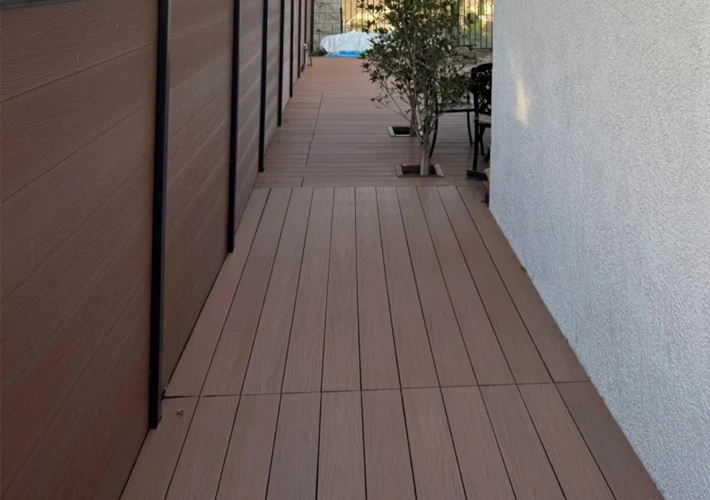
Composite decking expands and contracts more than wood due to temperature fluctuations.
This movement can lead to:
- Gaps between boards
- Warping or bowing
- Fastener stress
- Structural instability in extreme climates
These issues become more serious if installation spacing is incorrect or boards are not acclimated properly.
Temperature-driven expansion can even reduce deck lifespan if not properly engineered.
Structural Flexibility and Framing Requirements
Composite decking is generally more flexible than natural wood.
Because of this, many installations require:
- Closer joist spacing
- Stronger framing systems
- Higher installation labor cost
For example, composite decking may require joists spaced at 12 inches instead of 16 inches used for wood decking.
This can increase total project cost and complexity.
Potential Slipperiness When Wet
Composite decking can become slippery when wet because it does not absorb water like wood.
Water often remains on the surface, creating a slick film that reduces traction.
Risk increases when:
- Algae forms
- Moss grows
- Smooth surface finish is used
This can increase fall risk, particularly in:
- Pool areas
- Rain-exposed decks
- Cold climate regions
Less Natural Appearance Compared to Wood
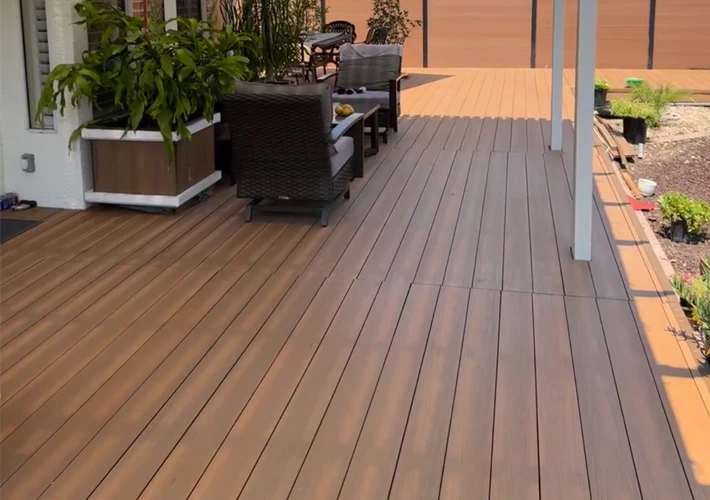
Despite major improvements, composite decking still cannot fully replicate natural wood aesthetics.
Common complaints include:
- Repetitive grain patterns
- Uniform color tone
- Plastic-like appearance in some brands
Many traditional wood enthusiasts still prefer natural timber appearance and texture.
Additional Real-World Ownership Downsides
Beyond technical performance, composite decking presents several long-term ownership challenges.
Color Fading Over Time
Even UV-resistant boards may fade gradually under constant sunlight exposure.
Replacement Difficulty
If one board is replaced after several years, color mismatch is common due to aging and weathering.
Environmental Complexity
Although often marketed as eco-friendly, composite decking recycling is more complicated than pure wood.
When Composite Decking Downsides Matter Most
Composite decking disadvantages are most noticeable in:
Hot Climate Installations
Heat retention becomes a serious comfort and safety factor.
Budget-Sensitive Projects
High initial cost may reduce competitiveness.
High-Design Residential Projects
Some customers demand natural wood authenticity.
DIY Installations
Incorrect spacing or installation increases risk of expansion and warping.
When the Downsides Are Less Important
Composite decking can still be an excellent choice when:
- Long maintenance cycles are required
- Labor costs are high
- Projects demand consistent color and finish
- Termite resistance is essential
- Long lifespan is prioritized
Composite Decking vs Wood: Downside Trade-Off Summary
| Factor | Composite Decking | Wood Decking |
|---|---|---|
| Initial Cost | High | Low |
| Maintenance | Low | High |
| Heat Resistance | Lower | Better |
| Repairability | Difficult | Easy |
| Natural Appearance | Moderate | Excellent |
| Installation Cost | Higher | Lower |
Final Conclusion
Composite decking is a technologically advanced material that solves many problems associated with traditional wood decking. However, it is not a perfect material and presents several important downsides that must be evaluated before selection.
The main disadvantages include:
- Higher upfront cost
- Heat retention under sunlight
- Limited refinishing and repair options
- Scratch susceptibility
- Mold and staining risk
- Thermal expansion and contraction
- Higher structural framing requirements
- Potential slipperiness when wet
- Less natural wood appearance
For B2B buyers, distributors, and project planners, the key is not simply choosing composite decking or wood decking—but choosing the right material for the right project environment, climate, budget, and customer expectation.
As composite technology continues to evolve, many of these downsides are gradually being reduced through capped technology, improved UV stabilizers, and advanced manufacturing processes. However, understanding the current limitations remains essential for professional decision-making.