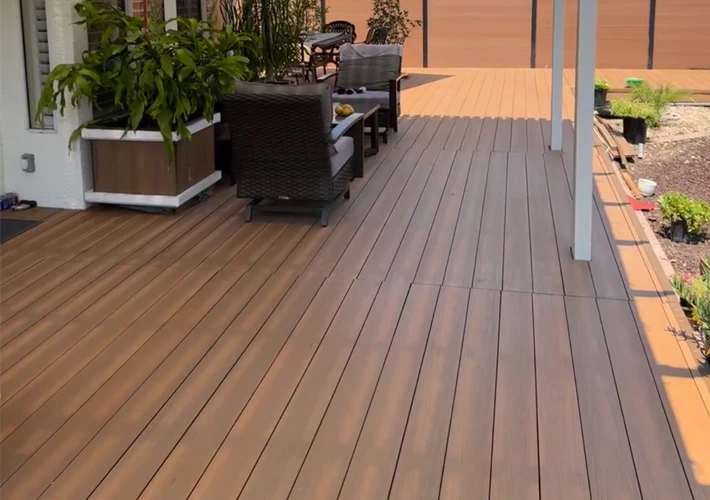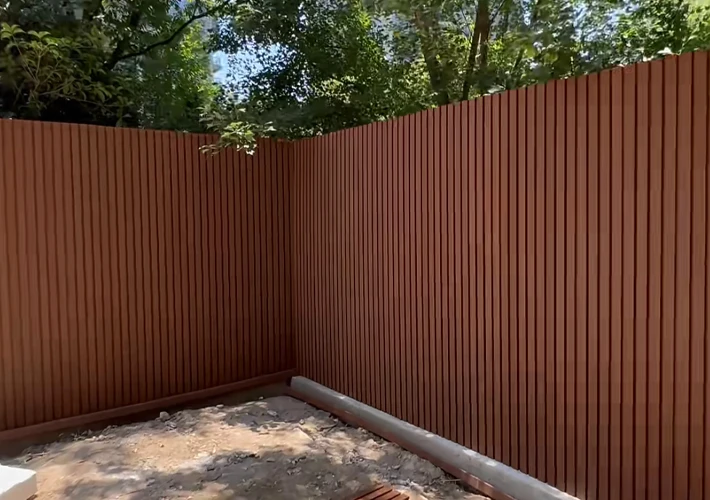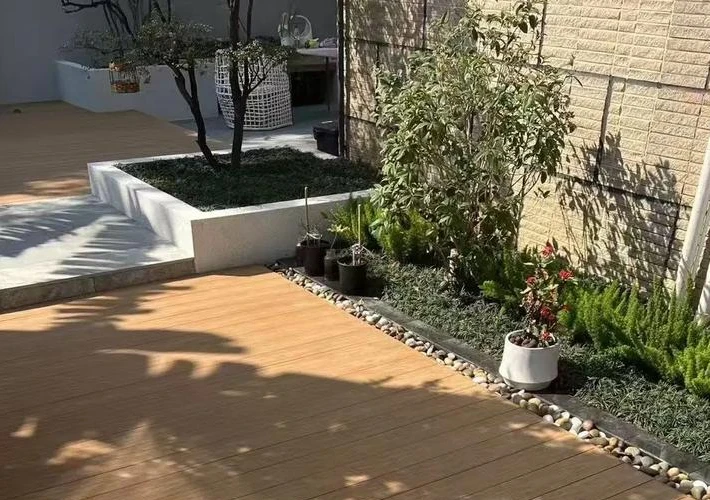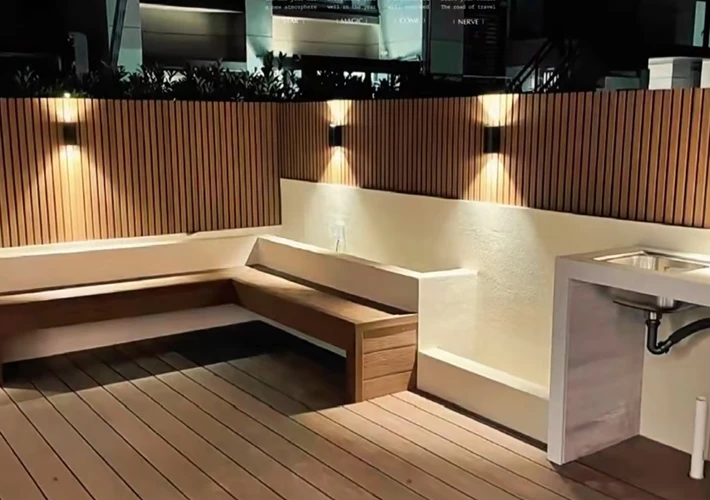

In recent years, composite wall cladding has become one of the fastest-growing categories in the global exterior decoration and façade materials market. From residential housing projects in North America to commercial buildings in Europe and resort developments in Southeast Asia, architects and contractors are increasingly choosing composite wall cladding for its durability, low maintenance, and modern aesthetic appeal.
As global demand rises, China manufacturers have become major suppliers in the international market. Thanks to large-scale production capacity, advanced extrusion technology, stable raw material supply chains, and competitive labor costs, China has established itself as a leading export base for composite wall cladding.
In this comprehensive guide, we will analyze composite wall cladding export prices from China manufacturers, including:
- Main price ranges in 2026
- Key cost components
- Raw material price impact
- Production process factors
- Export logistics costs
- Certification and compliance expenses
- How to evaluate factory quotations
- Strategies to reduce import costs
This article is designed for B2B buyers, distributors, contractors, and project developers who are sourcing composite wall cladding from China.
What Is Composite Wall Cladding?
Composite wall cladding generally refers to exterior wall panels made from a combination of materials, most commonly:
- Wood Plastic Composite (WPC)
- PVC-based composite panels
- Co-extruded composite boards
- Fiber-reinforced polymer panels
Among them, WPC composite wall cladding is the most popular export category. It combines wood fiber (or bamboo fiber) and thermoplastic materials such as HDPE or PVC, forming a durable and weather-resistant exterior panel.
Main Characteristics
Weather resistance
UV stability
Waterproof performance
Anti-corrosion capability
Low maintenance
Long service life (15–30 years depending on quality)
Because of these features, composite wall cladding is widely used in:
- Villas
- Commercial façades
- Hotels
- Shopping malls
- Prefabricated houses
- Public buildings
For global importers, understanding export pricing structures is essential before placing bulk orders.
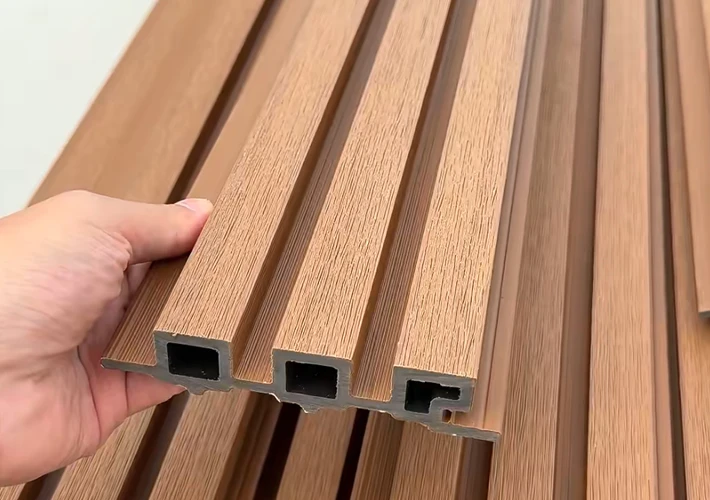
Average Export Price of Composite Wall Cladding from China
The export price of composite wall cladding from China manufacturers in 2026 typically ranges as follows:
1.Standard WPC Wall Cladding
- FOB China price: USD 8–15 per square meter
2.Co-extrusion WPC Wall Cladding (Capped Surface)
- FOB China price: USD 12–22 per square meter
3.Fire-Rated Composite Wall Cladding
- FOB China price: USD 15–28 per square meter
4.Customized Texture or Color Series
- FOB China price: USD 18–30 per square meter
Note: Prices vary based on thickness (20mm–30mm), density, surface treatment, color options, order quantity, and certification requirements.
For large container orders (40HQ), buyers usually receive more competitive pricing compared to small trial orders.
Key Factors Affecting Export Price
Understanding price components helps buyers negotiate effectively and compare suppliers accurately.
1.Raw Material Costs
Raw materials account for approximately 60–70% of total production cost.
Main materials include:
- Wood fiber or bamboo powder
- HDPE or PVC resin
- UV stabilizers
- Color masterbatch
- Additives (anti-oxidant, lubricant, coupling agents)
When global plastic resin prices rise, composite cladding prices follow. For example:
- HDPE price increase directly increases panel cost
- PVC resin fluctuations affect PVC-based composite boards
Manufacturers with long-term raw material contracts usually offer more stable pricing.
2.Panel Thickness and Density
Thickness greatly affects price.
Common thickness options:
- 20mm
- 25mm
- 26mm
- 28mm
- 30mm
Higher density panels provide better structural strength and impact resistance but increase material consumption.
For example:
- 20mm panel: Lower cost, lighter weight
- 28mm co-extrusion panel: Higher cost, stronger durability
Professional buyers should request:
- Density report (kg/m³)
- Weight per meter
- Mechanical test results
3.Surface Treatment Technology
Surface finishing influences both performance and cost.
Common treatments include:
- Sanded surface
- Wood grain embossing
- 3D deep embossing
- Brushed finish
- Co-extrusion protective layer
Co-extrusion technology adds a capped protective layer that improves:
- UV resistance
- Stain resistance
- Color stability
However, co-extruded panels typically cost 20–35% more than standard WPC panels.
4.Fire Rating Requirements
In Europe, Australia, and parts of North America, fire classification is mandatory for commercial buildings.
Common fire standards:
- EN13501 (Europe)
- ASTM E84 (USA)
- AS/NZS 1530 (Australia)
Fire-rated composite cladding requires:
- Flame-retardant additives
- Special formulations
- Testing fees
- Certification documentation
This increases manufacturing and compliance costs by 10–25%.
5.Production Equipment and Automation Level
Factories with:
- Fully automatic extrusion lines
- Advanced calibration systems
- Online surface embossing machines
- Automated cutting systems
usually maintain:
- Stable quality
- Consistent dimensions
- Lower defect rates
Although advanced factories have higher initial investment costs, their mass production efficiency reduces long-term pricing for large orders.
Shipping and Logistics Cost Analysis
Export pricing is not limited to factory FOB price. Importers must also consider freight and additional charges.
1.Container Loading Capacity
Composite wall cladding is relatively heavy. A 40HQ container typically loads:
- 700–900 square meters (depending on thickness)
Heavier density panels reduce loading volume.
2.Sea Freight Cost
Sea freight fluctuates depending on:
- Destination country
- Oil prices
- Seasonal demand
- Global trade conditions
For example:
- China to USA West Coast
- China to Europe
- China to Middle East
Freight cost can range from USD 1,200 to 4,500 per container depending on market conditions.
3.Import Duties and Tariffs
Buyers must check:
- HS code classification
- Anti-dumping duties
- Local customs policy
Incorrect HS code classification may increase import tax unexpectedly.
Certification and Compliance Cost Impact
International projects often require certification.
Common certifications include:
- CE certification
- FSC documentation (if wood-based content claimed)
- Fire rating reports
- ISO quality management certification
Certification costs include:
- Testing laboratory fees
- Sample production cost
- Annual renewal fees
Suppliers who already possess certifications reduce buyer compliance risk and shorten project approval timelines.
How to Evaluate a China Manufacturer’s Quotation
When sourcing composite wall cladding from China manufacturers, buyers should not compare price alone.
Evaluate the following:
1.Product specification sheet
2.Material composition ratio
3.Density report
4.UV resistance report
5.Warranty policy
6.Production lead time
7.Packaging standard
8.OEM capability
Professional manufacturers provide:
- Detailed technical drawings
- Installation accessories
- Engineering support
- Project references
Low price without technical transparency often indicates lower density or recycled plastic content.
Strategies to Reduce Import Cost
For long-term importers, reducing cost requires strategic planning.
1.Increase Order Quantity
Full container orders significantly reduce unit cost.
2.Standardize Colors
Customized colors increase mold and masterbatch cost.
3.Choose Optimal Thickness
Avoid over-specification. Select thickness according to structural needs.
4.Consolidate Shipments
Combine multiple SKUs in one container to reduce freight cost per square meter.
5.Long-Term Cooperation
Factories offer better pricing for stable annual purchasing volumes.
2026 Market Trend and Price Outlook
Global demand for composite wall cladding continues to grow due to:
- Sustainability awareness
- Replacement of traditional timber
- Labor cost reduction
- Prefabricated construction growth
However, price trends are influenced by:
- Plastic resin cost
- Global shipping fluctuations
- Environmental regulation policies
- Energy prices in manufacturing regions
In 2026, stable supply chains and improved automation are helping China manufacturers maintain competitive export pricing compared to Europe and North America suppliers.
Why Global Buyers Choose China Manufacturers
China has built strong advantages in composite wall cladding manufacturing:
1.Complete industrial chain
2.Large-scale production capacity
3.Skilled technical workforce
4.Competitive raw material sourcing
5.Mature export experience
For B2B importers, working directly with manufacturers rather than trading companies ensures:
- Better price control
- Customization flexibility
- Stable quality
- Faster communication

Conclusion
Composite wall cladding export price from China manufacturers generally ranges from USD 8 to USD 30 per square meter, depending on material type, thickness, fire rating, surface treatment, and customization level.
When sourcing from China, buyers should consider:
- Raw material composition
- Density and mechanical strength
- Surface technology
- Certification requirements
- Freight and customs cost
Price is important, but long-term durability, compliance, and supplier reliability are equally critical for successful projects.
For professional importers, conducting factory audits, requesting test reports, and negotiating annual supply agreements are the most effective ways to ensure stable pricing and consistent quality.
As global construction continues evolving toward sustainable and low-maintenance materials, composite wall cladding from China manufacturers will remain a competitive and strategic choice for international buyers.
If you are planning to import composite wall cladding for your next project, now is the time to analyze suppliers carefully and secure stable export pricing for long-term success.