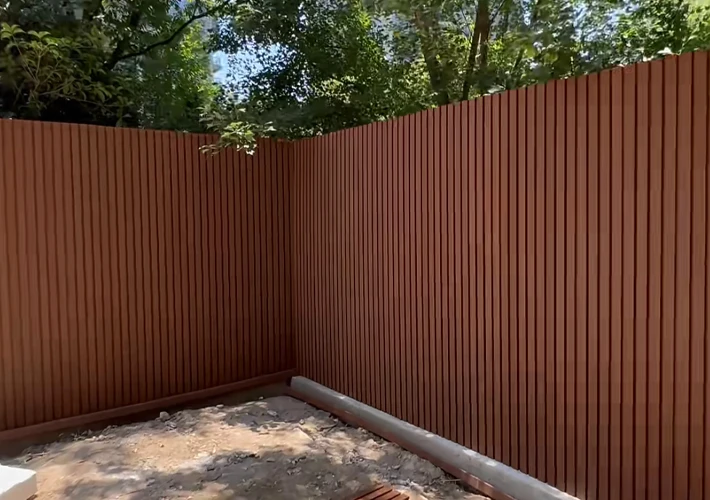

In modern architecture and large-scale construction projects, exterior facade materials are no longer chosen solely for appearance. Developers, architects, contractors, and building owners now evaluate materials based on durability, lifecycle cost, sustainability, installation efficiency, and long-term maintenance performance.
Among the many facade solutions available today, wood composite cladding has rapidly gained popularity in residential, commercial, hospitality, and public infrastructure projects. Combining the natural aesthetics of timber with the performance advantages of engineered materials, wood composite cladding offers a balanced solution for contemporary exterior design.
In this comprehensive guide, we will explore the advantages of wood composite cladding for exterior facades, analyze its structural benefits, cost-effectiveness, sustainability value, and technical performance, and explain why it has become a preferred choice in global markets.
Superior Durability Compared to Traditional Timber Cladding
One of the most significant advantages of wood composite cladding is its exceptional durability.
Traditional solid wood facades, while visually appealing, are highly vulnerable to:
- Moisture absorption
- Rot and decay
- Termite and insect damage
- Warping and cracking
- UV fading
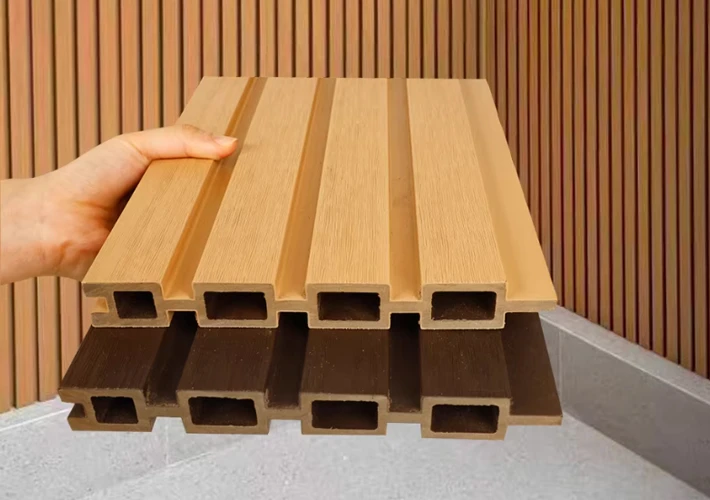
Wood composite cladding is engineered using a combination of recycled wood fibers and high-performance polymers. This composition creates a dense, stable structure that significantly reduces moisture penetration and eliminates many weaknesses associated with natural timber.
Resistance to Moisture and Rot
Exterior facades are constantly exposed to rain, humidity, snow, and temperature fluctuations. Wood composite boards are designed with low water absorption rates, preventing swelling, mold growth, and structural deformation.
This makes them particularly suitable for:
- Coastal areas
- Tropical climates
- Regions with heavy rainfall
- Freeze-thaw environments
Insect and Termite Resistance
Unlike natural wood, composite cladding does not provide an organic food source for termites. This dramatically reduces long-term structural risks and eliminates the need for chemical treatments.
UV Stability
High-quality wood composite cladding includes UV stabilizers to minimize fading and discoloration. While all materials experience some weathering, composite boards maintain their appearance far longer than untreated timber.
The result: a facade that looks consistent and professional for years with minimal intervention.
Low Maintenance and Long-Term Cost Savings
When evaluating exterior facade materials, upfront cost should never be the only factor. Lifecycle cost is often more important.
Wood composite cladding offers substantial savings over time due to its low maintenance requirements.
No Painting or Staining Required
Traditional wood facades require:
- Annual sealing
- Periodic staining
- Repainting every few years
- Surface sanding
Wood composite cladding eliminates these processes. The color is integrated during manufacturing, meaning it does not require repainting.
Reduced Cleaning Costs
Composite panels only require basic cleaning with water and mild detergent to remove dust and debris. There is no need for specialized wood treatments.
Longer Replacement Cycle
Because composite cladding resists cracking and decay, its service life can often exceed 20–30 years under normal conditions.
For commercial developers, this translates into:
- Lower operational expenditure
- Reduced facade renovation frequency
- Higher return on investment
Over large surface areas, these savings can be substantial.
Aesthetic Versatility and Modern Architectural Appeal
Architectural design trends are increasingly focused on combining natural textures with modern geometry. Wood composite cladding excels in this area.
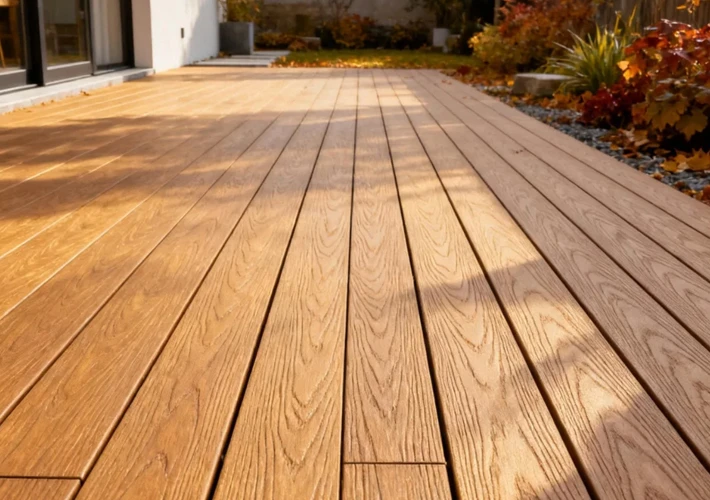
Natural Wood Appearance
Advanced embossing and surface finishing technologies replicate:
- Oak grain
- Teak texture
- Cedar patterns
- Walnut tones
The visual depth and tactile feel closely resemble real timber, satisfying both designers and end clients.
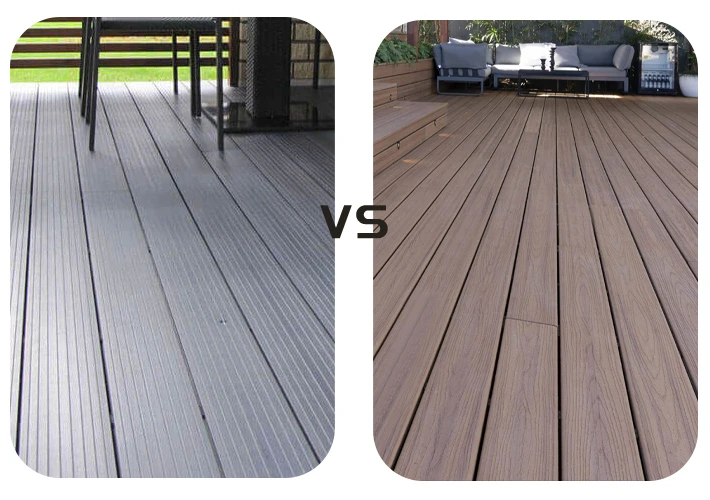
Wide Range of Colors and Finishes
Manufacturers offer:
- Warm wood tones
- Contemporary greys
- Charcoal finishes
- Custom color options
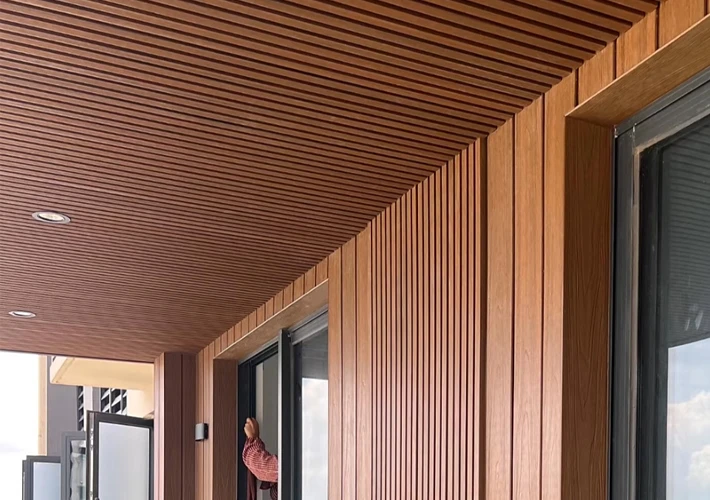
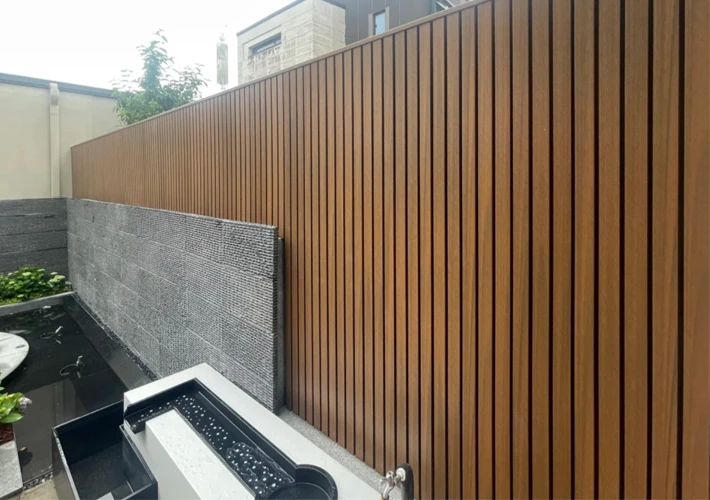
This allows architects to match facade elements with windows, metal frames, glass curtain walls, and roofing systems.
Flexible Design Applications
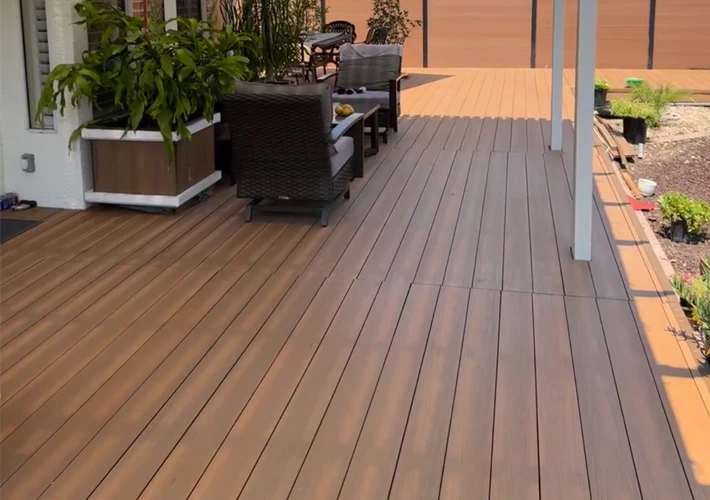
Wood composite cladding can be installed:
- Horizontally
- Vertically
- Diagonally
- In mixed facade compositions
It integrates well with materials such as:
- Aluminum panels
- Stone veneer
- Concrete surfaces
- Glass curtain walls
The design flexibility makes it suitable for:
- Luxury villas
- Apartment complexes
- Hotels
- Office buildings
- Retail centers
- Educational facilities
Environmental Sustainability and Green Building Benefits
Sustainability is now a core requirement in global construction projects.
Wood composite cladding supports green building objectives in several ways.
Use of Recycled Materials
Most composite boards are manufactured using:
- Recycled wood fibers
- Recycled plastics
This reduces reliance on virgin timber and minimizes landfill waste.
Reduced Deforestation
By replacing natural hardwood in facade applications, composite cladding contributes to forest conservation.
Long Service Life = Lower Environmental Impact
Materials that last longer reduce the frequency of replacement and associated carbon emissions from manufacturing and transportation.
Compatibility with Green Building Certifications
Composite cladding can contribute to green building rating systems such as:
- LEED
- BREEAM
- Green Mark
Its recycled content and durability make it attractive in environmentally responsible projects.
Structural Stability and Weather Resistance
Exterior facade systems must withstand:
- Wind loads
- Temperature fluctuations
- UV exposure
- Heavy rainfall
- Snow accumulation
Wood composite cladding is engineered to maintain dimensional stability under varying climate conditions.
Minimal Expansion and Contraction
While all materials expand and contract slightly, composite boards are designed to control movement more effectively than natural wood.
Proper installation systems with expansion gaps further ensure long-term structural integrity.
High Impact Resistance
Composite cladding is less prone to cracking from impact compared to brittle materials such as fiber cement.
This makes it suitable for high-traffic public buildings and commercial properties.
Fire Performance Options
Some manufacturers offer fire-retardant composite cladding variants that meet international building codes for commercial use.
Easy Installation and Construction Efficiency
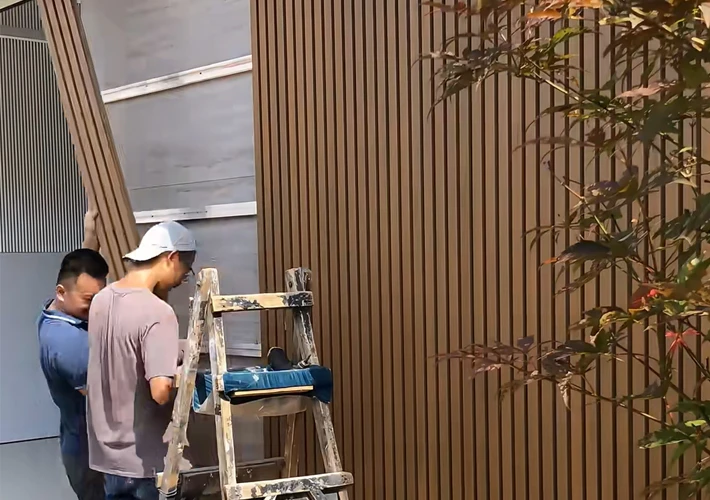
Construction timelines are critical for developers and contractors. Wood composite cladding provides installation advantages that reduce labor time and overall project duration.
Lightweight Material
Composite boards are lighter than many traditional facade materials such as stone or solid hardwood, making them easier to transport and handle onsite.
Modular Installation Systems
Most systems include:
- Hidden fasteners
- Interlocking profiles
- Clip systems
These reduce visible screws and improve overall aesthetics.
Reduced Skilled Labor Requirement
Unlike traditional timber installation, composite cladding does not require specialized wood finishing skills, lowering labor costs.
Faster Project Completion
Quick installation contributes to:
- Shorter construction timelines
- Lower scaffolding costs
- Earlier project turnover
For large-scale commercial developments, these benefits significantly impact project profitability.
Excellent Thermal and Acoustic Performance
While primarily selected for aesthetics and durability, wood composite cladding also contributes to building performance.
Thermal Insulation Contribution
When combined with insulation layers in ventilated facade systems, composite cladding helps:
- Reduce heat transfer
- Improve energy efficiency
- Lower HVAC costs
In hot climates, ventilated composite facades reduce solar heat gain.
In colder regions, they help maintain internal warmth.
Acoustic Benefits
Composite materials have sound-dampening properties that can help reduce:
- Urban noise
- Traffic sound transmission
This makes them suitable for:
- Residential developments
- Hotels
- Schools
- Healthcare buildings
Cost-Effective Solution for Global Construction Markets
From a global trade perspective, wood composite cladding offers strong competitiveness.
Balanced Material Cost
While slightly more expensive than basic PVC panels, composite cladding is generally more affordable than high-grade hardwood.
This positions it as a mid-to-premium facade solution.
Lower Shipping Costs Compared to Stone
Because composite boards are lightweight, international shipping costs per square meter are lower than heavy facade materials.
High Market Demand
Global demand for sustainable and low-maintenance materials continues to rise, particularly in:
- North America
- Europe
- Australia
- Southeast Asia
Developers increasingly specify composite cladding for both new builds and renovation projects.
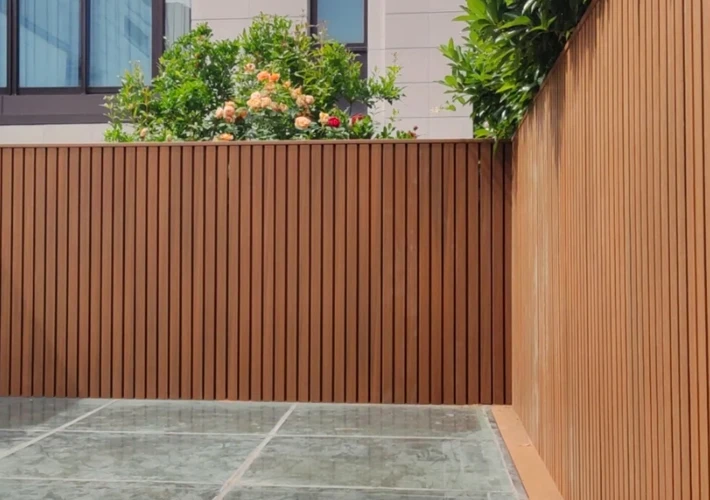
Conclusion: Why Wood Composite Cladding Is a Smart Choice for Exterior Facades
Wood composite cladding has transformed exterior architecture by combining natural beauty with modern engineering performance.
Its key advantages include:
- Exceptional durability
- Low maintenance
- Long service life
- Design versatility
- Sustainability benefits
- Weather resistance
- Easy installation
- Strong cost-performance ratio
For developers, architects, contractors, and property owners, these benefits translate into reduced long-term costs, improved building performance, and enhanced visual appeal.
As global construction standards continue to prioritize sustainability and lifecycle value, wood composite cladding is expected to remain a leading choice for exterior facade systems.
If you are evaluating facade materials for your next residential, commercial, or hospitality project, wood composite cladding offers a balanced, future-ready solution that aligns aesthetics, performance, and profitability.